Vietnam Moves to Regulate Crypto Trading in VND, Ending Dollar-Paired Domestic Trades
 LTB
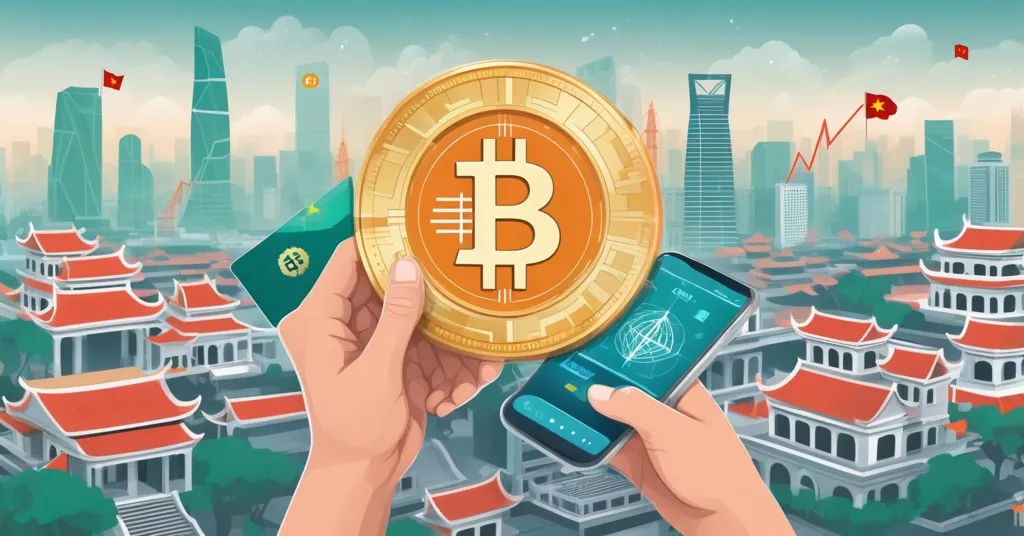
LTB Vietnam is moving to bring crypto trading into its regulated financial system, with domestic trades set to be settled in Vietnamese dong rather than U.S. dollars.
- Domestic crypto trades would be settled in Vietnamese dong
- Dollar-paired trading on licensed platforms would be shut down
- Bitcoin, Ethereum, USDT, and USDC are all covered
- Investors can still hold crypto in personal wallets
- Tokenization could open access to real-world assets like real estate and infrastructure
The shift was laid out at a conference in Hanoi involving officials from the State Securities Commission, the State Bank of Vietnam, and the Ministry of Public Security. The direction is clear enough: crypto is not being shoved out of the country, but it is being pulled under state supervision and forced to play by local monetary rules.
That means licensed platforms would become the main route for trading, while domestic crypto activity on those venues would need to settle in Vietnamese dong. In plain terms, if you want to trade Bitcoin, Ethereum, or stablecoins such as USDT and USDC inside Vietnam’s licensed system, the state wants the transaction anchored in its own currency, not the dollar.
That may sound like a technical rule, but it carries real consequences. Settlement currency shapes liquidity, price discovery, tax visibility, and capital flow. Forcing trades into VND reduces dollar exposure inside the domestic market and gives regulators a cleaner view of what’s happening. It also makes the local system more dependent on the central banking framework, which is exactly the point. Governments love innovation right up until it starts looking a little too free.
Investors would still be allowed to hold assets in personal wallets, which matters a lot for Bitcoin users and anyone who values self-custody. Self-custody means controlling your own coins in your own wallet instead of leaving them on an exchange. That is one of crypto’s core promises, and one of the few areas where the user still holds the keys instead of some middleman with compliance theater and a shiny logo.
Foreign investors would also be allowed to open accounts and participate. Domestic participation, at least at first, would be limited to people who already hold crypto assets. That suggests Vietnam wants to open the door, but not fling it off the hinges and let speculation run wild before the rulebook is finished.
Vice chairman of the State Securities Commission, Bui Hoang Hai, said the country is laying the groundwork for a broader digital finance regime.
“Vietnam is in a critical phase of building a legal framework for digital finance.”
He also argued the country has a real opening if it gets the structure right.
“The country has a real opportunity to pull in international capital, open up new business models, and strengthen its position in the regional fintech space.”
That opportunity is not theoretical. Vietnam already has a serious crypto footprint. Phan Duc Trung, chairman of the Vietnam Blockchain Association, said the country ranks 7th globally in crypto users and 5th in transaction growth. That is not some fringe side quest. That is a meaningful market with real demand, whether the old financial gatekeepers like it or not.
The broader regional backdrop is also hard to ignore. In the Asia-Pacific region, digital asset transaction values reached about $2.4 trillion as of June 2025. Institutional adoption has also moved from novelty to reality, with BlackRock reported to manage around $67 billion in Bitcoin ETF assets. When that much capital is already flowing through digital assets, it becomes much harder for policymakers to pretend crypto is a temporary fad or a playground for internet gamblers.
Vietnam’s approach is tied to a pilot program for crypto-asset trading platforms under Government Resolution No. 05/2025/NQ-CP. That matters because it shows the country is not just drafting vague rhetoric and hoping for the best. It is building a test environment for licensed virtual asset service providers, with compliance, investor protection, and risk management at the center.
Bui Hoang Hai put the regulatory condition bluntly:
“Only if the market is built on transparent rules, sound risk management, and strong protections for investors.”
That’s the line regulators love to draw, and to be fair, they are not wrong to do so. Crypto markets have been riddled with scams, wash trading, fake yield, and exchange collapses that vaporized savings faster than a meme coin launch on a bad day. If Vietnam wants to attract serious capital, it cannot leave the market in the hands of opportunists, fraudsters, and exchange operators who treat “proof of reserves” like optional decoration.
Still, regulation cuts both ways. A clean framework can help legitimize Bitcoin and other digital assets, but too much friction can push users straight back to offshore exchanges and peer-to-peer channels. That is the eternal balancing act: build trust without building a cage. If the rules are too heavy, the smartest traders and the most committed Bitcoin holders will simply route around them.
Vietnam’s move also has a quietly important monetary angle. Requiring domestic settlement in Vietnamese dong is not just about oversight. It also helps limit dollarization inside the local crypto market. Many Asian trading venues have leaned on dollar-linked stablecoins like USDT and USDC because they provide easy pricing, easy settlement, and a familiar reference point. That convenience comes at a cost, though: it gives users a fast path into the global dollar system while reducing the state’s ability to monitor local flows. Vietnam appears to be saying it wants the benefits of crypto without surrendering monetary control. Fair enough — that is exactly what governments do when they smell both opportunity and risk.
The more forward-looking part of the plan is tokenization. Chris Chiew of CAEX said tokenization of real-world assets could widen access to investments.
“Tokenization of real-world assets could widen access to investments.”
Tokenization means turning ownership rights in a real-world asset into digital tokens on a blockchain. Those tokens can then be traded more easily, often in smaller units than the original asset would allow. In theory, that could make high-value markets more accessible to ordinary investors.
The assets being discussed are not small potatoes either. Tokenized versions of gold, industrial facilities, data centers, energy projects, port systems, and real estate could open new ways to raise capital and spread ownership. Instead of needing to buy an entire property or infrastructure stake, investors could own a slice. That could be useful for markets where access has long been limited to institutions and insiders.
There is real promise there, but tokenization is also one of the easiest places for hype merchants to start blowing smoke. Not every asset needs to be on-chain. Not every tokenized project will be liquid. And not every “fractionalized” investment is automatically better just because it comes with blockchain branding and a glossy pitch deck. Tokenization only matters if it solves a real problem: access, settlement, transferability, or market efficiency. Otherwise, it’s just old finance in a new costume.
Conference figures cited an ambitious outlook: global tokenized asset markets could reach $19 trillion by 2033, while Vietnam’s share could land somewhere between $70 billion and $80 billion by 2030. Those numbers should be treated with caution, because long-term forecasts in crypto often age like milk left in a hot car. Still, they show where policymakers and industry players think the next wave of financial growth may be headed.
For Vietnam, the strategic logic is easy to see. The country has an active crypto user base, rising transaction volume, and a government that clearly understands it is better to regulate a market than to pretend it does not exist. If the framework is sensible, Vietnam could attract foreign capital, support fintech innovation, and build one of the more serious regulated digital asset markets in Southeast Asia.
If it goes wrong, the result could be a half-open system that is cumbersome for legitimate users and still porous enough for bad actors. That would be the worst of both worlds: more paperwork, less freedom, and the scammers still finding their way around the fence.
Bitcoin holders, Ethereum traders, and stablecoin users should all pay attention here. Vietnam is showing how a major emerging market can bring crypto under formal oversight without outright banning it. Whether that becomes a model for adoption or a lesson in overcontrol will depend on how the final rules are written and how much room users are given to actually use the technology, not just file forms about it.
- What is Vietnam trying to do with crypto?
Vietnam is trying to regulate domestic crypto trading, bring it into licensed platforms, and require settlement in Vietnamese dong. The goal is to make the market more transparent and easier to supervise. - Will Bitcoin, Ethereum, USDT, and USDC still be tradable in Vietnam?
Yes. The major assets mentioned are still part of the framework, but domestic trades on licensed platforms would need to settle in Vietnamese dong rather than U.S. dollars. - Can people still hold crypto in private wallets?
Yes. Investors would still be allowed to keep crypto in personal wallets, which preserves self-custody. - Why does the Vietnamese dong settlement rule matter?
It reduces dollar-paired trading inside the domestic system, gives regulators better visibility, and keeps crypto activity closer to the country’s monetary perimeter. - How big is Vietnam’s crypto market?
Vietnam is said to rank 7th globally in crypto users and 5th in transaction growth, making it one of the more active markets in the region. - What is tokenization of real-world assets?
Tokenization is the process of turning ownership in physical assets like real estate, gold, energy projects, or infrastructure into digital tokens that can be traded more easily. - Is this bullish or bearish for crypto?
It is both. It is bullish for legitimacy, institutional access, and mainstream adoption. It is bearish for unrestricted trading and open market freedom if the rules become too restrictive.