Vietnam’s Crypto Exchange Licensing Pilot: $220B Market Under Tight Control
 LTB
LTB Vietnam Launches Five-Year Crypto Exchange Licensing Pilot: Progress or Power Grab?
Vietnam has taken a decisive step into the crypto regulatory arena, rolling out a five-year pilot licensing program for crypto asset exchanges. Spearheaded by the Ministry of Finance, this initiative seeks to bring structure to a market transacting $220-230 billion annually, cementing Vietnam’s status as a major player in the Asia-Pacific crypto landscape while raising questions about innovation versus control.
- Regulatory Move: Five-year pilot licensing for crypto exchanges under Decision No. 96/QD-BTC.
- Market Power: $220-230 billion in yearly transactions, third in APAC region.
- Tough Standards: High capital, institutional ownership, and strict operational rules for providers.
Setting the Stage: Vietnam’s Crypto Crackdown Begins
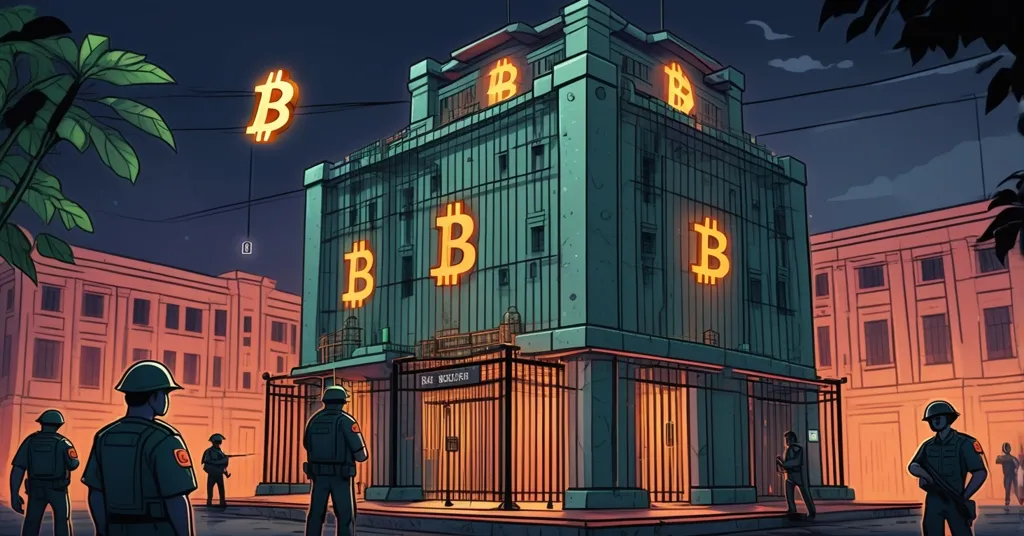
Vietnam’s crypto market has been a bit like the Wild West—thriving, chaotic, and largely unchecked. That’s changing fast. The Ministry of Finance has introduced a rigorous framework through Decision No. 96/QD-BTC, allowing businesses to apply for licenses under a five-year pilot program for crypto exchanges that could shape the future of blockchain adoption in the country. As per Government Resolution No. 05/2025/NQ-CP, issued in September, only registered service providers can operate trading platforms during this five-year trial. This isn’t a casual invitation to join the party; it’s a gauntlet of rules designed to separate the heavyweights from the hobbyists in Vietnam’s crypto regulation 2025 landscape.
Let’s break down the barriers. To even think about operating a crypto exchange, a company must be a limited liability or joint stock entity with a minimum charter capital of VND 10,000 billion—about $400 million USD. Think of this as a financial moat, ensuring only deep-pocketed players can cross. Ownership rules are just as brutal: 65% must be held by institutions, with the remaining 35% owned by at least two qualifying organizations like banks or securities firms. This isn’t a space for garage startups dreaming of disrupting finance; it’s a VIP club for the financial elite. Operationally, the demands are daunting—premises, top-tier security systems (equivalent to military-grade tech as per Ministry of Public Security standards), a general director with two years of financial experience, a CTO with five years in IT, and at least ten staff each for cybersecurity and securities certification. If you’re a small team with big ideas, Vietnam’s message is clear: sit this one out.
Why Now? A $220 Billion Market Demands Attention
What’s driving this sudden urge to regulate? Vietnam’s crypto market isn’t just big—it’s colossal. Blockchain analytics firm Chainalysis pegs the country’s transaction volume at $220-230 billion from July 2024 to June 2025, averaging over $600 million daily. That makes Vietnam the third-largest crypto market in the Asia-Pacific, trailing only India and South Korea, and accounting for 10% of the region’s total value. With a tech-savvy population fueling grassroots blockchain adoption in Vietnam, the government couldn’t ignore this economic juggernaut any longer. This isn’t just about curbing scams or protecting investors—though those are on the table, especially under international pressure from bodies like the Financial Action Task Force (FATF). It’s also about controlling a massive flow of capital and ensuring the state doesn’t lose its grip on financial sovereignty.
Historically, Vietnam’s crypto scene operated in a legal gray zone, with peer-to-peer trading and mobile app usage skyrocketing among young, digitally native users. Stories of locals using Bitcoin for remittances or speculative altcoin trades have been common for years, often without any oversight. Past incidents of fraud and Ponzi schemes tied to crypto likely nudged regulators to act. Now, with numbers this staggering, the pilot program feels like a calculated move to harness economic potential while clamping down on risks like money laundering or capital flight—where large sums exit the country unchecked, potentially destabilizing the local economy.
Investor Rules: Tight Leash for Locals and Foreigners
Wondering how traders can navigate Vietnam’s new crypto game? Brace yourself for red tape. Both domestic and foreign investors must open accounts exclusively with licensed providers. For foreigners, the restrictions bite harder—they’re limited to a single VND-denominated account at a licensed local bank for all crypto-related transactions. This isn’t random paperwork; it’s a deliberate barrier to monitor cash flows and prevent the kind of speculative or illicit movements that unregulated markets often enable. For the unversed, this kind of control is a double-edged sword: it might stabilize the market but could also clash with the privacy ethos that Bitcoin champions, where pseudonymity is a core feature. Are we trading freedom for safety here? That’s a question every investor in Vietnam will need to wrestle with.
Institutional Giants Step In: Military Bank and Upbit’s Big Play
Here’s where the plot thickens. Institutional interest in Vietnam’s crypto space is heating up, with around ten local securities firms and banks gearing up to offer exchange services once licenses drop. The standout player is Vietnam’s Military Bank, the country’s fifth-largest lender with assets of VND 1.29 trillion and a pre-tax profit of VND 15,889 billion in the first half of 2025. They’ve signed a Memorandum of Understanding (MoU) with South Korea’s Dunamu, the operator of Upbit— the world’s third-largest centralized exchange, raking in $1.1 trillion in transaction volume in 2025 and commanding 80% of South Korea’s crypto market. This isn’t just a casual partnership; it’s a potential seismic shift. Upbit brings global expertise, robust infrastructure, and a battle-tested platform to the table. Could this mean Vietnam gets a fast track to a world-class exchange ecosystem? Or will it simply cement the dominance of big players, leaving smaller innovators in the dust? One thing is sure—this tie-up signals that traditional finance is ready to merge with crypto in Vietnam, for better or worse.
The Bright Side: A Regional Hub in the Making?
Let’s look at the glass half full. This pilot could position Vietnam as a regulated crypto powerhouse in Asia, especially as neighbors like India grapple with punitive tax regimes and South Korea tightens its own screws. A clear framework, even a strict one, might lure institutional capital seeking stability over anarchy. For Bitcoin maximalists, there’s a silver lining: regulated markets often validate BTC as a legitimate store of value, pushing it closer to mainstream acceptance. Imagine banks and securities firms custodying Bitcoin alongside gold—Vietnam’s move could be a step toward that reality. Plus, with a market this large, successful regulation might inspire other emerging economies to follow suit, accelerating global adoption. Effective accelerationism, anyone? Let’s get this tech into high gear.
Playing Devil’s Advocate: Is This Decentralization’s Death Knell?
Now, let’s flip the coin. Is this really about progress, or is it a state power grab dressed as regulation? The barriers to entry are so sky-high that only the most connected, well-funded entities can play ball. This isn’t regulation—it’s a guest list for crypto’s 1%. Sorry, scrappy developers, the bouncer ain’t letting you in. The focus on control—down to dictating foreign investor accounts—raises red flags for privacy advocates. Bitcoin was born to sidestep centralized oversight, yet here we are, potentially handing the reins to the very systems it sought to disrupt. Look at China: heavy-handed bans pushed crypto underground, fueling black markets. Could Vietnam risk a similar fate if these rules choke innovation or drive trading into the shadows? And let’s not forget altcoins and other blockchains. Ethereum’s DeFi ecosystems or niche NFT projects might struggle under this regime, where complex use cases face more scrutiny than Bitcoin’s straightforward “digital gold” narrative. Are we sacrificing the diversity of blockchain tech for a sanitized, state-approved version?
Global Context: Vietnam in the Regulatory Wave
Zooming out, Vietnam’s move mirrors a worldwide scramble to tame crypto. The EU’s Markets in Crypto-Assets Regulation (MiCA) and the U.S.’s fragmented state-federal approach show governments waking up to blockchain’s staying power. What sets Vietnam apart is the sheer scale of its market relative to its economic footprint, paired with a population that’s adopted crypto from the ground up. If this pilot works, it could be a blueprint for emerging markets balancing growth with control. If it flops—say, by deterring genuine innovation or fueling illicit P2P networks—it might prove that heavy regulation kills the rebellious spirit of blockchain. For now, we’re spectators to a high-stakes experiment. Will Vietnam light the path for regulated crypto in Asia, or show that state overreach can strangle the freedom this tech promises?
Key Takeaways and Questions for the Crypto Community
- What does Vietnam’s crypto licensing pilot mean for adoption?
It could legitimize crypto in traditional finance circles, driving institutional adoption, but the steep barriers might sideline smaller players and slow organic, community-led growth. - Is this a boost for Bitcoin or a blow to decentralization?
It’s a mixed bag—Bitcoin gains credibility as regulated markets embrace it, but the emphasis on oversight threatens the privacy and autonomy at the heart of BTC’s ethos. - How will strict investor rules impact foreign participation?
The single-account limit will likely deter casual foreign speculators, though serious institutional investors with local ties might still see Vietnam as a promising frontier. - Can Vietnam strike a balance between regulation and innovation?
That’s the big unknown. Current rules prioritize control over creativity, and without space for smaller innovators, the disruptive potential of blockchain might be stifled. - What’s the broader impact on blockchain diversity?
Bitcoin’s simplicity might fare better under these rules, but complex ecosystems like Ethereum’s DeFi or smaller altcoin projects could face an uphill battle, limiting the scope of crypto’s potential in Vietnam.
Vietnam is gambling big with this five-year pilot. On one hand, it’s a chance to cement its status as a crypto heavyweight, blending traditional finance with cutting-edge tech. On the other, it risks alienating the very community—decentralized, rebellious, and fiercely independent—that built this $220 billion market from scratch. For Bitcoin purists, there’s cautious optimism in seeing legacy systems nod to crypto’s permanence, but let’s not sugarcoat it: this framework screams containment more than empowerment. Altcoin advocates and blockchain innovators face an even steeper climb, needing deep pockets and insider connections just to get started. As this experiment plays out, Vietnam’s crypto saga is set to become a defining chapter in the global push for regulated digital finance—whether it’s a triumph or a cautionary tale remains to be seen.