Warren Buffett’s Portfolio Moves: Lessons for Bitcoin and Crypto Investors
 LTB
LTB Warren Buffett’s Investment Playbook: A Blueprint for Crypto and Bitcoin Investors?
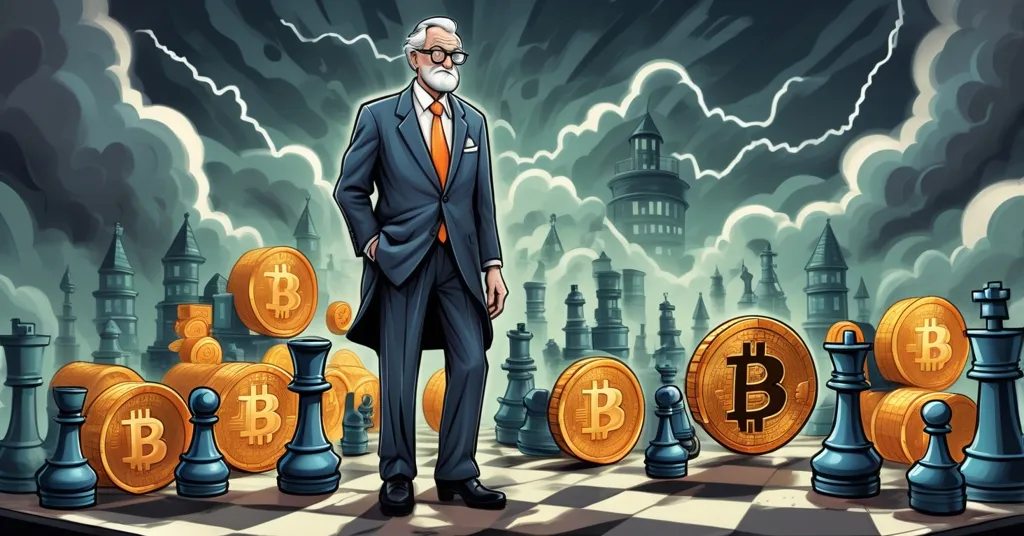
Warren Buffett, the legendary investor behind Berkshire Hathaway, is recalibrating his portfolio in the face of inflation, geopolitical unrest, and economic uncertainty. While the Oracle of Omaha hasn’t jumped on the Bitcoin bandwagon (and likely never will), his strategic moves in traditional markets offer hard-hitting lessons for crypto enthusiasts navigating our own wild, decentralized frontier. Could his bets on energy, banking, and insurance be the kind of pragmatic thinking we need in a space often drowned in hype and scams?
- Buffett’s Game Plan: Positioning for inflation and instability with focus on energy, financials, and insurance.
- Key Holdings: Bank of America, Chevron, Occidental Petroleum, and Chubb Limited as potential outperformers.
- Crypto Lessons: Diversification, cash reserves, and value-driven investing as survival tactics.
Buffett’s Defensive Strategy: Bracing for Economic Storms
Let’s cut through the noise and get to the meat of Buffett’s latest maneuvers at Berkshire Hathaway, a conglomerate with a market cap exceeding $900 billion as of late 2023. With inflation still gnawing at economies worldwide, central banks like the Federal Reserve maintaining high interest rates to curb it, and geopolitical tensions threatening everything from oil supplies to global trade, Buffett isn’t sitting idly by. He’s trimming exposure to tech giants like Apple Inc.—once a cornerstone of his portfolio, now down to a reported 29% of Berkshire’s equity holdings from a peak of over 40%—and doubling down on sectors historically resilient to such chaos: financials, energy, and insurance. For those of us in the crypto space, whether you’re a Bitcoin maximalist or an altcoin explorer, this isn’t just Wall Street gossip. It’s a masterclass in playing defense when the world’s on fire, something our volatile markets know all too well.
Buffett’s approach screams endurance over flash. Berkshire’s portfolio, with over $300 billion in cash reserves as per recent SEC filings, is a fortress built to weather downturns and pounce on opportunities when others panic. This isn’t about chasing the next 100x moonshot—a trap too many crypto projects lure investors into, often ending in rug pulls or outright scams. It’s about calculated bets on value and stability. So, let’s break down his key sectors and see how they translate to our world of decentralization, privacy, and disruption.
Banking on Financials: A Staking Parallel for Crypto?
Bank of America, representing roughly 11% of Berkshire’s equity portfolio with over 1 billion shares valued at approximately $40 billion, is a heavyweight in Buffett’s lineup. Why? High interest rates—think the Fed’s benchmark rate hovering around 5.25-5.5% as of mid-2023—mean banks earn more from the spread between what they pay depositors and what they charge borrowers. Simply put, they profit more on loans when rates are up. If the Fed keeps its foot on the brake to fight inflation, this sector could be a steady earner for Buffett.
For crypto investors, this mirrors the value of yield-generating mechanisms in a portfolio. Think staking on Ethereum, where you lock up ETH to validate transactions on the network and earn rewards—often 4-5% annually via platforms like Lido Finance, a decentralized staking protocol. It’s not flashy, but it’s a consistent return, much like a bank’s loan margins. However, here’s the harsh reality: high interest rates can also strangle economic growth, reducing liquidity and hammering risk assets like Bitcoin and altcoins. We saw this in 2022 when rate hikes triggered a brutal crypto winter, with BTC dropping from $69,000 to under $20,000 in months. Buffett’s banking bet is a reminder to balance our portfolios with steady plays, not just speculative gambles. Don’t get caught holding only memecoins when the macro tide turns.
Energy Stocks: Bitcoin’s Digital Gold Narrative Gets a Nod
Buffett’s deep into energy, with massive stakes in Chevron (about 6% of Berkshire’s portfolio, worth over $19 billion) and Occidental Petroleum (a 27% ownership stake, valued at roughly $14 billion). Geopolitical risks—think conflicts in oil-rich regions or supply chain disruptions—could spike oil prices, and domestic producers like Occidental are well-positioned to profit. Chevron, a global titan, adds broader exposure to rising energy costs. Recent data backs this up: Occidental’s stock surged 10% in Q3 2023 alone amid fears of international oil supply issues, per Bloomberg reports.
Now, tie this to crypto. Energy’s role as a hedge against global chaos resonates with Bitcoin’s pitch as “digital gold”—a scarce asset with a fixed supply of 21 million coins, immune to inflation or manipulation by central powers. If oil becomes a safe haven in a crisis, BTC’s narrative as a store of value could gain traction. But let’s not drink the Kool-Aid just yet. Energy stocks are tangible, old-world assets tied to physical demand, while Bitcoin’s adoption as a crisis hedge remains theoretical for most mainstream investors. Plus, Bitcoin mining’s insane energy consumption—estimated at 0.1% of global electricity use by the Cambridge Bitcoin Electricity Consumption Index—puts it at odds with environmental trends, unlike oil giants pivoting to renewables. Still, scarcity and crisis resilience are themes both share. Could BTC miners, often criticized for power use, be our “energy play” if they pivot to sustainable grids? It’s a long shot, but worth pondering.
Insurance as Stability: The Blockchain Utility Angle
Insurance might bore you to tears, but Buffett loves it, with holdings like Chubb Limited (a recent addition with over 25 million shares worth $6 billion) poised to benefit from higher interest rates. Here’s the deal: insurers hold massive pools of capital from premiums, which they invest for returns. When rates rise, those investments—like government bonds—yield more without extra risk. It’s a slow, predictable grind, pure Buffett.
In the crypto realm, this echoes the quiet, utility-driven projects often overshadowed by hype. Think layer-2 scaling solutions like Polygon or Arbitrum, which reduce Ethereum’s transaction costs and improve efficiency—boring but essential. Or consider decentralized infrastructure protocols like Chainlink, providing real-world data to smart contracts. These aren’t sexy like a Dogecoin pump, but they’re the backbone of a maturing ecosystem, offering steady value akin to insurance gains. The catch? Crypto’s volatility can bury these gems under a flood of speculative shitcoins promising overnight riches. Buffett’s insurance play nudges us to prioritize fundamentals over FOMO—don’t sleep on projects solving real problems just because they don’t trend on Twitter.
Cash Reserves: The Stablecoin Strategy We Ignore at Our Peril
Berkshire’s war chest—over $300 billion in cash and short-term investments—lets Buffett strike when markets tank. It’s why some investors skip individual stocks and buy Berkshire shares directly, betting on its diversified spread across banking, energy, insurance, and consumer goods. This liquidity is power, a buffer to seize undervalued assets during crashes, as Buffett did post-2008.
Crypto investors, take note: this screams the value of holding “cash” equivalents like stablecoins—USDT, USDC, or BUSD—during bear markets. When BTC dipped below $16,000 in late 2022, those with stablecoin reserves could buy low, just as Buffett snaps up discounted stocks. Diversification across Bitcoin, Ethereum, and niche altcoins with genuine use cases (not scam tokens) mirrors Berkshire’s broad exposure. But here’s the brutal truth: crypto lacks Buffett’s decades of proven stability. One wrong bet on a fraudulent project can obliterate your stack faster than a market downturn hits Berkshire. Liquidity is king, but so is due diligence—most “100x guaranteed” altcoins are pure garbage. Stick to what has real staying power.
Tech Trim: A Warning Against Crypto Hype Cycles
Buffett’s reduction in Apple holdings—down from over 5% of the company to under 3% in recent quarters—signals a shift from growth-heavy tech to value-driven sectors better suited for inflation. For us in crypto, this is a glaring caution against overexposure to hype-driven niches. Remember the NFT mania of 2021, where pixelated jpegs sold for millions, only to crash 90% in value? Or metaverse tokens hyped as the “future,” now languishing in obscurity? Trends fade; fundamentals endure.
Bitcoin, with its relentless focus on decentralization and scarcity, aligns more with Buffett’s value ethos than the latest altcoin shilled by influencers. Yet, let’s play devil’s advocate: tech isn’t dead, and neither are innovative blockchain protocols. Ethereum’s smart contracts power DeFi and NFTs, filling niches Bitcoin can’t touch. Layer-1 competitors like Solana offer speed and cost Bitcoin lacks. Buffett trimming Apple doesn’t mean abandoning innovation—it means recalibrating risk. We should do the same, balancing core holdings like BTC with calculated bets on protocols solving real issues, not empty promises.
Buffett’s Bitcoin Skepticism: Centralized Fortress vs. Decentralized Freedom
Let’s address the elephant in the room: Buffett famously called Bitcoin “rat poison squared” in 2018, dismissing it as a speculative bubble with no intrinsic value. His centralized, traditional approach—building fortresses of diversified, tangible assets—clashes with crypto’s ethos of disrupting the status quo through decentralization and privacy. Berkshire’s playbook is about endurance within the system; Bitcoin’s is about breaking it.
Yet, there’s overlap. Buffett’s cash reserves mirror stablecoin holdings for opportunistic buys. His focus on value over hype echoes Bitcoin maximalists’ disdain for scam-ridden altcoins. Even his energy bets parallel Bitcoin’s scarcity narrative, albeit through different lenses. For insights into his latest investment moves, check out Buffett’s recent stock picks and their potential as market winners. As champions of effective accelerationism (e/acc)—pushing for rapid, tech-driven systemic change—we can admire Buffett’s pragmatism while rejecting his old-world constraints. If Berkshire ever bought BTC, it’d be the ultimate validation. Until then, let’s borrow his ruthless focus on longevity while forging our path to financial freedom.
Key Takeaways and Questions for Crypto Investors
- What can crypto investors learn from Buffett’s energy investments like Chevron?
Energy’s role as a crisis hedge parallels Bitcoin’s potential as a store of value during global instability, though BTC’s mainstream adoption as a safe haven still lags behind traditional assets like oil. - How do high interest rates impact Buffett’s portfolio and the crypto market?
They boost financials like Bank of America with higher loan profits, but often crush risk assets like cryptocurrencies by tightening liquidity, as seen in the 2022 crypto winter—balance is critical. - Why does Berkshire’s cash reserve strategy matter for crypto holdings?
Holding over $300 billion in cash lets Buffett buy dips; similarly, stablecoins like USDC allow crypto investors to capitalize on market crashes, provided they avoid scam projects. - Does Buffett’s tech reduction warn against crypto speculative trends?
Absolutely—his Apple trim highlights the danger of overexposure to hype like NFTs or metaverse tokens; focus on fundamentals like Bitcoin’s scarcity or Ethereum’s utility instead. - Can crypto diversification mimic Berkshire’s broad sector approach?
Yes, spreading investments across Bitcoin, altcoins with real use cases (like Chainlink or Polygon), and stable assets reduces risk, much like Berkshire’s mix of energy, finance, and insurance. - How does Buffett’s Bitcoin skepticism challenge crypto’s disruptive ethos?
His “rat poison squared” jab and centralized strategy conflict with crypto’s push for decentralization, yet his principles of value and endurance offer lessons for navigating our volatile space.