White House Targets April for Bitcoin Bill Amid Global Tensions and Crypto Shifts
 LTB
LTB White House Sets April Target for Bitcoin Market Structure Bill Amid Global Chaos and Crypto Evolution
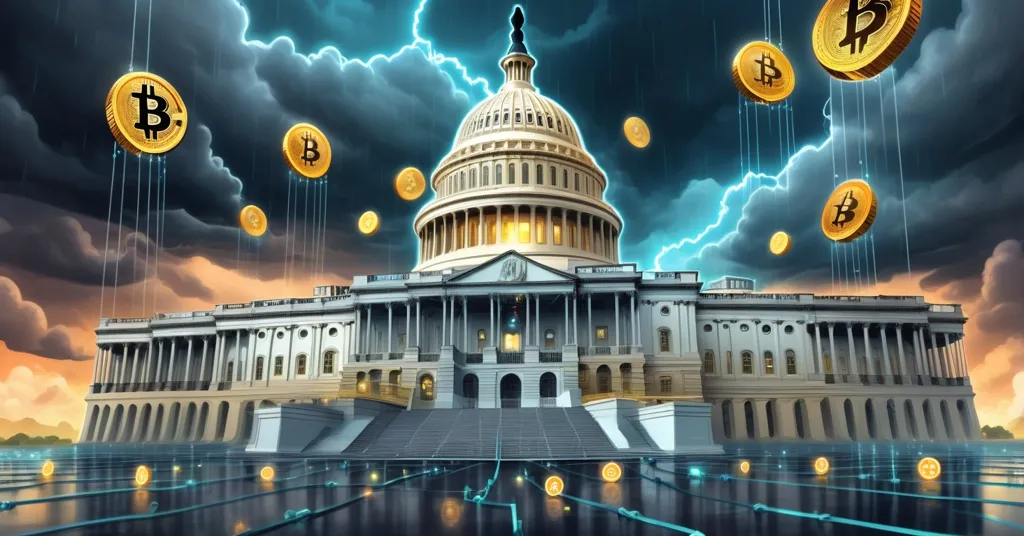
The White House under President Trump has ignited fresh hope in the crypto community by signaling that a Bitcoin market structure bill could move forward as early as April. This potential regulatory milestone might finally bring clarity to the murky U.S. digital asset landscape, but with geopolitical fires burning and internal market pressures mounting, the path ahead looks anything but smooth.
- Regulatory Milestone: A Bitcoin bill in April could set clear rules, potentially unlocking institutional investment.
- Global Volatility: U.S.-Iran tensions and Strait of Hormuz risks are shaking markets, including crypto.
- Market Shifts: Miners prep for the 2028 halving, stablecoins eye massive growth, and Ethereum struggles persist.
Regulatory Breakthrough on the Horizon
For years, the U.S. crypto industry has been trapped in a frustrating game of bureaucratic ping-pong, with the SEC and CFTC squabbling over jurisdiction while innovators and investors navigate a legal gray zone. The recent signal from President Trump’s administration—shared by journalist Pete Rizzo on X—offers a tantalizing prospect: a Bitcoin market structure bill that could advance in April. If it comes to fruition, this legislation might define digital assets’ legal status (commodity or security?), establish exchange compliance rules, and set taxation frameworks. Though specifics remain under wraps, past proposals like the Lummis-Gillibrand bill suggest a focus on carving out Bitcoin’s place in the financial system, potentially separate from altcoins or tokens tied to decentralized apps. You can explore more about this development through the latest update on the White House’s Bitcoin bill timeline.
For institutional players, this could be the green light they’ve been waiting for. Picture Wall Street hedge funds and pension managers diving into Bitcoin without the constant dread of a regulatory hammer dropping—adoption could spike faster than a viral token on social media. But let’s pump the brakes on the hype train. Could overregulation backfire, stifling the very innovation that makes Bitcoin a disruptor? Some Bitcoin maximalists worry that a watered-down bill might cater to traditional finance at the expense of decentralization’s core ethos. Clarity is crucial, but the devil’s always in the details, and we’ve seen governments botch this before with heavy-handed rules that choke freedom.
Geopolitical Storm Clouds Loom Large
While policy hope flickers, the broader environment for risk assets like Bitcoin is a mess. Geopolitical tensions spiked after U.S.-Iran talks collapsed on April 12 in Islamabad, failing to resolve flashpoints around the Strait of Hormuz, asset unfreezing, and Iran’s uranium enrichment program. Iran labeled the negotiations a “last opportunity” for a basic framework, as reported by PANews through regional sources. President Trump upped the ante, hinting at a maritime blockade as his strategic “trump card” if Iran doesn’t concede, according to a Truth Social post cited by Odaily. Analytics from Onchain Lens confirm what many already feel: crypto markets are jittery, with volatility climbing as these risks simmer.
Why does this matter to Bitcoin beyond vague “volatility”? A blockade in the Strait of Hormuz—a choke point for global oil shipments—could send crude prices soaring, fuel inflation in fiat currencies, and either drive Bitcoin adoption as an inflation hedge or spook investors into safer havens. History offers clues: during Middle East unrest in 2019, Bitcoin rallied as a perceived safe store of value. Yet, in today’s tighter liquidity conditions, a similar crisis might just as easily trigger a sell-off. While Saudi Arabia’s restored East-West pipeline, capable of moving 7 million barrels of crude daily and bypassing the Strait (per Watcher.Guru on X), eases some energy supply fears, it’s hardly a shield against diplomatic saber-rattling. Crypto isn’t an island—it’s tethered to the chaos of global economics, whether we like it or not.
Bitcoin Miners Under Pressure Before 2028 Halving
Closer to home, Bitcoin miners are grappling with their own storm as the 2028 halving looms. For the uninitiated, a halving happens roughly every four years, cutting the reward miners get for validating transactions in half. Think of it as a factory slashing production of rare widgets—fewer widgets (Bitcoins) entering circulation can drive up scarcity and price, but the workers (miners) earn less per unit, squeezing their profits unless demand explodes. Baked into Bitcoin’s code to cap supply at 21 million coins, this mechanism is genius for decentralization but brutal for those securing the network.
According to PANews, miners are already selling Bitcoin from their treasuries, slashing costs, and pivoting to unrelated ventures like AI compute services and power infrastructure. Companies like Riot Blockchain have made headlines for repurposing mining hardware for energy solutions, a sign of desperate adaptation. But here’s the rub: if smaller miners can’t survive shrinking rewards, only corporate giants with deep pockets might remain, centralizing a system built to resist such consolidation. Is this the future we want for Bitcoin, or can innovation keep the little guy in the game? The halving’s pressure cooker is a stark reminder that even Bitcoin’s most fervent champions face hard economic realities.
Stablecoin Surge: Transformative Potential or Overblown Hype?
Shifting gears to blockchain’s payment frontier, Chainalysis has dropped a jaw-dropping forecast: stablecoin transaction volumes could balloon from $28 trillion in 2025 to $719 trillion by 2035. If you’re new to the term, stablecoins are cryptocurrencies pegged to stable assets like the U.S. dollar, designed to avoid the wild price swings of Bitcoin or Ethereum. They’re like digital cash—handy for cross-border payments, trading, or settling deals without a bank’s slow grind. This projected growth suggests stablecoins could become a backbone of global finance, rivaling traditional settlement systems.
But don’t buy the champagne just yet. This rosy picture hinges on regulatory clarity—exactly what the White House bill might deliver. Without clear rules, stablecoins risk being crushed by bans or mired in legal limbo. Skeptics also point to lingering trust issues; giants like Tether have faced unresolved questions about whether their reserves fully back their tokens. A single scandal or crackdown could torpedo confidence, derailing these trillion-dollar dreams. While the potential for stablecoins to disrupt outdated financial rails is real, it’s balanced by the specter of systemic risks regulators might not ignore. Are we looking at the future of money, or a bubble waiting to burst?
Altcoins Lag and Institutional Bets Grow
Elsewhere in the crypto ecosystem, Ethereum—the second-largest blockchain and Bitcoin’s chief rival—continues to underwhelm. Trading at roughly $2,212 on OKX (per Odaily), it’s down 55% from its all-time high. For newcomers, Ethereum powers a vast network of decentralized applications (dApps) and smart contracts—self-executing agreements coded on the blockchain—fueling niches like decentralized finance (DeFi) and non-fungible tokens (NFTs). Bitcoin isn’t built for these use cases, and that’s fine; Ethereum fills a gap. Yet, its price slump reflects broader market hesitancy. Does this signal fading confidence in altcoins, or is it just a cyclical dip while DeFi innovation chugs along? Ethereum’s struggles highlight that even vital players aren’t immune to macro gloom.
Meanwhile, institutional interest is heating up despite the noise. Tok-Edge, a digital asset services firm, launched a crypto hedge fund targeting $100 million by 2026, as reported by Benzinga via PANews. This move screams confidence that crypto is maturing, with big money hungry for risk management tools and secure custody. It’s a nod to the industry’s slow shift toward legitimacy, even as individual assets like Ethereum stumble. But let’s not kid ourselves— institutional adoption doesn’t guarantee stability. These players bring deep pockets, but also the potential for sharper sell-offs when sentiment sours.
Market whales aren’t sitting still either. Rune Christensen of Sky (formerly MakerDAO, a DeFi heavyweight) closed a leveraged short on the Nasdaq 100 while holding $518,000 in crude oil futures longs, per Odaily. A whale address ‘0x9e8’ similarly flipped from leveraged silver to a $9 million long in crude oil futures with 95,577 contracts. These pivots to traditional markets by crypto-native actors underscore a harsh truth: Bitcoin may be a hedge against fiat woes, but it’s no fortress against global economic tremors.
What’s Next for Bitcoin and Crypto?
The White House’s April target for a Bitcoin market structure bill is a beacon for an industry fed up with regulatory guesswork. It could turbocharge adoption and cement Bitcoin’s role as the future of money, aligning perfectly with the push for decentralization and financial freedom. Yet, geopolitical flashpoints like U.S.-Iran tensions, internal pressures from the 2028 halving, and unresolved questions around stablecoins keep the crypto space teetering on a knife-edge. Add in Ethereum’s lag and the mixed signals from institutional moves, and you’ve got a perfect storm of promise and peril.
As champions of disrupting the status quo, we’re rooting for policy to accelerate Bitcoin’s mainstream ascent. But let’s not drink the Kool-Aid blindfolded—no amount of legislative optimism can fully insulate us from global dumpster fires or Bitcoin’s own unforgiving mechanics. If you’re not questioning the hype while cheering the progress, you’re missing half the picture. Could crypto’s true strength lie in its knack for thriving amid uncertainty, bill or no bill?
Key Takeaways and Questions on Bitcoin and Crypto’s Future
- How could the April Bitcoin bill reshape U.S. crypto markets?
By defining digital assets’ legal status and setting exchange rules, it might unlock a flood of institutional investment, though overregulation risks stifling innovation. - Why are U.S.-Iran tensions a threat to Bitcoin’s stability?
A potential Strait of Hormuz blockade could spike oil prices and inflation, either boosting Bitcoin as a hedge or triggering sell-offs in a tight liquidity crunch. - What strategies are Bitcoin miners using for the 2028 halving?
They’re selling Bitcoin reserves, cutting costs, and diversifying into AI and energy sectors to survive shrinking block rewards. - Can stablecoins really hit $719 trillion in volume by 2035?
Chainalysis thinks so, if regulations align, but unresolved trust issues with reserves and systemic risks could derail this ambitious forecast. - Does institutional interest signal crypto’s maturity?
Moves like Tok-Edge’s $100 million hedge fund suggest big players see potential, but their involvement could also amplify market swings. - Why does Ethereum’s price lag matter to the broader ecosystem?
Down 55% from its peak, it reflects caution around altcoins, though Ethereum’s smart contract dominance keeps DeFi and NFTs alive—niches Bitcoin doesn’t serve.