Xiaomi’s Bold Tech Leap: Annual Chips, AI EVs, and Humanoid Robots Unveiled
 LTB
LTB Xiaomi’s Ambitious Tech Push: Annual Chips, AI-Driven EVs, and Humanoid Robots
Xiaomi, the Chinese tech juggernaut, dropped a bombshell at the Mobile World Congress in Barcelona, unveiling plans that could either cement its status as a global innovator or expose it as an overreaching hype machine. President Lu Weibing laid out a bold roadmap: annual smartphone processor releases, an AI assistant tied to electric vehicle (EV) expansion in Europe by 2027, and experimental humanoid robots already keeping pace in EV factories. This isn’t just about gadgets—it’s a full-on assault on the status quo, with echoes of the disruptive spirit we champion in the Bitcoin and blockchain space.
- Yearly Chip Releases: Xiaomi commits to a new smartphone processor annually, kicking off with a 2023 device launch in China.
- AI and EV Global Play: An international AI assistant and EV rollout are targeted for Europe by 2027.
- Humanoid Robots Tested: Early trials in EV factories show robots matching production speed, though still experimental.
Annual Chips: A High-Stakes Power Grab
Let’s start with the silicon. Xiaomi is jumping into the deep end with a pledge to release a new smartphone processor every year, mirroring the relentless upgrade cycles of Apple with its A-series chips and Samsung with its Exynos lineup. Their first stab at this, the XRing O1, is a system-on-chip (SoC)—essentially a single chip handling a device’s core functions like processing power and graphics—built on a cutting-edge 3-nanometer process. For the uninitiated, 3-nanometer refers to the tiny scale of the chip’s transistors, allowing more power and efficiency in a smaller space. Debuted last year, the XRing O1 powers Xiaomi’s latest phones, and the goal is clear: tighter integration between hardware and their HyperOS operating system (based on Android) for a smoother, more tailored user experience.
Lu Weibing was blunt about the strategy.
“This is our first chip product. Going forward, we should most likely release a yearly upgrade,”
he declared. This vertical integration—controlling both hardware and software in-house—could let Xiaomi fine-tune performance in ways that brands reliant on third-party chips from Qualcomm or MediaTek can’t match. But let’s not drink the Kool-Aid just yet. Designing chips is a brutal, costly game. One flop—a buggy release or production delay—could bleed Xiaomi dry faster than a rug-pulled meme coin. Look at Intel’s stumbles with delayed chip rollouts as a cautionary tale. Annual releases sound sexy, but execution is everything, and transparency on performance benchmarks compared to rivals is still lacking. Are they truly outpacing Snapdragon, or is this just marketing bravado? We’ll believe it when we see the numbers.
AI and EVs: A Global Gambit with Big Risks
Moving beyond chips, Xiaomi is weaving AI into its broader vision, specifically with an international AI assistant slated to launch alongside its electric vehicles by 2027, targeting Europe as the first major market. This isn’t just Siri 2.0; it’s a companion designed to enhance the EV experience, potentially blending Xiaomi’s own tech with Google’s Gemini models for a hybrid approach.
“When our cars go to the international markets, you will see our AI agents come along with it,”
Weibing promised. Think smarter navigation, predictive maintenance, or even personalized driving settings—all powered by AI that learns your habits. It’s a page out of Tesla’s playbook, where software isn’t an add-on; it’s the soul of the machine.
Yet, scaling this to global markets is a minefield. Europe by 2027 sounds optimistic, but as a Chinese firm, Xiaomi faces geopolitical headwinds and trade barriers in Western markets wary of data security and foreign tech dominance. Add to that the challenge of tailoring AI to diverse languages, regulations, and user expectations. And let’s talk privacy—something near and dear to us in the crypto crowd. Centralized AI systems gobbling up driver data could clash hard with the ethos of freedom and data sovereignty we fight for with Bitcoin. If Xiaomi isn’t transparent about data handling, this could be a dealbreaker for privacy-conscious consumers. On the flip side, if they nail it, this could position them as a serious Tesla rival, blending affordability with cutting-edge tech. It’s a gamble worth watching.
Humanoid Robots: Factory Future or Expensive Gimmick?
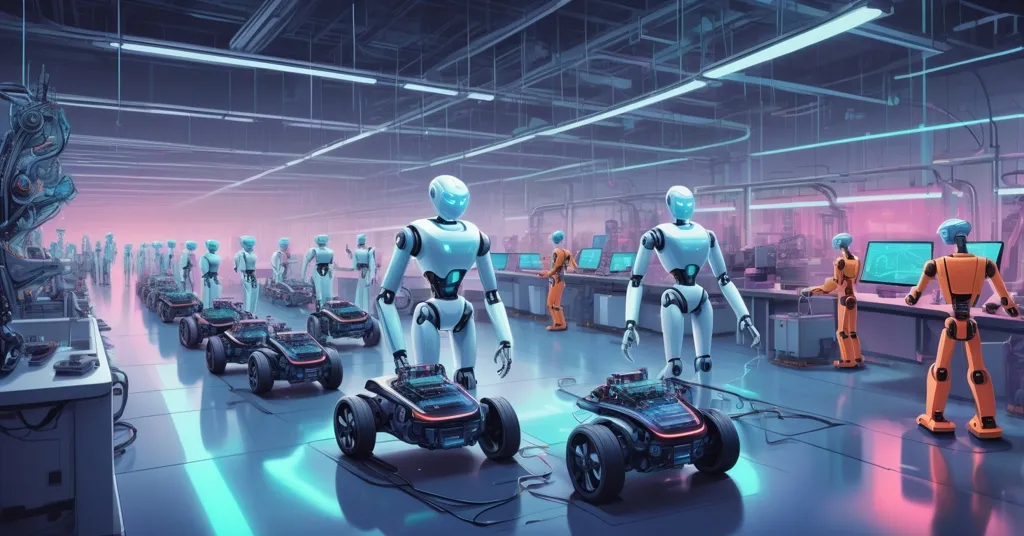
Now for the sci-fi bit: Xiaomi is testing humanoid robots in its EV factories, and the early results are eyebrow-raising. These bots, still in an experimental “intern” phase, can handle 90% of tasks like installing nuts and moving materials, completing them in just three hours during trials. With a factory churning out a new car every 76 seconds, speed is non-negotiable, and Weibing sounded impressed.
“To integrate robots into our production lines, the biggest challenge is for them to keep up with the pace… The two humanoid robots are able to keep up our pace,”
he said. But he tempered expectations with a smirk:
“The robots in our production lines weren’t doing an official job, more like the interns.”
For clarity, humanoid robots aren’t your typical assembly-line arms. They’re built to mimic human movements, making them adaptable to complex, varied tasks that traditional industrial robots fumble. Xiaomi first flexed with its CyberOne robot in 2022, though it’s not yet commercially available. Matching the factory’s breakneck pace is a promising start, as detailed in reports about Xiaomi’s innovative strides in smartphone chips and robotics. But let’s not crown them yet. These are early days—software glitches, hardware breakdowns, or even a single robot tripping up the line could spell chaos. And then there’s the elephant in the room: job displacement. Automation could slash costs and boost output, but at what human cost? Manufacturing jobs are already under pressure globally, and replacing workers with bots could spark backlash. Still, in the spirit of effective accelerationism, pushing tech boundaries fast—even messily—is how progress happens. Xiaomi’s got the guts to try; let’s see if they’ve got the brains to scale it.
Crypto Connection: Could Blockchain Fuel Xiaomi’s Tech Revolution?
For us in the Bitcoin and decentralization camp, Xiaomi’s moves resonate with the ethos of disrupting centralized systems, even if they’re not directly tied to crypto. Their push for vertical integration mirrors Bitcoin’s rejection of financial middlemen—cutting reliance on third-party chipmakers like Qualcomm feels a bit like ditching banks for peer-to-peer transactions. But there’s a deeper angle worth exploring: how could blockchain intersect with Xiaomi’s innovations? Imagine decentralized ledgers securing AI data in EVs, ensuring driver privacy against centralized overreach. Or smart contracts automating factory logistics, with humanoid robots logging maintenance on an immutable chain for transparency. Tokenized supply chains could even track EV parts from factory to road, cutting fraud and inefficiency.
Admittedly, this is speculative—Xiaomi hasn’t whispered a word about blockchain adoption. But the overlap of industrial tech and decentralized systems is a space ripe for disruption. If their AI or robotics pivot to centralized data grabs, it could run counter to the freedom we champion. On the other hand, if they embraced blockchain for transparency or security, it’d be a win for the cause. For now, Xiaomi’s audacity to challenge norms—rushing annual chips, betting on EVs, testing robots—echoes the same rebellious streak that birthed Bitcoin. Disruption often starts with wild bets, just like Satoshi’s genesis block.
Balancing Hype with Hard Truths
Zooming out, Xiaomi’s multi-front assault—custom chips, AI-driven EVs, robotic factories—paints them as a company itching to be more than a smartphone peddler. They’re gunning for Apple and Tesla’s turf, and the ambition is palpable. But let’s cut through the PR gloss. Annual chip releases are a tightrope walk—one rushed dud could tank their reputation faster than a scam ICO. The 2027 Europe EV target hinges on navigating a geopolitical swamp, where Chinese tech often gets the side-eye. And humanoid robots, while flashy, are unproven at scale; they’re more likely to be a headline than a game-changer for now. Optimism is fine, but blind hype is not. Xiaomi’s drive embodies the accelerationist vibe we dig—innovate fast, break things, repeat—but they’ve got to stick the landing, or this is just noise.
Key Takeaways and Questions for Crypto Enthusiasts
- What’s Xiaomi’s strategy with smartphone chips?
Xiaomi plans to release a new processor yearly, starting with a 2023 launch in China, aiming to integrate hardware and software seamlessly, much like Apple, though risks of rushed releases loom large. - How does Xiaomi’s AI and EV plan tie to global expansion?
They’re developing an AI assistant, possibly with Google’s Gemini models, to launch with EVs in Europe by 2027, enhancing user experience but facing geopolitical and privacy hurdles. - What’s the status of humanoid robots in Xiaomi’s factories?
Early trials show robots handling 90% of tasks and matching the factory’s pace of a car every 76 seconds, but they’re still experimental and raise concerns about job displacement. - Could blockchain play a role in Xiaomi’s tech innovations?
Potentially, by securing AI data in EVs or automating factory processes via smart contracts, though Xiaomi hasn’t signaled any crypto integration yet—it’s a speculative but exciting overlap. - What are the biggest risks to Xiaomi’s bold vision?
Rushed chip flops, geopolitical barriers in Europe, privacy issues with AI, and untested robotics tech could derail their timeline, despite the disruptive potential we admire.
As Xiaomi barrels forward, they’re playing a high-stakes game that could either redefine tech or crash spectacularly. For us in the crypto sphere, their hunger to upend norms is a familiar tune—pushing boundaries, even with rough edges, is how revolutions spark. Whether it’s chips outpacing rivals, AI steering EVs, or robots reshaping production, Xiaomi’s journey mirrors the same audacity that drives Bitcoin’s fight against centralized control. It’s not perfect, and it’s not crypto—yet—but disruption this raw demands attention. Keep an eye on them; the ride’s just getting started.