Zcash Price Jumps 74% After SEC Probe Ends, Hits Key $700 Resistance
 LTB
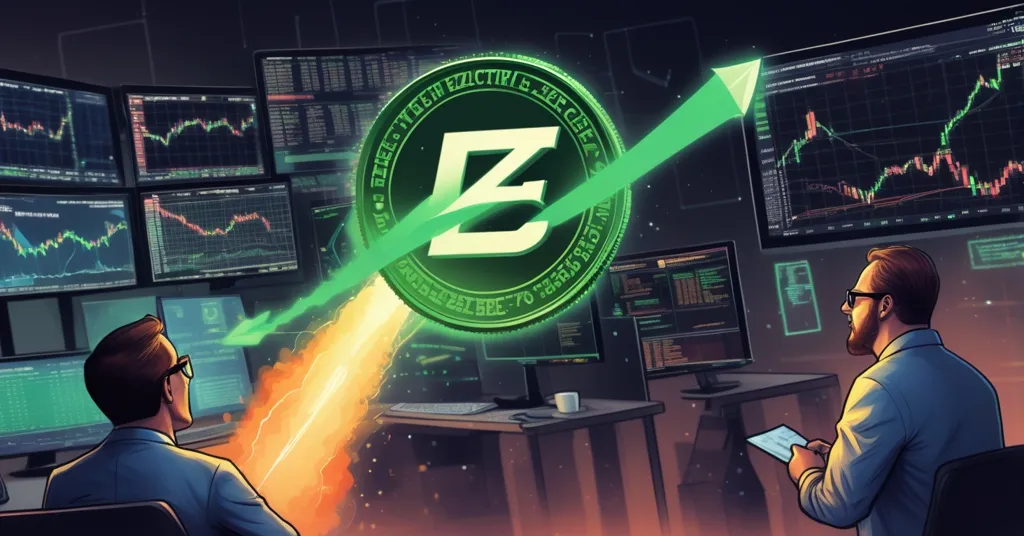
LTB Zcash (ZEC) is ripping higher after a brutal 74% selloff, but the price is now slamming into a major resistance zone that could decide whether this is a genuine trend reversal or just a short-squeeze sugar high with fancy branding.
- ZEC rose 2.67% in one day to around $676.31, outperforming Bitcoin.
- The SEC closed its investigation into the Zcash Foundation with no fines and no penalties.
- Short sellers got wrecked: nearly $26.5 million of the $28.25 million in liquidations came from shorts.
- Major resistance sits near $700–$760, the same area that previously triggered a vicious collapse.
The Zcash price jump is being fueled by a familiar cocktail: regulatory relief, institutional buying, ETF speculation, and a violent short squeeze. That combination can produce real follow-through, but it can also produce an absolute trapdoor if buyers run out of steam. In other words, this is either the beginning of something meaningful, or leverage doing what leverage does best — making everyone feel like a genius right before it humiliates them.
Zcash is one of crypto’s most politically awkward but technically important assets. Its core value proposition is privacy. Unlike transparent blockchains where transaction details are visible by default, Zcash gives users the option to hide transaction data by encrypting it. That matters for people who want financial confidentiality, censorship resistance, or simple personal privacy without broadcasting their entire wallet history to the world like some sort of voluntary surveillance subscription.
The recent move is not happening in a vacuum. The SEC closed its investigation into the Zcash Foundation and did so with no fines and no penalties. That investigation had been hanging over the project since August 2023, so the market clearly treated its closure as a major reduction in regulatory risk. A dark cloud that had hung over the privacy coin since 2023 finally went away.
That matters because regulatory uncertainty is one of the biggest anchors on privacy coins. Even when the technology is solid, the mere whiff of a regulatory headache can keep institutions, exchanges, and cautious investors at arm’s length. So when that overhang disappears, even temporarily, the market tends to react hard.
Grayscale is also trying to convert its Zcash Trust into a spot ETF. For newer readers, a spot ETF is a traditional market product that lets investors gain exposure to an asset without directly holding it themselves. In crypto terms, that can mean easier access for institutions and retail buyers who prefer to use a brokerage account rather than mess around with wallets, keys, and all the other delightful ways people lose money.
The ETF angle has clearly added fuel to the move, but it deserves a reality check. ETF speculation can be powerful, especially for altcoins that have been starved for attention. Still, speculation is not approval, and a filing is not a guarantee of anything except more headlines. Crypto has a long and glamorous history of pricing in dreams before the paperwork is anywhere close to done.
The tape also shows a classic squeeze setup. Open interest jumped 38%, which means traders piled in aggressively with leverage. Nearly $26.5 million of the $28.25 million in liquidations came from short positions. Translation: traders betting against ZEC got forced to buy back their positions as the price moved up, and that panic buying helped push the move even higher. The rally also got an extra push from short sellers getting wiped out.
That is important because a squeeze can look a lot like a breakout while it’s happening. Once the forced buying ends, the market has to prove it can stand on its own. If it can’t, the air comes out fast.
From a technical perspective, the market is now staring straight at a hostile zone. Analyst Crypto Patel says ZEC is entering a high-risk resistance zone near $700. Resistance is a price area where sellers often step in and cap the upside. In plain English, it is where the market has previously said, “Nope, not today.”
That zone matters because it is the same area that previously triggered a massive breakdown. ZEC fell more than 74% from roughly $750 to nearly $185 between November 2025 and February 2026. That kind of rejection leaves a scar. Sellers remember it, trapped longs remember it, and anyone buying there now should remember it too. Markets do not erase bad memories just because the vibe is better this week.
Patel’s invalidation level is a high-timeframe candle close above $760. A candle close simply means the price has to finish above that level on a meaningful chart timeframe, not just poke above it for a few minutes before faceplanting. If ZEC can do that, the bearish case weakens materially. If not, the current move remains vulnerable to a sharp rejection.
The downside map is already clear. Key support zones sit around $350, $200, and $150. Support is the opposite of resistance: it is an area where buyers tend to step in and defend the price. If ZEC gets rejected hard here, those levels become the likely landing pads.
That sets up the core question: is this a dead cat bounce or the start of a trend reversal?
The honest answer is that both outcomes are still on the table. On the bullish side, Zcash has real fundamental tailwinds. Multicoin Capital has confirmed a long-term Zcash position, and Cypherpunk Technologies increased holdings to more than 314,000 ZEC. That does not make ZEC immune to volatility, but it does show that larger investors are willing to back a privacy coin with actual utility rather than just chase the latest shiny nonsense token with a cartoon mascot and a delusion problem.
The Zcash Foundation also reported $36.7 million in cash and crypto in Q1 2026, including more than 85,000 ZEC worth about $21.2 million. That treasury matters because it helps fund development and security work, which are the unsexy but essential parts of keeping a protocol alive. The foundation is still working on Network Upgrade 7 and security fixes, which is exactly the kind of boring engineering work that actually keeps a project from turning into a museum piece.
Zcash also has a few structural advantages worth remembering. It has a fixed 21-million-coin supply, industry-leading privacy technology, and a more compliance-friendly profile than many privacy coins that have been shoved into the regulatory penalty box. Its key difference is the option to hide all transaction details by encrypting them.
Still, the bullish case is not a free pass. Privacy coins live in a rough neighborhood. Exchanges can be cautious, regulators can be hostile, and the market often prefers flashy narratives over actual utility. Zcash may have better fundamentals than many people give it credit for, but fundamentals alone do not protect a chart from getting mauled by resistance.
That is why the current setup is so interesting. If buyers can hold the line, reclaim $700, and eventually break through $760 on a convincing close, the market could start talking seriously about a push toward $900 to $1,000. Crypto Patel says ZEC could reclaim $700 and even attempt another run toward $1,000 if buyers maintain control and ETF speculation intensifies.
But if the market fails here, the bounce starts looking a lot less heroic. The same $700 region already triggered a 74% collapse once before. That kind of overhead supply is no joke. It is the sort of area where traders who bought the top are desperate to get out even, and every rally attempt runs into a wall of old baggage.
That is also why the current ZEC price move is attracting so much attention from both bulls and skeptics. The bulls see regulatory relief, growing institutional interest, and a privacy narrative that still has real relevance in a world increasingly obsessed with tracking, tagging, and monetizing everything that moves. The skeptics see a crowded trade, a violent squeeze, and a price chart running headfirst into the same ceiling that already crushed it once.
Both camps have a point.
Privacy in crypto is not some niche luxury for people doing shady stuff in a basement. It is a core property of money. Not every transaction needs to be a public performance. The ability to choose privacy is part of what makes digital cash meaningfully different from a transparent ledger where every move can be analyzed, profiled, and potentially used against you later. That is why Zcash still matters, even after years of regulatory heat and market indifference.
At the same time, the market is not a morality play. Good tech does not guarantee a good chart. ZEC now has to prove that the move is more than a leverage event with a better PR department. If it clears resistance cleanly, the reversal case gets stronger. If it stalls here, traders will probably learn once again that a sharp bounce is not the same thing as a durable breakout.
What is driving the Zcash price right now?
Regulatory relief from the SEC closing its investigation, Grayscale’s spot ETF push, institutional accumulation, and a short squeeze are all pushing ZEC higher.
Why is the $700–$760 range so important?
It is a major resistance zone where ZEC previously failed hard, leading to a 74% collapse. Breaking it would be a strong sign that buyers are in control.
What does a short squeeze mean?
It happens when traders betting on lower prices are forced to buy back their positions as the price rises, which can accelerate the move higher.
Is Zcash getting a spot ETF?
Not yet. Grayscale is seeking to convert its Zcash Trust into a spot ETF, but that is still a proposal, not a done deal.
What would weaken the bearish case?
A high-timeframe candle close above $760 would invalidate the current resistance-heavy setup and suggest buyers have taken control.
What are the downside levels to watch?
Traders are watching $350, $200, and $150 as key support zones if the rally fails.
Why do privacy coins still matter?
They give users the option to protect transaction details, which supports financial privacy, censorship resistance, and confidential payments.
Does the SEC closure make Zcash “safe”?
No. It removes one major overhang, but ZEC is still a volatile crypto asset facing technical resistance, market leverage, and ongoing regulatory uncertainty across the sector.
“No fines. No penalties.”
“A dark cloud that had hung over the privacy coin since 2023 finally went away.”
“Zcash could reclaim $700 and even attempt another run toward $1,000 if buyers maintain control and ETF speculation intensifies.”
“The same $700 region already triggered a 74% collapse once before.”
“The rally also got an extra push from short sellers getting wiped out.”
“For now, the ZEC price remains at a crossroads between a true reversal and a rally driven mainly by leverage and ETF excitement.”
“Zcash has strong fundamentals: a fixed 21-million-coin supply, industry-leading privacy technology, growing institutional adoption, and a compliance-friendly regulatory profile.”
“Its key difference is the option to hide all transaction details by encrypting them.”