Prediction Markets Surge as Meme Coins Crash: Crypto’s Next Big Bet?
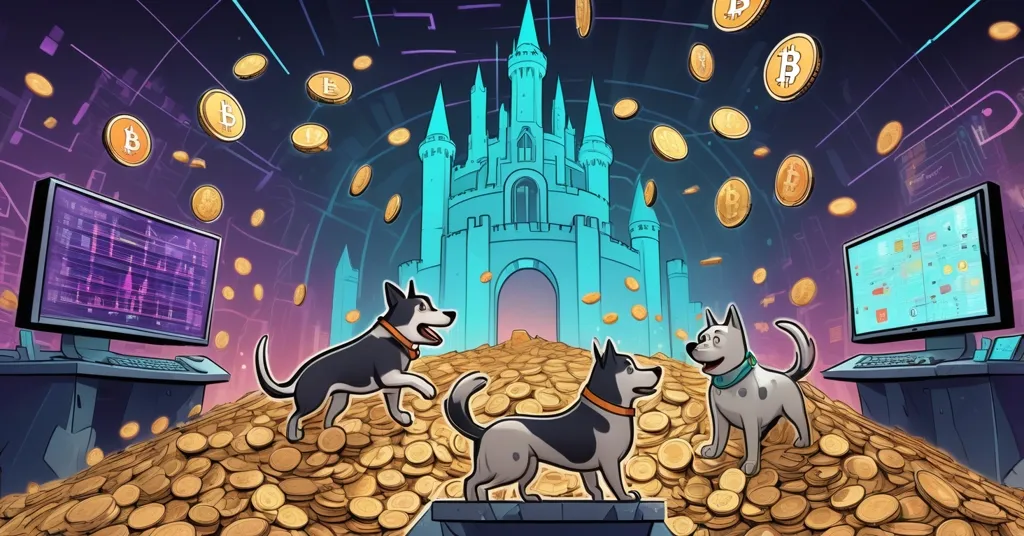
 LTB
LTB Prediction Markets vs Meme Coins: Is This Where Crypto’s Next Alpha Lives?
Speculative capital in the crypto space is a fickle creature, constantly sniffing out the next big score. With meme coins reeling from a spectacular crash, prediction markets are emerging as the shiny new toy for traders chasing outsized returns. But is this shift a sign of market maturity, or just another speculative bubble waiting to burst?
- Meme Coin Meltdown: Market cap crashes from $150B in 2024 to $42B by late 2025, with trading volumes down 85%.
- Prediction Market Boom: Platforms like Kalshi, Polymarket, and Limitless rack up $44B in trading volume in 2025.
- Capital Rotation: Both sectors feed different speculative hungers, hinting at coexistence rather than a zero-sum game.
Meme Coins: From Hype to Hangover
The crypto world has long been a playground for wild bets, and meme coins—those joke tokens turned jackpot dreams like Dogecoin, Shiba Inu, and Pepe—have been the poster children of retail investor madness. Fueled by social media hype and pure FOMO, their collective market cap ballooned from a modest $22 billion at the end of 2023 to a jaw-dropping $150 billion by December 2024. Two major rallies defined this ascent, with a particularly frenzied burst in April-May 2024 as speculative launches flooded the market. Even political-themed tokens cashed in, riding election-year buzz to absurd valuations. Remember Dogecoin’s 2021 pump, catalyzed by a few tweets from Elon Musk? That’s the kind of viral chaos we’re talking about—pure, unadulterated hype with little to no fundamentals.
Fast forward to late 2025, and the party’s crashed harder than a rug-pulled shitcoin. The meme coin market cap has plummeted to under $42 billion, while trading volumes have nosedived by 85% from their peak, according to data from various blockchain trackers. The once-buzzing Discord channels and Reddit threads are now eerily silent. So, what happened? A cooling of trader risk appetite is the obvious culprit, but let’s not sugarcoat it—many of these tokens were scams from the start, with rug pulls and empty promises burning retail investors time and again. Tokens launched on a whim, pumped by influencers, and dumped on unsuspecting bag-holders have left a bitter taste. Are meme coins dead? Hardly. They’re just in hibernation, waiting for the next wave of volatility to wake the degens—those reckless traders chasing quick profits with zero strategy—from their slumber.
Prediction Markets: Betting on Reality
As meme coins lick their wounds, a new speculative darling has stepped into the ring: prediction markets. Platforms like Kalshi, Polymarket, and Limitless are grabbing headlines with a different kind of gamble—structured bets on real-world events. We’re talking about wagering on election results, sports championships, or even quirky outcomes like whether a tech giant will launch a product on time. In 2025, these platforms collectively recorded a staggering $44 billion in trading volume. Kalshi alone hit $1 billion in weekly volume, driven by sports and political contracts, while on-chain prediction market volumes exploded from under $100 million in early 2024 to over $13 billion in 2025—a 130-fold leap, per insights from Keyrock and Dune Analytics. Non-sports markets, spanning economics, politics, and tech events, fueled the lion’s share of this growth. For deeper insights into this trend, check out this analysis on prediction markets versus meme coins.
For the uninitiated, prediction markets work like a stock market for events. Instead of buying shares in companies, you trade “yes” or “no” shares tied to specific outcomes. If a “yes” share for a candidate winning an election trades at $0.70, the market sees a 70% chance of that happening. When the event resolves, settlements are handled by oracles—third-party data sources that confirm real-world results on the blockchain to ensure fairness (or at least try to). This probability-based pricing brings a veneer of logic to crypto speculation, unlike the tweet-driven chaos of meme coins where a billionaire’s musings can 10x or tank a token overnight. Are prediction markets the grown-up version of crypto gambling? Not quite, but they’re certainly a shift from the “moon lambo” fantasies to a more calculated coin flip.
John Wang, head of crypto at Kalshi, captured the parallel between these trends with a sharp observation:
“Prediction markets are ‘the meme coins of 2023’”
Wang, speaking from the helm of a platform riding this wave, suggests both sectors tap into the same trader itch for asymmetric opportunities—those rare bets where a small stake can yield massive rewards. But unlike meme coins, where a lucky punt could theoretically turn $1,000 into a million (before the inevitable crash), prediction market returns are capped by design. You’re not striking it rich betting on a football game, no matter how spot-on your hunch is. Still, their tie to tangible events and a slow drip of regulatory clarity in places like the EU or past U.S. CFTC rulings on platforms like Kalshi are building a sticky user base.
The Dark Side of Prediction Markets
Before we get too starry-eyed, let’s play devil’s advocate. Prediction markets aren’t a flawless utopia of structured speculation. They carry risks that could erode trust faster than a meme coin rug pull. Oracle failures are a glaring concern—what happens if a data feed spits out wrong election results or gets hacked? Users lose money, and faith in the system crumbles. Then there’s the specter of outcome manipulation. Bad actors could rig smaller, niche events for profit, especially in markets with low liquidity. Regulatory pushback is another wildcard—while some jurisdictions are warming to these platforms, others, like the U.S., could clamp down if they’re seen as gambling in disguise. A 2025 crackdown on Kalshi or Polymarket in key markets isn’t far-fetched, and it’d spook users faster than you can say “decentralized.”
Compare that to meme coins, where the dark side is painfully obvious—scams, pump-and-dumps, and zero utility beyond a viral meme. But at least with meme coins, the absurdity is upfront; you know you’re buying a lottery ticket. Prediction markets, with their polished veneer of rationality, might lull traders into a false sense of security. Could they become as scammy as meme coins if hype overtakes utility? Picture a flood of poorly designed contracts or insider trading on obscure events—suddenly, that “structured” bet looks a lot like a rigged casino. Both sectors, for all their differences, remind us that crypto’s Wild West spirit cuts both ways: freedom to innovate, and freedom to get burned.
Capital Rotation or Culture Clash?
So, are prediction markets poised to bury meme coins for good? I’m not buying that narrative. These two arenas aren’t locked in a deathmatch—they cater to distinct appetites. Meme coins thrive on cultural moments, internet virality, and the kind of reckless abandon that only a bull market can sustain. They’re the crypto equivalent of throwing darts blindfolded, and history proves they’ll resurge when risk appetite spikes. Dogecoin will likely claw back into the spotlight, probably alongside some ridiculous new token born from a TikTok trend. Prediction markets, meanwhile, draw a crowd that fancies itself more analytical, betting on probabilities rather than prayers. It’s less “to the moon” and more “what’s the spread?”
This isn’t replacement; it’s rotation. Speculative capital in crypto doesn’t vanish—it just shapeshifts. One day it’s a dog-themed token, the next it’s a wager on a presidential debate. The $44 billion trading volume in prediction markets for 2025, fueled by global events like elections or blockbuster sports seasons, shows how real-world relevance keeps users hooked. Meme coins don’t need such catalysts; they just need a spark of absurdity and a horde of willing degens. As the market matures (messily, mind you), traders are diversifying their risk exposure, and there’s room for both flavors of chaos. Heck, imagine a trader burned by a 2025 meme coin flop pivoting to Polymarket, only to bet on the Super Bowl with the same gambler’s itch. Same thrill, different wrapper.
The Bigger Picture for Crypto
Zooming out, the tug-of-war between meme coins and prediction markets reflects a deeper tension in crypto: speculative excess versus sustainable innovation. Meme coins are the punk-rock rebels, flipping the bird at traditional finance while often fleecing retail investors with empty hype. Prediction markets, for all their structure, aren’t saints either—trust issues and regulatory hurdles could tarnish their shine. Yet both embody the decentralized ethos we stand for: the freedom to speculate, disrupt, and build without a banker or bureaucrat breathing down your neck. As Bitcoin maximalists, we might roll our eyes at the altcoin circus, but let’s not pretend Bitcoin fills every niche. Ethereum’s smart contracts paved the way for much of this experimentation, from meme token launches to on-chain prediction markets. These sideshows, chaotic as they are, push the boundaries of what decentralized finance can be.
This diversity ties into effective accelerationism—the idea that chaotic, rapid experimentation, even if it burns some hands, drives progress faster. Meme coins and prediction markets are messy but necessary labs for financial revolution, testing the limits of human greed and ingenuity on the blockchain. Bitcoin remains the gold standard of decentralized money, a store of value above the speculative fray. But these other plays, whether they’re a dog-themed joke or a bet on an election, remind us why altcoins and niche protocols matter. They fill gaps Bitcoin doesn’t aim to address, and that’s not a bug—it’s a feature of this sprawling, disruptive ecosystem.
What’s Next for Speculative Crypto?
Looking ahead, where does the next alpha hide? It’s not about choosing between meme coins and prediction markets—it’s about tracking how capital flows between these speculative sandboxes. Meme coins are down, not out; expect a resurrection when the market’s mood swings back to reckless abandon, likely tied to some absurd cultural trigger. Prediction markets, meanwhile, are carving a lasting niche, especially if regulatory tailwinds hold and platforms like Kalshi keep tying bets to high-stakes global events. But don’t sleep on other horizons—tokenized real-world assets or AI-driven betting systems could be the next speculative wave, each building on the decentralized rails Bitcoin pioneered.
Before we wrap this deep dive, here are some key questions and takeaways to chew on, with quick answers to frame where crypto speculation might be headed:
- What triggered the meme coin crash in 2025?
A toxic mix of fading hype, an 85% drop in trading volumes, and a market cap collapse from $150 billion to $42 billion, driven by scam fatigue and a pullback in trader risk appetite. - Why are prediction markets surging in the crypto space?
Their $44 billion trading volume in 2025, powered by platforms like Kalshi and Polymarket, ties speculation to real-world events like politics and sports, offering a structured alternative to meme coin madness. - Will prediction markets overtake meme coins for good?
Not likely—meme coins feed on viral cycles and will rebound with the next bull run, while prediction markets attract a different, odds-driven crowd, pointing to coexistence over conquest. - What risks lurk behind prediction markets’ growth?
Oracle failures, outcome manipulation, and regulatory crackdowns could shatter trust, proving that even “rational” crypto bets carry a hefty dose of risk. - How does this trend mirror crypto’s broader evolution?
It signals a maturing market where speculative capital splinters across chaotic meme coins and structured prediction markets, embodying decentralized freedom to experiment, flaws and all.
For now, keep a sharp eye on platforms like Kalshi and Polymarket—they’re proving crypto speculation doesn’t have to be a total circus. But don’t scrub your meme coin watchlist just yet. In this game, change is the only constant, and a healthy dash of absurdity is the spice that keeps it interesting. Where will you place your next bet?