Ukraine Bans Polymarket Over War Bets: Decentralized Freedom or Ethical Overreach?
 LTB
LTB Ukraine Shuts Down Polymarket: Unlicensed Gambling or Decentralized Overreach?
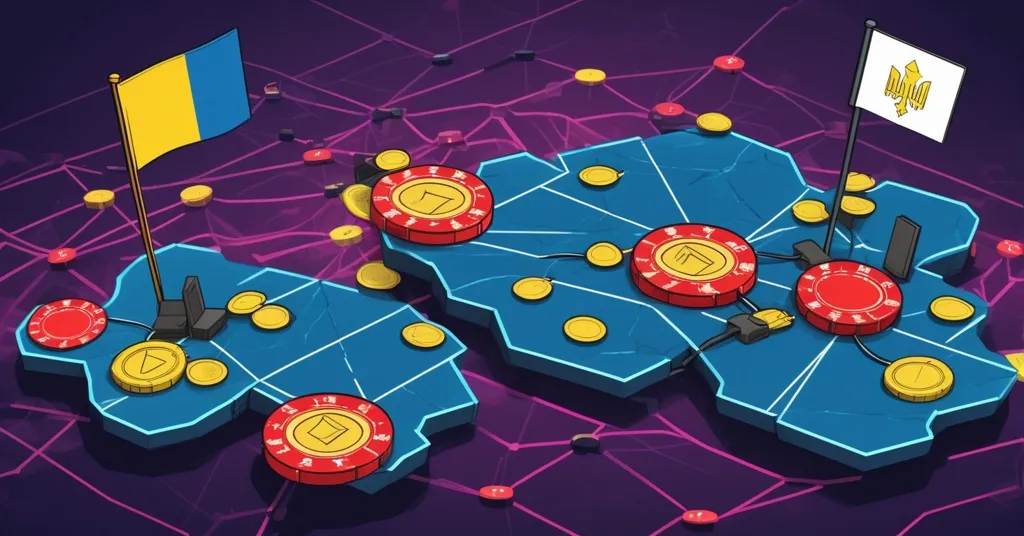
Ukraine has taken a hard stance against Polymarket, a decentralized prediction market platform, banning it for operating as an unlicensed gambling service. The decision, driven by ethical outrage over bets on the Russian-Ukrainian war, ignites a fierce debate about the balance between decentralized freedom and the need for accountability in the blockchain space.
- Ukraine’s Crackdown: NCEC Resolution No. 695 on December 10 bans Polymarket for unlicensed gambling after PlayCity’s review.
- War Betting Fury: Millions wagered on Russian-Ukrainian conflict outcomes, fueling ethical backlash.
- Global Pushback: Romania, France, Thailand, and U.S. state Tennessee also target Polymarket over regulatory concerns.
- Ethical Dilemma: Profiting from tragedy raises questions about the limits of decentralized platforms.
Ukraine’s Ethical Stand: Banning Polymarket
On December 10, Ukraine’s National Commission for State Regulation of Electronic Communications (NCEC) issued Resolution No. 695, formally restricting access to Polymarket after a critical assessment by PlayCity, the state agency overseeing gambling regulations, on November 27. The platform was flagged for operating without a required gambling license under Ukrainian law. But the real firestorm stems from Polymarket’s facilitation of bets on the ongoing Russian-Ukrainian war—a conflict that has ravaged the region since 2014 and intensified since 2022. We’re talking serious money here: in November alone, 97 war-related bets totaled $96.8 million, while December saw over $270 million across 240 completed bets, with another $140 million still active across 120 wagers. These aren’t harmless predictions; they’re wagers on whether cities in Donbas will fall to Russian forces, turning human tragedy into a speculative sideshow. For more details on the ban, check out this report on Ukraine’s action against Polymarket.
Polymarket’s troubles don’t stop at licensing. Reports suggest the platform tapped into the API of DeepState, a Ukrainian open-source intelligence (OSINT) project that tracks war developments, without permission. For the uninitiated, OSINT refers to publicly available data used to analyze real-world events—think crowd-sourced war maps. If true, Polymarket’s unauthorized use of DeepState’s data to fuel betting markets on territorial occupations is a blatant breach of trust, exploiting a community tool for profit. Ukrainian activist and blogger Serhiy Sternenko has also raised alarms about data integrity, pointing to the Institute for the Study of War (ISW), a D.C.-based think tank known for its conflict analysis. He claims ISW may have manipulated war maps to influence betting outcomes, stating:
“At the same time, foreign game enthusiasts are more outraged by data manipulation by map sources, which affects the results of such markets. They accuse ISW of allegedly deliberately introducing a fictitious Russian promotion on the map an hour before the market resolution and are asking for a change in map sources.”
Polymarket’s domain, polymarket.com, now sits on Ukraine’s public registry of blocked resources, though enforcement is patchy at best. Some users still slip through the cracks, a nod to the slippery nature of decentralized tech that laughs in the face of traditional firewalls. This inconsistency underscores the challenge of regulating blockchain-based platforms—bans sound tough on paper, but the internet’s a wild beast.
Global Regulatory Domino Effect on Blockchain Betting
Ukraine isn’t fighting this battle alone. Polymarket faces mounting scrutiny worldwide as regulators grapple with the blurry line between prediction markets and outright gambling. Romania blacklisted the platform for processing over $600 million in bets on local elections—an astronomical figure for what many see as a digital casino dressed up as “crowd wisdom.” France, Belgium, Poland, Singapore, and Thailand have similarly barred access, citing unlicensed gambling operations. Even in the U.S., where Polymarket recently gained federal approval to operate under oversight from the Commodity Futures Trading Commission (CFTC), state-level regulators are swinging hammers. Tennessee’s Sports Wagering Council ordered Polymarket, alongside prediction platform Kalshi and crypto heavyweight Crypto.com, to cease operations by January 31 for violating state gambling laws. Failure to comply could trigger fines of $25,000 per infraction and even felony charges—a stark reminder that the libertarian dream of borderless markets doesn’t mesh with local rulebooks.
This fragmented response highlights a deeper issue for blockchain betting platforms: the regulatory patchwork. Federally, the U.S. CFTC views Polymarket as a legitimate market for event contracts under strict conditions, a win for decentralized innovation. Yet states like Tennessee see it as gambling, plain and simple, reflecting a broader tension in crypto’s legal landscape. How do you govern a system designed to evade centralized control? It’s a question Bitcoin faced in its early days with debacles like Silk Road, and now Polymarket’s walking the same tightrope.
Polymarket’s Decentralized Dilemma: Innovation or Exploitation?
For those new to the space, let’s break down what Polymarket is. It’s a decentralized prediction market built on blockchain technology, often using cryptocurrency for transactions. Unlike traditional betting sites, it’s powered by smart contracts—self-executing agreements coded on a blockchain that handle bets automatically without a middleman. Users wager on real-world outcomes, from election results to, controversially, war events. The appeal is clear: it’s a pure expression of decentralization, flipping the bird to overreaching governments and corporate gatekeepers. But the reality? It’s a gray zone, often indistinguishable from gambling, especially when it treads into morally bankrupt territory like betting on whether a Ukrainian city survives another day.
The ethical swamp here is impossible to ignore. Profiting off predictions about territorial losses in an active warzone isn’t just distasteful—it’s a profound violation for a country in crisis. Add to that Sternenko’s claims of ISW map tampering, and you’ve got a trust crisis. If the data feeding these markets is skewed, the whole system collapses like a house of cards. Blockchain promises transparency, but if the inputs are garbage, the output’s just polished trash. This isn’t just Polymarket’s problem—it’s a black eye for the broader promise of decentralized tech. How can we champion systems that disrupt the status quo if they’re undermining basic human decency?
Let’s flip the script for a moment and play devil’s advocate. Isn’t Polymarket just a neutral tool? No one’s forced to bet on war outcomes—users opt in. And historically, prediction markets have value. Take the Iowa Electronic Markets, launched in 1988, which has often outperformed polls in forecasting U.S. elections through crowd-sourced bets. Couldn’t Polymarket, in less fraught arenas like economic trends or policy outcomes, aggregate insights better than any analyst? Possibly. But when the stakes are human lives, that argument feels like a hollow tech-bro dodge. Freedom’s great until it’s freedom to exploit suffering.
Lessons from Bitcoin and the Future of Prediction Markets
As a Bitcoin maximalist, I’m all for systems that yank power from centralized hands—be it governments or banks—and return it to the people. Bitcoin’s ethos is financial sovereignty, a rock-solid foundation for a new monetary system. Polymarket, powered by blockchain, embodies a similar rebellious spirit, carving out a niche Bitcoin doesn’t touch. But unlike Bitcoin’s focus on sound money, Polymarket risks turning decentralization into a carnival of cheap thrills. Early Bitcoin faced its own regulatory gauntlet—think Silk Road and the wild west of 2011—yet emerged stronger by proving its utility. Can Polymarket do the same, or is it doomed to be a cautionary tale?
The broader clash here is freedom versus accountability. I’m a fan of effective accelerationism—pushing tech forward, consequences be damned—but even I’ll admit some guardrails might be needed before the whole ship sinks. Self-regulation in decentralized platforms sounds utopian, but when profit motives clash with ethics, as with war bets, it often fails. Could the crypto community set ethical standards, like blacklisting certain topics for betting? Or use blockchain itself to verify data sources transparently, preventing manipulation like the alleged ISW map tweaks? These aren’t perfect fixes, but they’re a start. Without them, government crackdowns—clumsy as they are—become inevitable.
Zooming out, Polymarket’s woes reflect the growing pains of crypto as it barrels toward mainstream adoption. Why do users even bet on war outcomes—pure greed, morbid curiosity, or something deeper? It’s a human element we can’t ignore. And what of the data integrity issue? If ISW or other sources are gaming maps, it’s not just Polymarket’s credibility at stake—it’s the public’s trust in conflict reporting. Ukraine’s ban, though imperfectly enforced, sends a clear signal: even in the borderless realm of blockchain, there are lines you cross at your peril. Decentralization doesn’t mean zero accountability. We can champion freedom, privacy, and disruption, but not at the cost of turning tragedy into a betting line. If prediction markets are to survive, they must prove they’re more than digital casinos with slick PR.
Key Questions and Takeaways on Polymarket and Crypto Ethics
- Why did Ukraine ban Polymarket, and does the decision hold weight?
Ukraine banned Polymarket on December 10 through NCEC Resolution No. 695 for unlicensed gambling, driven by outrage over $270 million in bets on the Russian-Ukrainian war. Given the ethical horror of profiting from conflict, the move seems justified, though it risks stifling decentralized innovation. - How does Polymarket’s model blur the line between prediction and gambling in crypto?
Built on blockchain with smart contracts, Polymarket lets users bet on real-world events using crypto, masking speculation as insight. Global bans from Ukraine to Tennessee show regulators view it as gambling, threatening crypto’s broader legitimacy. - Can decentralized platforms like Polymarket avoid government oversight through self-regulation?
Self-regulation is the ideal for blockchain platforms, but it often fails when profits override ethics, as seen with war betting. Without industry standards, heavy-handed government bans may persist, challenging the freedom crypto stands for. - What do data manipulation claims mean for trust in blockchain prediction markets?
Allegations of map tampering by sources like ISW suggest Polymarket’s betting data could be rigged, eroding trust in prediction markets. Blockchain’s transparency is meaningless if inputs are flawed, posing a risk to the tech’s reputation. - How does Polymarket’s controversy tie into Bitcoin’s ethos and crypto’s future?
This mess mirrors crypto’s core struggle: freedom versus accountability. While Bitcoin pushes financial sovereignty, Polymarket tests decentralization’s limits by monetizing tragedy, risking public backlash that could hinder the entire space’s adoption.