Wall Street Eyes Prediction Markets: 43% See Potential, Liquidity Remains Key Barrier
 LTB
LTB Wall Street Bets on Prediction Markets: 43% See Value, But Liquidity Holds the Key
Prediction markets are stepping out of the academic shadows and into Wall Street’s spotlight as potential tools for institutional trading. A recent flash survey by Crisil Coalition Greenwich found that 43% of market structure specialists believe these platforms could bring significant value, but there’s a massive hurdle: liquidity and trading depth need a serious upgrade to make them viable.
- Survey Results: 43% of Wall Street pros see potential in prediction markets, 36% are neutral, and 19% raise concerns over gambling risks.
- Liquidity Challenge: Low trading volumes and wide spreads hinder effective price discovery.
- Future Growth: 75% anticipate new speculative opportunities within a year, with major financial players already engaging.
Wall Street’s Verdict: Hopeful But Hesitant
For those new to the concept, prediction markets are platforms where traders buy and sell contracts tied to the outcomes of real-world events. These can range from economic indicators like Federal Reserve interest rate decisions or inflation data (think Consumer Price Index reports) to geopolitical developments such as election results or international conflicts. The underlying idea is to tap into collective wisdom—crowd-sourced forecasting often beats traditional polls or expert predictions. It’s like a group of buddies pooling their guesses on a game’s score; together, they’re often closer to the mark than any single person. These markets started as experiments, with the Iowa Electronic Markets launching in 1988 at the University of Iowa to predict political elections. Now, modern platforms like Kalshi and Polymarket offer 24/7 trading on a dizzying array of events, from unemployment stats to gas prices.
The Crisil Coalition Greenwich survey polled 53 U.S.-based Wall Street experts—decision-makers from buy-side firms, sell-side banks, exchanges, fintech companies, and brokerages who shape how trading infrastructure evolves. Their take? A cautious nod of approval. That 43% who see value aren’t just theorizing; they envision prediction markets as novel speculative instruments and alternative data sources for institutional trading. Picture leveraging crowd-driven odds to hedge against an unexpected economic shift or to gauge sentiment on a Fed policy change. It’s not a pipe dream—60% of respondents see these markets as a new data pool for speculation, while 43% believe they could redefine hedging strategies. Looking two years out, 56% expect the data to be “somewhat valuable” alongside existing feeds, with 17% calling it “very valuable” for unique, forward-looking insights.
Liquidity: The Giant Roadblock
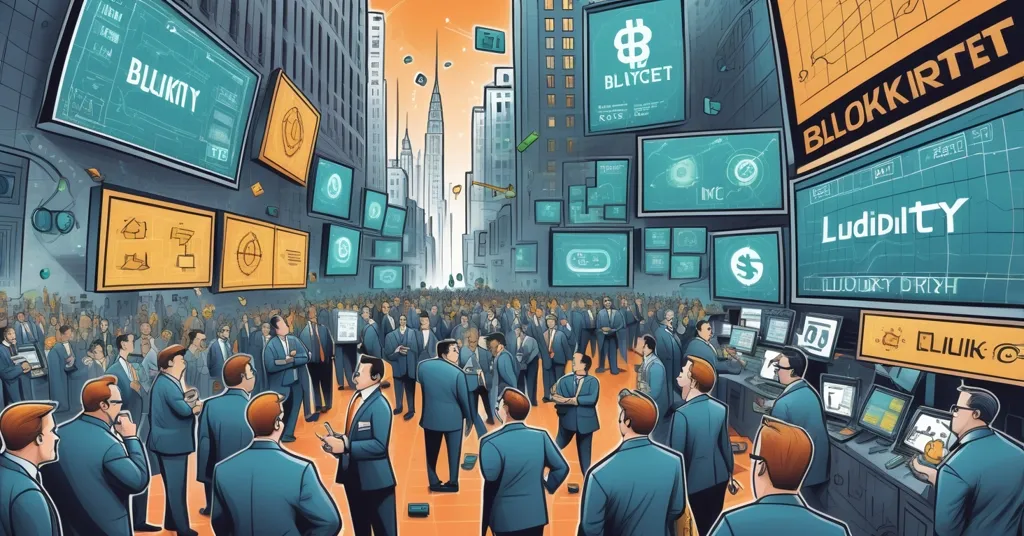
Now, let’s cut through the fluff: liquidity is the glaring flaw holding prediction markets back. Low trading volumes create thin markets with wide bid-ask spreads—that’s the gap between what buyers are willing to pay and what sellers demand, making trades costly and inefficient. This screws up price discovery, the process of determining a contract’s fair value through supply and demand. For big institutional players, this is a non-starter. Drop a sizable trade in a shallow market, and you’ll see prices swing like a pendulum—hardly the stability Wall Street craves. It’s like trying to sail a yacht in a kiddie pool; the setup just doesn’t hold water. The surveyed specialists pinpointed this as the top barrier. Until platforms like Kalshi and Polymarket attract enough participants to tighten those spreads, they’re relegated to a sandbox for small-time speculators.
Consider a real example: in 2022, Polymarket faced erratic price movements on contracts tied to U.S. midterm election outcomes. A handful of large bets in a low-volume market skewed the odds, eroding trust in the forecast. This isn’t a minor glitch; it’s a fundamental issue that demands mass participation to resolve. Without deeper liquidity pools, the big sharks of finance will keep swimming elsewhere.
Gambling Risks and Regulatory Uncertainty
Not everyone on Wall Street is ready to roll the dice. A significant 19% of surveyed pros are waving warning flags, concerned that prediction markets could devolve into glorified gambling hubs. Let’s not sugarcoat it—wagering on whether the next jobs report tanks or spikes isn’t far from spinning a roulette wheel if the stakes aren’t controlled. This worry has legs, especially for retail traders already hooked on volatile meme stocks or high-risk options trades. They could easily get sucked into a spiral of event-based betting as the next thrill. History offers parallels: early online sports betting platforms in the 2000s battled similar stigmas, with some collapsing under regulatory pressure or user overexposure. Prediction markets could stumble into the same trap without safeguards like betting limits or robust user education.
Then there’s the looming shadow of regulation. The Securities and Exchange Commission (SEC) and Commodity Futures Trading Commission (CFTC) haven’t fully weighed in, but if these markets start resembling casinos, expect swift action. Could certain contracts be classified as derivatives, triggering heavy oversight? Might retail access face outright bans? These aren’t idle musings—Wall Street’s split sentiment, with 36% staying neutral due to the market’s immaturity, mirrors this uncertainty. For every specialist excited about alternative data for hedging, another fears systemic risk if speculative bubbles inflate unchecked.
Prediction Markets and the Blockchain Connection
Let’s pivot to a space we’re passionate about: blockchain and crypto. While the survey doesn’t directly address decentralized tech, platforms like Polymarket are built on blockchain infrastructure—specifically Polygon, a layer-2 scaling solution for Ethereum. They leverage smart contracts, which are self-executing agreements coded into the blockchain that automate trades without intermediaries, ensuring transparency and slashing counterparty risk (the chance the other party flakes on a deal). This is pure catnip for decentralization advocates. Blockchain-based prediction markets sync perfectly with the ethos of decentralized finance (DeFi), pushing trustless systems even if they don’t revolve around Bitcoin itself.
As someone who leans Bitcoin maximalist, I’ll admit a begrudging respect here. Sure, Bitcoin is king, but Ethereum and other protocols fill niches BTC doesn’t touch—like powering complex applications such as prediction markets. Polymarket users trade with crypto, often stablecoins like USDC, and payouts happen instantly via smart contracts. Yes, transaction fees (known as gas costs) on Ethereum can bite, and scalability remains a pain point, but the immutability and openness are game-changers. Imagine if these platforms used Bitcoin as a settlement layer for final payouts—that’d be a disruption worth cheering. If we’re committed to effective accelerationism (e/acc), we’ve got to support these experiments, warts and all, as steps toward dismantling outdated financial structures.
Major Players and Future Prospects
Despite the obstacles, the heavyweights are taking notice. Leading exchanges like the Chicago Mercantile Exchange (CME), Chicago Board Options Exchange (Cboe), and Intercontinental Exchange (ICE) aren’t just observing—ICE has already invested in Polymarket, a strong signal of institutional confidence. Brokerages such as Interactive Brokers and Robinhood (you know, the app that turned trading into a dopamine hit for millions) are also easing access for their users. This isn’t a fringe fad; it’s gathering steam. A whopping 75% of surveyed specialists expect prediction markets to unlock new speculative opportunities on financial events within the next 12 months. That’s not a far-off fantasy; it’s practically tomorrow.
Stepping back, prediction markets stand apart from traditional assets like stocks, which are tied to company fundamentals. These are pure event-driven speculation, carving out a unique niche but hauling unique risks—like overbetting on shaky forecasts. Over a two-year horizon, just 19% of pros think they’ll remain a side show, and a mere 4% see no value at all. Yet those skeptics remind us the hype isn’t universal. Could these platforms become echo chambers fueling irrational bubbles? And what if they started forecasting crypto milestones, like the odds of a Bitcoin ETF approval—would the data hold up under scrutiny? These are meaty questions for the road ahead.
Critical Optimism for a Decentralized Future
As advocates for decentralization, privacy, and shaking up the status quo, we should root for prediction markets—but with a sharp, critical eye. They’re a proving ground for disrupting centralized forecasting, from government stats to analyst proclamations, echoing Bitcoin’s rebellious spirit even if indirectly. Yet promise doesn’t equal delivery. Without liquidity, they’re a flashy distraction, not a functional tool. Without boundaries, they risk turning traders into reckless punters. We’re all for accelerating innovation, but not at the cost of integrity. So let’s monitor their rise, call out the flaws, and push for smarter, freer financial systems.
Key Takeaways and Questions
- What’s Wall Street’s current sentiment on prediction markets?
It’s mixed but leans positive—43% see value for institutional trading, 36% remain neutral due to the market’s early stage, and 19% are wary of gambling-like behavior. - Why is liquidity such a critical issue for prediction markets?
Thin trading volumes lead to wide bid-ask spreads, distorting price discovery and making it risky for large investors to participate without skewing the market. - How do prediction markets relate to blockchain and cryptocurrency?
Platforms like Polymarket use blockchain for transparent, automated trades via smart contracts, fitting into DeFi’s vision of trustless financial systems. - What’s the short-term outlook for prediction markets in finance?
Within 12 months, 75% of experts predict new speculative opportunities, pointing to rapid integration into mainstream trading strategies. - Are gambling concerns a legitimate threat?
Yes—19% of specialists highlight this risk, and without proper oversight or education, retail traders could treat these markets as high-stakes lotteries. - How can blockchain enhance prediction markets?
Blockchain ensures transparency and eliminates intermediaries through smart contracts, though challenges like transaction fees and scalability persist.