Iran’s Power Plant Threat: Could Geopolitical Chaos Fuel Bitcoin Adoption?
 LTB
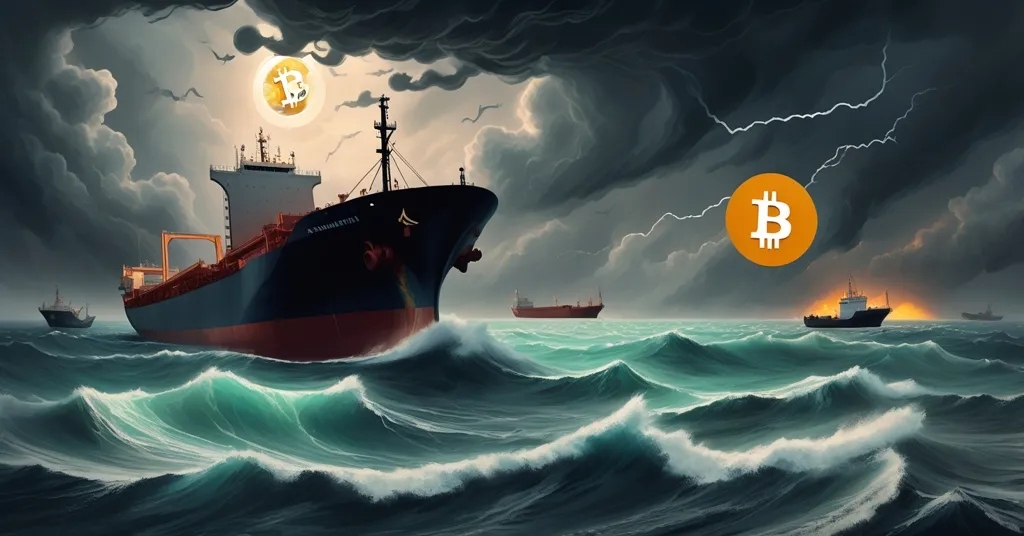
LTB Iran’s Power Plant Crisis and the Crypto Connection: Could Geopolitical Firestorms Ignite Bitcoin Adoption?
Tensions in the Middle East have exploded into a dangerous standoff, with Iran facing a 48-hour ultimatum from U.S. President Donald Trump to reopen the Strait of Hormuz or risk devastating strikes on its power plants. As global oil markets teeter on the brink and retaliatory threats fly between Iran, the U.S., and Israel, the chaos begs a question for us in the crypto space: could this geopolitical mess fuel Bitcoin’s rise as a lifeline—or expose its limits—in regions choked by conflict and sanctions?
- Conflict Flashpoint: Trump’s threat to hit Iran’s power plants escalates tensions, with Iran vowing to strike U.S. and Israeli infrastructure if attacked.
- Economic Stakes: Restrictions on the Strait of Hormuz, a vital passage for 20% of global oil trade, could spike energy prices and shake markets, potentially driving safe-haven demand for Bitcoin.
- Crypto Angle: Iran’s economic isolation might push Bitcoin adoption for bypassing sanctions, while blockchain tech offers speculative solutions for trade and aid in conflict zones.
Geopolitical Firestorm: Iran’s Strait Standoff
The fuse was lit when Trump issued a blunt 48-hour warning to Iran: reopen the Strait of Hormuz or face targeted strikes on its power plants. This narrow sea passage near Iran isn’t just a waterway—it’s an economic artery handling roughly a fifth of the world’s oil trade, making any disruption a global gut punch. Iran has restricted access, allowing passage only under tight security measures and reportedly slapping an unconfirmed $2 million fee on vessels. This isn’t a game; it’s a calculated power play amid years of U.S. sanctions that have crippled Iran’s economy since the 1979 revolution and intensified after the 2018 scrapping of the nuclear deal.
Iran’s military isn’t blinking. A spokesperson from Khatam al-Anbiya laid out a brutal tit-for-tat plan if non-military targets like energy infrastructure are hit. For more on Iran’s stance, see the detailed report on Iran’s response to Trump’s threats.
“Should Iran’s fuel and energy infrastructure be hit, all energy, information technology, and water desalination facilities in the region belonging to the US and the [Israeli] regime will be targeted,” the spokesperson declared.
Ali Mousavi, Iran’s representative to the International Maritime Organization, nodded to diplomacy but insisted on a “complete halt in aggression” as a prerequisite. Senior parliament member Alaeddin Boroujerdi confirmed a “new regime” in the waterway, hinting at Iran’s intent to use access as leverage. Defense ministry spokesperson Reza Talaei-Nik doubled down, pushing for sustained conflict until the “enemy fully surrenders” and framing defense as the foundation of any decent life in Iran.
Israel, caught in the crossfire, is taking heavy hits. Two Iranian missile strikes in southern Israel injured over 120 people, 11 seriously, with one strike unnervingly close to a nuclear research center. Israel’s military chief warned the conflict is only at its “halfway point,” signaling weeks more of violence, while Defense Minister Israel Katz gears up for intensified attacks. The body count and escalating rhetoric paint a region on the razor’s edge.
Diplomacy offers a faint glimmer, though it’s more mirage than oasis. The Trump administration is floating peace talks through envoys like Jared Kushner and Steve Witkoff, using backchannels via Egypt, Qatar, and the U.K. But the U.S. demands are a non-starter for Tehran: halt missile programs for five years, end uranium enrichment, dismantle nuclear sites like Natanz and Fordow, accept invasive monitoring, and cut funding to proxy groups like Hezbollah, Houthis, and Hamas. Iran counters with demands for a ceasefire, guarantees against renewed conflict, and compensation. A U.S. official smirked, “Our view is we’ve stunted Iran’s growth,” but forcing a deal with a nation this cornered is like teaching a tiger to fetch—good luck.
Crypto as Iran’s Backdoor: Adoption Under Siege
Now let’s zero in on why this chaos matters to us. Iran’s economy has been battered by sanctions for decades, with its currency, the rial, often in freefall—think hyperinflation so bad that a loaf of bread costs a fortune overnight. Bitcoin has already carved a niche here as a way to sidestep traditional finance. Unlike bank transfers tied to SWIFT (a global payment system often blocked for sanctioned countries), Bitcoin lets users send value peer-to-peer over the internet, no middleman required. For ordinary Iranians, it’s a way to buy goods online or preserve savings when the rial tanks. For the state, it’s a potential workaround to move funds under the radar.
Iran’s dalliance with crypto isn’t new. The country has turned to Bitcoin mining—using powerful computers to validate transactions and earn BTC as a reward—to generate revenue. With subsidized electricity (some of the cheapest in the world), mining farms have sprouted up, reportedly raking in millions annually according to past estimates. But it’s a messy affair. The government has flip-flopped on crypto legality faster than a memecoin’s price chart, banning private mining during power shortages while allegedly running state-controlled operations. During peak summer heat, when blackouts hit, officials blamed miners for overloading the grid—yet some whisper these same officials profit off the rigs. It’s a contradiction that shows just how desperate, and duplicitous, the situation can be.
With the Strait of Hormuz crisis threatening oil exports—Iran’s economic lifeline—the push toward crypto could intensify. If oil revenues dry up, mining or direct Bitcoin use might become a bigger crutch. Picture a small Iranian business, cut off from global trade, using BTC to pay suppliers abroad. Or citizens hoarding it as a hedge against the next currency crash. But let’s not romanticize this. Bitcoin’s volatility can wipe out savings in a day, and Iran’s shoddy internet and tech infrastructure make reliable access a gamble. Plus, the regime could clamp down hard if it smells uncontrolled financial freedom—past crackdowns on exchanges and wallets prove they’re not above playing whack-a-mole with decentralization.
Blockchain’s Speculative Role in Conflict Zones
Beyond Bitcoin, blockchain—the underlying tech of tamper-proof digital ledgers—could offer practical fixes in this mess. Think humanitarian aid: conflict zones like Iran or neighboring war-torn areas often see aid money vanish into corrupt pockets. Blockchain’s transparency could track every dollar (or crypto token) from donor to recipient, ensuring it doesn’t line a warlord’s wallet. The World Food Programme has already piloted Ethereum-based systems for refugee aid in Jordan, cutting fraud and costs. Why not scale that to Iran if sanctions ease or conflict surges?
Then there’s energy trade. With the Strait of Hormuz under siege, oil and gas deals face political chokeholds. Blockchain-based smart contracts—self-executing agreements coded to trigger payments or actions when conditions are met—could secure trades outside traditional systems. Imagine Iran selling oil to a buyer via a smart contract: once delivery is verified, payment in a stablecoin (a crypto pegged to, say, the dollar for less volatility) releases automatically, no banks or geopolitics needed. It’s a pipe dream for now—legal and tech barriers are massive—but it hints at how decentralization could bypass broken infrastructure.
Of course, there’s a dark underbelly. Iran’s government, or rogue actors, could exploit crypto for illicit funding—think arming proxies or dodging sanctions on a grand scale. This isn’t hypothetical; U.S. reports have flagged Iranian Bitcoin mining as a potential revenue source for military ops, drawing scrutiny. If that scales, expect global regulators to crack the whip harder, maybe pushing stricter rules like the FATF’s travel rule (forcing crypto platforms to share user data). That screws legit users worldwide, not just shady ones. Blockchain’s promise isn’t a free pass—it’s a tightrope.
Global Fallout: Bitcoin as Safe Haven?
Zooming out, Middle East instability often ripples through global markets. A prolonged Strait of Hormuz closure could jack up oil prices—some analysts peg a full shutdown as adding $50 or more per barrel overnight. That squeezes economies, fuels inflation, and spooks investors. Historically, chaos like the 2019 U.S.-Iran flare-up (think drone strikes and tanker attacks) saw Bitcoin spike as a safe-haven asset, much like gold, with prices jumping over 20% in weeks as uncertainty reigned. If this crisis drags, we might see similar flight to BTC among investors hedging against market mayhem.
But let’s keep it real: Bitcoin isn’t gold 2.0 yet. Its wild price swings—dropping 30% in a month isn’t rare—can scare off risk-averse folks who’d rather stash cash in bullion or bonds. And unlike gold, you can’t hold Bitcoin in your hand if the internet goes down, a real concern in a warzone where power plants are literal targets. Plus, don’t fall for grifters hawking “war-driven Bitcoin pumps” or fake investment schemes tied to this crisis—claims of BTC hitting $100K by Christmas on Middle East drama are pure nonsense. We’re not here to peddle fantasies; we’re here to dissect utility.
As Bitcoin maximalists, we’d argue BTC remains the ultimate censorship-resistant money, perfect for places like Iran where centralized finance is a stranglehold. No government can freeze your wallet if you hold your keys. But we’re not blind—other blockchains have their place. Ethereum’s DeFi protocols (think decentralized banks for lending or borrowing without a building) or stablecoins like USDT offer tools for smoother transactions that Bitcoin wasn’t built to handle. This ecosystem diversity is messy, often scam-ridden, but it’s a strength in chaotic contexts. Iran’s crisis could test which flavor of decentralization—if any—wins out.
Key Questions on Geopolitical Tensions and Crypto’s Role
- How might Iran’s clash with the U.S. turbocharge Bitcoin adoption?
With oil exports at risk and sanctions tightening, Iranians could flock to Bitcoin for cross-border payments or wealth preservation, mirroring past crises where the rial collapsed. - What dangers lurk for crypto in conflict zones like Iran?
Bitcoin offers a financial escape, but state crackdowns, shaky infrastructure, and potential illicit use by regimes could trigger global regulatory backlash, impacting even honest users. - Can blockchain solve real problems amid Middle East turmoil?
Blockchain’s transparent ledgers could track aid or secure energy trades, as seen in small pilots elsewhere, but tech barriers and misuse risks mean it’s far from a cure-all. - Is Bitcoin the sole answer, or do other blockchains matter here?
Bitcoin shines as un-censorable money for sanctioned regions, yet Ethereum’s DeFi tools and stablecoins provide practical options for lending or stable transactions in volatile economies.
So, while missiles and ultimatums dominate the news, a quieter battle brews in the financial shadows. Every time centralized systems—be it oil trade, banking, or politics—buckle under conflict, the case for decentralization screams louder. Iran’s standoff isn’t just a war of weapons; it’s a potential crucible for Bitcoin and blockchain to prove their worth. Yet the path is littered with traps—volatility, repression, and regulatory blowback could derail the dream. Bitcoin might be freedom’s currency, but can it thrive in a warzone without becoming a weapon itself? Chew on that as this crisis unfolds.