Bitcoin Whale Dumps 1,102 BTC on Binance, Takes $55M Loss in Brutal Capitulation
 LTB
LTB Bitcoin Whale Capitulates: 1,102 BTC Dumped on Binance Signals $55 Million Loss
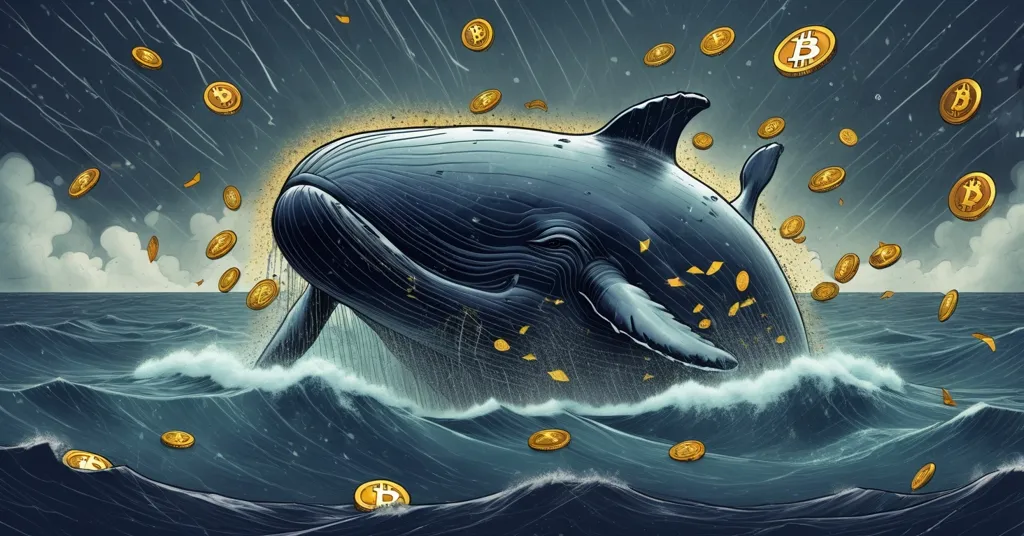
A Bitcoin whale has waved the white flag, transferring a hefty 1,102 BTC to Binance in what looks like a full-blown capitulation after enduring months of punishing losses. Bought at an average of $117,770 per coin for a total of $129 million, the current value of this stash sits just above $74 million—a staggering $55 million down the drain. This move has the crypto community buzzing about market sentiment and the brutal reality of holding through volatility.
- Massive Hit: 1,102 BTC bought for $129 million, now worth just over $74 million, a $55 million loss.
- Binance Move: Transfer signals likely intent to sell after holding past a peak price.
- Market Warning? Large exchange inflows from long-term holders often spook investors.
The Whale’s Costly Misstep
Back in July 2025, during a surge of market optimism following a four-month Bitcoin price rally, this whale made a bold play, snapping up 1,102 BTC at $117,770 each. That’s a $129 million bet on the world’s leading cryptocurrency, often hailed as digital gold by its fiercest advocates. The timing seemed right—sentiment was bullish, possibly driven by institutional inflows, geopolitical unrest pushing demand for decentralized assets, or regulatory breakthroughs we can only speculate on. Bitcoin was soaring, and this whale was all in.
By October 2025, Bitcoin hit a jaw-dropping all-time high above $126,000. At that point, selling would’ve netted a profit of roughly $9 million (1,102 BTC x ($126,000 – $117,770)). But the whale held firm. Was it the “HODL” ethos—born from a 2013 forum typo meaning “Hold On for Dear Life”—urging them to cling on for bigger gains? Or just plain greed? Whatever the reason, it’s a choice many Bitcoin maximalists might nod to, rooted in the conviction that BTC’s value will skyrocket over time. Yet, markets don’t reward blind faith, and Bitcoin’s notorious volatility soon showed its teeth.
Fast forward to now, and Bitcoin’s price has plummeted to around $67,000. That 1,102 BTC stash, once a $129 million dream, is worth a mere $74 million—a gut-punch loss of $55.7 million to be exact (1,102 x ($117,770 – $67,000)). After months of watching their portfolio bleed out, the whale moved their entire holdings to Binance, one of the largest crypto exchanges globally, as reported in this detailed account of a Bitcoin whale’s massive transfer. For those new to the space, moving coins to an exchange like Binance usually means a sale is imminent, unlike storing them in a private wallet for long-term safekeeping. This isn’t pocket change; it’s a transaction tracked by on-chain analytics tools that monitor blockchain activity, sending shockwaves through the market.
Market Ripples: Bearish Omen or Hidden Opportunity?
What does a move like this mean for Bitcoin and the broader crypto market? When long-term holders—often called “whales” for their outsized holdings—dump large amounts onto exchanges, it’s typically seen as a bearish signal. The logic is simple: flooding the market with supply can drive prices down, especially if retail investors, already nervous in a downturn, interpret it as a cue to sell. These exchange inflows are like a dark cloud over market sentiment, hinting at potential further declines.
But let me throw a curveball here. Could this whale’s capitulation—where even the staunchest holders give up and sell at a loss—actually signal a local bottom? Think of it like a boxer throwing in the towel after a brutal fight; it often marks the peak of despair, where pessimism maxes out. Savvy investors might see this as a buying opportunity, stepping in to scoop up BTC at a discount. Of course, there’s no crystal ball in crypto. Bitcoin’s price swings are driven by a chaotic mix of factors, from macroeconomic shifts like interest rate hikes to random social media hype. One whale dumping doesn’t set the market’s course, but it sure stokes the flames of uncertainty.
Let’s add some historical context. We’ve seen whale sell-offs before, like during the 2018 bear market or the 2021 correction after Bitcoin’s $69,000 peak. Often, these moves preceded further drops as panic spread. Yet, in some cases, they coincided with reversals, as bargain hunters jumped in. Without broader on-chain data—like whether other whales are following suit or if Binance inflows spiked unusually—we’re left guessing. What we do know is that Bitcoin’s price drop from $126,000 to $67,000 likely stems from larger forces, perhaps global economic tightening or regulatory clampdowns, though specifics remain unclear in this speculative 2025 scenario.
The Human Cost of Crypto Volatility
Beyond the cold hard numbers, this whale’s story exposes the raw psychological toll of holding massive crypto positions. Picture this: you’re sitting on $129 million in Bitcoin, watching it climb past $126,000, thinking, “Just a little more, then I’ll cash out.” Then the floor drops—$120K, $110K, down to $67K. Each price tick is a dagger to the chest. For all the rhetoric about Bitcoin as a hedge against inflation or a path to financial sovereignty, the reality is messier. Even whales, with their deep pockets, aren’t immune to fear, regret, and loss aversion—the behavioral finance principle where losses hurt more than gains feel good.
This isn’t just a financial blunder; it’s a human one. The emotional rollercoaster of crypto investing tests everyone, from retail newbies to seasoned OGs. Missing the $126,000 exit might haunt this whale for years, a textbook case of FOMO (Fear of Missing Out) turning into FOLE (Fear of Losing Everything). It’s a reminder that crypto isn’t just about blockchain tech or decentralization; it’s about navigating the messy intersection of greed and panic.
Bitcoin’s Unshakable Vision Amid the Chaos
As someone who champions decentralization and the disruptive force of Bitcoin, I remain steadfastly bullish on its long-term promise. This technology is a middle finger to centralized financial systems, cutting out corrupt middlemen and empowering individuals to control their own wealth. Events like this whale’s capitulation don’t undermine that vision; they highlight the raw, uncensored nature of a permissionless system where fortunes are made and lost without a safety net. That’s the beauty—and the brutality—of it.
Yet, I’m not here to peddle fairy tales. Bitcoin isn’t a get-rich-quick ticket; it’s a high-stakes arena where timing, conviction, and iron nerves are as crucial as the underlying tech. And while I lean toward Bitcoin maximalism, I’m clear-eyed about the role of altcoins and other blockchains. Ethereum’s DeFi ecosystem, for instance, offers yield opportunities BTC doesn’t, and might even tempt this whale to diversify their losses. Innovation across the crypto space isn’t a threat to Bitcoin; it’s a complementary force driving this financial revolution forward.
Stories like this are a sobering reality check for anyone chasing overnight riches. They test Bitcoin’s narrative as digital gold or a fiat hedge, but they also reinforce why decentralization matters. No government bailout saved this whale, and no central bank manipulated the outcome. It’s pure market dynamics, for better or worse. As we push for adoption and embrace effective accelerationism—using tech to turbocharge progress—we must keep the risks front and center. No nonsense price predictions here, just the unvarnished truth: Bitcoin can change the world, but it’ll break your bank if you’re not ready for the ride.
Key Questions and Takeaways on Bitcoin Whale Capitulation
- What drove this Bitcoin whale to sell at such a massive loss?
Likely a combination of financial strain and eroded confidence in a short-term recovery, especially after missing the $126,000 profit window. - Does this Binance transfer spell doom for Bitcoin’s price?
It’s a bearish flag, as large exchange inflows often mean selling pressure, but broader market trends and buyer response will ultimately decide. - What does this reveal about the mental strain of crypto investing?
It underscores the emotional grind of volatility, showing even big players wrestle with fear and regret as prices collapse. - Could this capitulation mark a Bitcoin price bottom?
Possibly, since such moves can signal peak pessimism, but confirmation hinges on whether buyers step in at these lower levels. - How does this event tie to Bitcoin’s ethos of decentralization?
It reflects the unfiltered, high-stakes reality of a system without guardrails—true freedom means facing the full weight of your decisions.
Explaining the Basics for Newcomers
For those just dipping their toes into crypto, let’s break down some key terms. Bitcoin (BTC) is the first and most dominant cryptocurrency, running on a decentralized blockchain—a public ledger recording every transaction without a central authority like a bank. Whales are individuals or entities with huge BTC holdings, and their moves can sway market sentiment because of the sheer volume involved. Binance is a centralized exchange, a platform where users trade cryptocurrencies, much like a digital stock market. When coins move to an exchange, it’s often a sign of intent to sell, and since blockchain transactions are public, tools like Whale Alert or Glassnode track these shifts in real time, giving us a window into whale behavior.
Capitulation, meanwhile, is when an investor gives up and sells at a loss after holding through a downturn, akin to admitting defeat. On-chain analytics refers to the data pulled from the blockchain to spot patterns, like large transfers, that might hint at market moves. Understanding these concepts helps decode why a single whale dumping 1,102 BTC isn’t just a personal loss—it’s a signal watched by thousands of traders worldwide.
What’s Next for Bitcoin?
This whale’s $55 million stumble is a microcosm of the crypto market’s wild west vibe. It’s not just a cautionary tale; it’s a stress test for Bitcoin’s narrative as a store of value. Will more long-term holders crack under pressure if prices keep sliding? Or will this spark a wave of bargain hunting, stabilizing the market? Only time will tell, but one thing is clear: Bitcoin’s journey is far from smooth, and that’s part of its charm. It’s a rebellion against the status quo, a bet on a freer financial future—warts, losses, and all.
As we monitor on-chain activity and market reactions, let’s remember that Bitcoin’s strength lies in its resilience. Whale dumps and price crashes don’t kill the dream; they weed out the weak-handed and refine the tech’s role in a chaotic world. Whether you’re a newcomer or a battle-scarred OG, the lesson is the same: respect the volatility, embrace the vision, and never bet more than you can afford to lose. Bitcoin isn’t just money; it’s a revolution with a body count of bad decisions. Are you ready to ride?