Bitcoin Whale Moves $20M to Binance: Panic Sell or Strategic Play Amid 45% Crash?
 LTB
LTB Bitcoin Whale Drops $20M on Binance Amid Price Chaos—Signal of Capitulation or Strategy?
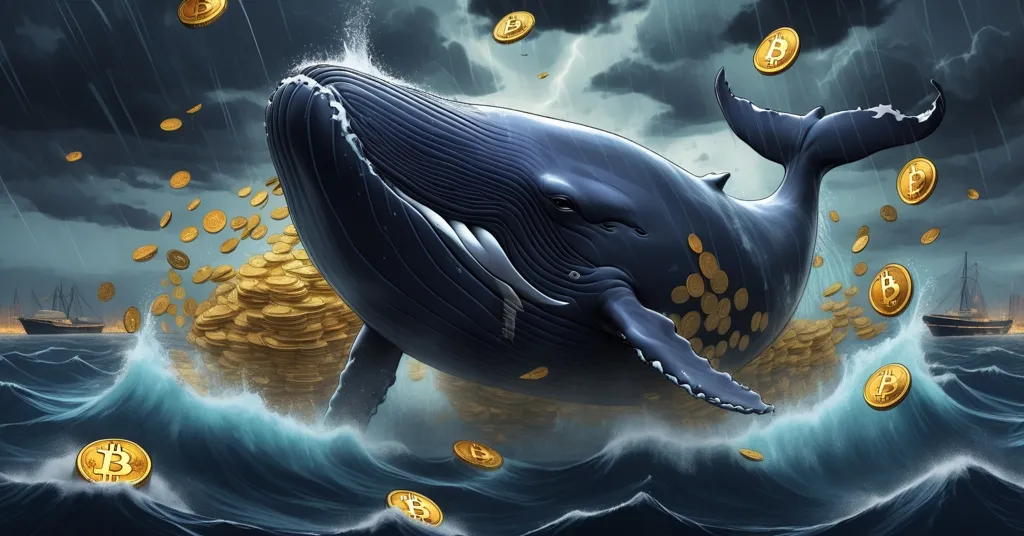
A Bitcoin whale has just sent shockwaves through the crypto market by transferring 300 BTC, worth over $20 million, to a Binance deposit address. With Bitcoin’s price teetering around $69,000—a brutal 45% drop from its all-time high—this move has everyone speculating: is this a panic sell, a calculated pivot, or just another day in the wild world of crypto?
- Huge Transfer: 300 BTC ($20M) moved to Binance, tracked by Arkham Intelligence.
- Whale’s Position: Wallet retains 200 BTC ($13.75M), bought at an average of $97,541 per coin.
- Market Turmoil: Bitcoin trades at $69,000, down 45% from peak amid volatility and global unrest.
The $20 Million Move: What We Know
Let’s cut to the chase. Blockchain analytics firm Arkham Intelligence spotted this hefty transfer on a recent Tuesday from a wallet labeled “bc1q…kp4n.” This isn’t some casual trader moving pocket change—this whale accumulated 513 BTC between January and March 2025, paying an average of $97,541 per coin, totaling about $50 million at the time. Fast forward to now, with Bitcoin languishing near $69,000, and this holder is staring down a significant unrealized loss. If they’re offloading, they’re eating a bitter slice of humble pie. If not, then what’s the game plan? For more details on this massive transaction, check out the report on whale activity moving $20M in Bitcoin to Binance.
For those new to the space, a “whale” refers to an individual or entity holding a massive amount of cryptocurrency—enough to sway market prices with a single trade. Transfers like this to exchanges such as Binance often hint at selling intent, since platforms like these are where big players typically liquidate assets. But don’t jump to conclusions. This could just as easily be portfolio restructuring—maybe shifting to other cryptocurrencies or handling internal liquidity. Frankly, we’re guessing in the dark here, and that’s the rub with on-chain data: it shows the “what” but rarely the “why.”
One thing we can dig into is the whale’s history. Arkham’s data doesn’t reveal past patterns of dumps or specific dates beyond the recent transfer, but the size of this move alone—coupled with current market conditions—makes it a red flag worth watching. In the crypto game, transparency via blockchain is a double-edged sword: it lets us track these massive transactions in real-time, but it also spooks retail investors who see every big transfer as a sign the sky is falling.
Bitcoin in the Red: A 45% Slide and Macro Mayhem
Zooming out, Bitcoin’s price chart looks like a horror show. Trading near $69,000, it’s down over 45% from its peak, battered by relentless volatility. A major driver behind this carnage isn’t even crypto-specific—it’s the broader economic mess spilling over from global events. Tensions between the U.S. and Iran have escalated, pushing oil prices skyward and stoking inflation fears. When oil spikes, so do costs across the board, and central banks like the U.S. Federal Reserve often respond with tighter monetary policies—think higher interest rates—that suck risk appetite out of markets. Speculative assets like Bitcoin get hit hardest as investors flock to safer bets like bonds or gold.
This isn’t just theory. When global markets face uncertainty, capital often flees from high-risk plays like cryptocurrencies. Bitcoin, despite its “digital gold” narrative, still behaves like a tech stock on steroids during these storms—hyper-sensitive to macro shifts. Add in geopolitical chaos, and you’ve got a recipe for the kind of price swings that keep traders up at night. Could this whale be reacting to these pressures, looking to cut losses before things get uglier than a bear market on a Monday morning? It’s a plausible bet.
Whale Watch: A Pattern of Big Moves
This $20 million transfer isn’t an isolated incident. The market’s been buzzing with whale activity lately, and not the kind that inspires confidence. A dormant wallet, untouched for 13 years, recently shifted 2,100 BTC—worth a staggering $147.7 million—stirring nostalgia and nerves in equal measure. Another whale moved $33 million in BTC to Binance not long ago. These aren’t random; large holders often offload during volatile spells, either to lock in profits from past gains or to dodge deeper losses. When whales swim en masse toward exchanges, retail players start sweating, fearing a mass dump could tank prices further.
But let’s play devil’s advocate for a moment. Could these dumps be a healthy purge? Markets need corrections to shake out weak hands—those overleveraged speculators who panic-sell at the first sign of trouble. If whales are trimming fat, it might stabilize Bitcoin long-term, even if it stings now. The downside, of course, is the risk of manipulation. Whales can trigger fear-driven sell-offs among smaller investors, only to buy back in at lower prices. It’s a dirty tactic, and while there’s no proof this whale is playing that game, the possibility lingers like a bad smell.
Institutions vs. Whales: A Market Tug-of-War
Here’s where the plot thickens. While some whales might be bailing—or at least hedging—the institutional crowd is wading in with wallets open. Treasury firms like Strategy are still stacking Bitcoin, and Bitcoin ETFs (exchange-traded funds that mirror BTC’s price for traditional investors) have seen robust inflows in recent weeks. According to data from CoinShares, U.S.-based Bitcoin ETFs logged over $1 billion in net inflows in the last month alone, a sign that big money views this dip as a discount rack for the king of crypto.
Why the disconnect? Institutions often play the long game, betting on Bitcoin as a store of value or a hedge against inflation—especially with central banks printing money like it’s going out of style. Whales, on the other hand, might be more reactive, driven by short-term price action or personal liquidity needs. It’s a classic clash: the suits building their ark while some big fish jump ship. Who’s right? History suggests Bitcoin’s resilience—think back to the 2018 bear market when prices cratered 80% only to rebound stronger by 2021—but past performance is no guarantee, especially with macro headwinds this fierce.
The Decentralization Angle: Freedom and Fear
Let’s not forget what makes Bitcoin unique amid all this chaos. This whale can move $20 million without a bank’s permission, a government’s oversight, or a middleman’s cut. That’s the beauty of decentralization—a system built on freedom and privacy, disrupting the status quo of centralized finance. But with great power comes great responsibility, or in this case, great risk. The same transparency that lets us track these transfers can fuel panic or manipulation, underscoring a darker side to this tech. It’s a reminder that while Bitcoin champions individual sovereignty, it also exposes markets to the whims of a few heavy hitters.
Could there be a silver lining on the horizon? Upcoming events like the next Bitcoin halving—where mining rewards are slashed, historically tightening supply and boosting prices—might offer a bullish spark. Regulatory clarity in key markets like the U.S. could also draw more institutional cash. But those are “ifs,” and right now, the bearish macro vibe and whale activity paint a grimmer short-term picture.
Historical Context: Been Here Before?
Bitcoin’s no stranger to whale dumps or bearish spirals. Rewind to 2018: after peaking near $20,000, BTC plunged to $3,000, with big holders offloading chunks along the way. Similar patterns played out in 2022 post the Terra-Luna collapse, when cascading liquidations and whale sales drove prices below $20,000. Each time, though, Bitcoin clawed back, fueled by its fixed supply, growing adoption, and sheer stubbornness. Today’s 45% drop hurts, but it’s not uncharted territory. The question is whether this whale’s move marks the bottom—or if we’re just halfway down the cliff.
Binance’s Role: Why This Exchange?
One angle worth poking at is Binance itself. As the world’s largest crypto exchange by volume, it offers deep liquidity—perfect for whales looking to sell without slipping too much on price. Low fees and a vast user base also make it a go-to for big trades. But there’s chatter in the community about patterns: Binance often sees these mega-deposits during volatile periods. Is it coincidence, or do whales favor it for strategic reasons? Without hard data on this specific wallet’s history, it’s speculation—but it’s a wrinkle that seasoned traders will be mulling over.
Key Questions and Takeaways
- What does a $20 million Bitcoin transfer to Binance mean for market sentiment?
It often signals potential selling, hinting at bearish sentiment given Bitcoin’s $69,000 price and 45% drop from its high. Yet, it could also reflect portfolio tweaks or internal fund management, not outright panic. - How are geopolitical tensions like U.S.-Iran issues hitting Bitcoin’s price?
Rising tensions drive oil prices and inflation fears, creating a risk-off mood globally. This macro pressure hammers speculative assets like Bitcoin, fueling the intense volatility we’re seeing now. - Why are institutions buying Bitcoin while whales may be selling?
Big players like Strategy and ETF investors see the dip as a bargain, banking on Bitcoin’s long-term role as a store of value. Their strategy clashes with whales possibly minimizing short-term losses. - Is there a broader trend in whale activity during this market downturn?
Yes, recent moves—like a 13-year dormant wallet shifting $147.7 million and another $33 million transfer to Binance—suggest large holders are active, likely taking profits or cutting risk amid volatility. - Can whale dumps have a positive market impact long-term?
Potentially. They might shake out overleveraged players, paving the way for a healthier recovery, though short-term pain and manipulation risks remain real concerns for smaller investors.
Bitcoin’s ride remains a gut-puncher, and this whale’s $20 million splash is the latest curveball. Whether it’s capitulation, strategy, or something in between, the battle between whale moves and institutional grit tests the core promise of decentralization: can a censorship-resistant system outmuscle centralized market fears? As macro storms rage and blockchain transparency cuts both ways, Bitcoin’s resilience—and its community’s resolve—face a crucible. Hang tight; the next chapter of this financial revolution is still being written.