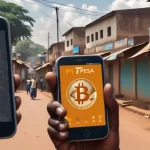
Pakistan Ends 8-Year Crypto Ban: Bitcoin and Blockchain Get Green Light

 LTB
LTB Pakistan Lifts 8-Year Crypto Ban: A New Era for Bitcoin and Blockchain
Pakistan has made a groundbreaking move by ending its eight-year ban on cryptocurrencies, a decision that could reshape the nation’s financial future. The State Bank of Pakistan (SBP) issued a circular on April 14, allowing regulated financial institutions to open accounts for licensed Virtual Asset Service Providers (VASPs), under the framework of the recently passed Virtual Assets Act 2026. This marks a cautious yet bold step toward embracing digital currencies in a country with millions of crypto users.
- Policy Shift: Pakistan reverses an eight-year crypto ban, enabling banks to support licensed VASPs.
- Strict Oversight: Banks must follow anti-money laundering (AML) and counter-terrorism financing (CTF) rules with segregated accounts.
- Untapped Market: Millions of Pakistani crypto enthusiasts now have access to regulated platforms.
The Ban’s End: What Changed?
Since 2018, Pakistan has clamped down on cryptocurrencies, citing risks like financial instability, money laundering, and unchecked capital outflows. Back then, the SBP and other authorities saw Bitcoin and its ilk as a Pandora’s box of economic chaos. But the underground market told a different story—tens of millions of Pakistanis traded Bitcoin, Ethereum, and other digital assets through peer-to-peer (P2P) networks and shady platforms, proving that you can’t ban decentralization, no matter how many edicts you issue. Fast forward to 2026, and the government has finally wised up. The Virtual Assets Act 2026, passed just last month, flips the script, acknowledging crypto’s staying power and its potential to fuel economic growth, as detailed in recent reports on Pakistan lifting its crypto banking restrictions after eight years.
Under the new SBP directive, banks can now open accounts for VASPs—businesses dealing with cryptocurrencies like exchanges or wallet services—provided they’re registered with the Pakistan Virtual Assets Regulatory Authority (PVARA). This isn’t a free pass for banks to start gambling on Bitcoin, though. They’re strictly barred from trading or investing in crypto with their own funds or those of their customers. Instead, their job is to act as a secure middleman, offering segregated Client Money Accounts (CMAs)—Pakistan Rupee-denominated accounts that keep customer funds separate from a VASP’s own money. Picture it as a financial moat: if a crypto exchange crashes, your cash shouldn’t go down with the ship.
Local Impact: Millions of Users in Play
Pakistan’s crypto scene is no small fry. Estimates suggest millions of individuals, often young and tech-savvy, have been dabbling in digital currencies despite the ban. Many of these users, frequently under 30, have turned to P2P trading via apps like WhatsApp or Telegram, dodging regulations to hedge against the Pakistani Rupee’s brutal devaluation—think inflation rates that make your savings evaporate faster than a desert mirage. Bitcoin, often called “digital gold” for its perceived store of value, and stablecoins pegged to stable assets like the US dollar, have become lifelines for those battered by economic uncertainty.
By legalizing regulated platforms, Pakistan aims to bring this shadow economy into the light. The potential is massive: formalizing crypto trading could channel capital into legitimate streams, boost tax revenues, and even spur job creation in tech and finance sectors. But don’t expect overnight miracles. Navigating the maze of licensed VASPs and strict banking rules might deter the average trader used to quick, under-the-table deals. Still, for a nation hungry for financial alternatives, this is a long-overdue step.
Regulatory Reality: Guardrails and Gaps
The SBP isn’t rolling out the red carpet for crypto without some serious baggage. Compliance is the watchword, and they’re playing the strict parent, grounding the industry until it proves it can behave. Banks must adhere to rigorous AML and CTF regulations—rules designed to prevent money laundering and terrorism funding—while updating their risk models to handle crypto’s notorious volatility and opacity. They’re also required to conduct exhaustive due diligence on VASPs, with constant monitoring to spot any funny business. As the SBP’s circular puts it bluntly:
“any arrangement with a VASP does not absolve them of those obligations.”
In plain English, banks can’t wash their hands of responsibility if a crypto partner screws up—they’re on the hook for foreign exchange and AML compliance.
But here’s the rub: Pakistan’s track record on enforcement is, frankly, a dumpster fire. Past financial scandals, from banking fraud to remittance scams, don’t inspire confidence that these shiny new rules will be anything but hot air. Bureaucratic inefficiencies and corruption could turn stringent regulations into paper tigers, leaving the door open for illicit activity. And while segregated accounts sound nice, what happens if a VASP skirts the rules or a bank cuts corners? The SBP’s iron fist looks good on paper, but execution is everything.
Global Stakes: Competing with Neighbors
Pakistan isn’t making this move in a vacuum. Late last year, the government held talks with heavyweight crypto exchanges like Binance and HTX, hoping to lure regulated platforms into the market. If Pakistan plays its cards right, it could become a regional hub for digital assets, rivaling neighbors who’ve already dipped their toes into crypto waters. Take India, for instance—after years of hostility, it introduced a 30% tax on crypto gains, a begrudging nod to reality. Then there’s the UAE, with Dubai’s free zones offering incentives for blockchain startups, positioning itself as a Middle Eastern crypto haven. Pakistan’s crypto legalization could put it on the same map, especially with a user base itching for legitimate trading options.
Beyond exchanges, the government is exploring blockchain infrastructure through partnerships with affiliates of World Liberty Financial. This isn’t just about trading coins; it’s about building systems for the future. Stablecoins—digital currencies pegged to stable assets—could overhaul cross-border payments, a lifeline for Pakistan’s remittance-heavy economy where workers abroad send billions home annually. Traditional systems like SWIFT are slow and pricey; stablecoins could slash costs and delays, potentially saving millions in fees. Whether regulators let such innovation breathe, or smother it with red tape, remains to be seen.
Bitcoin and Beyond: A Decentralized Future?
From a Bitcoin maximalist perspective, this is a quiet victory. Bitcoin’s core ethos—decentralization, financial sovereignty, and a middle finger to broken systems—resonates deeply in a country where the Rupee’s value plummets year after year. With a fixed supply of 21 million coins, Bitcoin offers a potential shield against inflation, something no fiat currency can match. For Pakistanis weary of watching their savings erode, it’s a tempting bet, even if its price swings can induce heart palpitations.
But Bitcoin isn’t the whole story. Altcoins and other blockchain protocols have unique roles to play, filling niches Bitcoin doesn’t touch. Ethereum, with its smart contract capabilities, could power decentralized finance (DeFi) platforms—think micro-lending apps for small businesses or farmers who can’t access traditional loans. Smaller chains might cater to low-cost microtransactions, ideal for a population where every rupee counts. Even non-fungible tokens (NFTs) could find a home, empowering local artists or creators to sell digital works globally. Pakistan’s crypto economy could thrive on this diversity, provided regulators don’t choke the life out of experimentation.
Risks and Roadblocks: Innovation or Control?
Let’s not start the victory lap yet. Pakistan’s crypto thaw comes with heavy strings attached, and overregulation could easily strangle growth. Small VASPs might balk at the compliance costs, leaving the market to a handful of big, state-approved players—hardly the decentralized dream we champion. Then there’s the dark side of crypto: scams, rug pulls, and outright theft. In a market full of eager but inexperienced users, predators will circle. If a few scammers get crushed by the SBP’s iron grip, good riddance, but will the rules actually catch the worst offenders?
Here’s a devil’s advocate take: is this framework a sandbox for innovation or a cage for control? Heavy-handed oversight risks turning crypto into just another arm of the centralized systems it was meant to disrupt. If only government-friendly entities can operate, we’re not far from a dystopia where “blockchain” is just a buzzword slapped on old power structures. Pakistan’s gamble is a microcosm of the global fight for financial freedom—will decentralization win, or will the state just co-opt it?
Mainstream adoption faces hurdles too. With banks barred from directly handling crypto, the average citizen might still find the process too clunky—hardly the seamless onboarding needed for mass uptake. Volatility remains a beast; Bitcoin’s price can tank 20% in a day, not exactly comforting for someone betting their savings. Without stablecoin alternatives or education on risk, this could backfire spectacularly.
Key Takeaways and Questions on Pakistan’s Crypto Legalization
- What does Pakistan lifting its crypto ban mean for Bitcoin adoption?
It creates a regulated pathway for Bitcoin trading in a market with millions of users, potentially driving mainstream use, though strict rules may temper speculative bubbles and focus on safety. - How will banks in Pakistan engage with cryptocurrency?
Banks are limited to supporting licensed VASPs through segregated Client Money Accounts, keeping customer funds isolated while avoiding direct exposure to crypto markets. - What protections are in place for Pakistan’s crypto market?
The SBP mandates AML and CTF compliance, enhanced due diligence, and ongoing monitoring to address risks like volatility and illicit activity, though effective enforcement is crucial. - Can Pakistan draw in major exchanges like Binance?
With discussions underway with Binance and HTX, there’s strong potential to attract global players, as long as the regulatory balance doesn’t hinder innovation. - What impact could stablecoins have on Pakistan’s economy?
Stablecoins could revolutionize remittances by cutting costs and delays, a critical boost for a nation reliant on overseas payments, as explored through partnerships with World Liberty Financial affiliates. - What are the dangers of Pakistan’s new crypto-friendly policy?
Overregulation might stifle smaller players, enforcement gaps could enable scams, and barring banks from direct crypto involvement may limit accessibility for everyday users.
Pakistan’s leap into the crypto arena is a high-stakes experiment, one that could redefine financial access for millions or collapse under its own contradictions. It embodies the push for effective accelerationism—rushing toward decentralized tech to dismantle outdated systems—while wrestling with the mess of real-world implementation. This isn’t about empty hype or fake price predictions; it’s about laying bricks for a financial revolution. Whether those bricks build a fortress of freedom or a prison of control is the question that will define this journey. Time, as always, holds the answer.