Uzbekistan Offers 10-Year Crypto Mining Tax Holiday in Besqala Mining Valley
 LTB
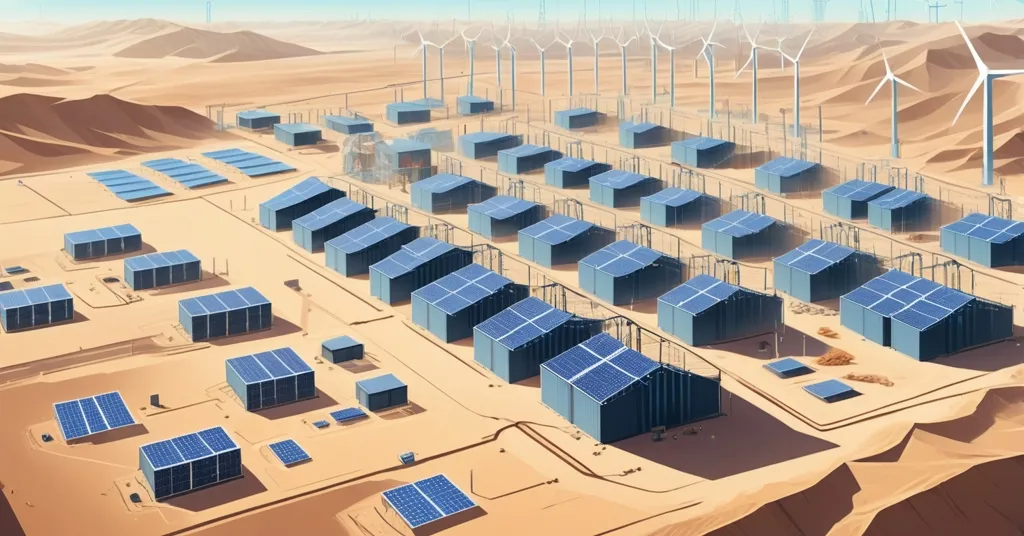
LTB Uzbekistan is making a clean, blunt offer to crypto miners: bring your rigs to Besqala Mining Valley, keep your tax bill light for a decade, and help energize a region that’s long needed real investment.
- 10-year tax holiday for mining operators
- Besqala Mining Valley launched in Karakalpakstan
- Renewables, hydrogen, and grid power are now allowed
- 1% monthly fee still applies to mining income
- Banking system oversight remains firmly in place
President Shavkat Mirziyoyev signed the decree on April 17, 2026, and it took effect on April 20, 2026. The move positions Uzbekistan as a serious contender for industrial-scale Bitcoin mining and broader crypto mining activity, not a half-baked sandbox for hobby rigs and bureaucratic ribbon-cutting.
The headline incentive is straightforward: miners in the new special zone get a 10-year tax holiday that waives corporate income tax, property tax, and land tax. For an energy-heavy business with brutal margins, that matters. But as always, the state is not handing out a free lunch. Operators must pay a 1% monthly fee on mining income to the zone directorate, and all sales proceeds, domestic or foreign, must route through Uzbekistan’s banking system.
That last part tells you everything you need to know about the deal. Uzbekistan wants foreign capital, jobs, and industrial activity. It also wants visibility and control. This is not a libertarian mining paradise where the state steps out of the way and pretends not to notice the hash rate. It’s more like: “Come on in, but we’re watching the ledger.”
Besqala Mining Valley sits in Karakalpakstan, an autonomous region in the Republic of Uzbekistan that has been chosen for a reason. This wasn’t random geography. Karakalpakstan has high poverty, a limited industrial base, and was identified by a 2025 UN Development Program report as needing economic intervention. In plain English: the government is trying to use crypto mining as a development lever in a place that needs one badly.
The zone is supervised by the National Agency for Perspective Projects (NAPP), the state body handling licensing and resident status. That means the rules are being curated from the top down. The government says it plans tax code amendments within two months of activation, which suggests this is meant to be a durable policy framework rather than a short-lived experiment.
That distinction matters. Crypto miners don’t chase slogans; they chase certainty. The business of mining is brutally simple and brutally unforgiving. Profitability depends on a few things that actually matter: cheap power, reliable uptime, sensible regulation, and enough infrastructure to keep the machines from becoming expensive heaters with delusions of grandeur.
In that sense, Uzbekistan’s energy policy shift is the most important part of the package. The zone originally had a solar-only mandate, but that has now been loosened. Operators can use renewable energy, hydrogen, or grid electricity at higher tariffs. That is a more pragmatic setup, and frankly, a much more realistic one.
Solar-only sounds excellent in a brochure and terrible in a mining operation if it cannot provide consistent power around the clock. Mining runs 24/7. Bitcoin doesn’t pause because the sun went down or because a government ministry drafted a shiny sustainability slogan. If Uzbekistan wants actual industrial-scale hash rate, it has to provide energy that is available, predictable, and priced in a way miners can survive.
Hash rate is the computing power used to secure proof-of-work networks like Bitcoin. More hash rate generally means a more secure network, but only if the mining is economically sustainable. That is the key point here: a tax holiday helps, but power reliability is what makes or breaks the economics.
The government says it is also targeting grid modernization to 1GW capacity. That is a serious ambition, but ambition is not infrastructure. Miners will want to see whether that number reflects real delivery, actual transmission upgrades, and enough generation to support large operations without constant interruptions. A press release can promise megawatts. A substation, copper, and fuel contracts are what do the heavy lifting.
There is a strong strategic logic to the move. Around the world, governments are increasingly trying to treat crypto mining as an industrial policy tool rather than a nuisance. That shift makes sense in some cases. Mining can help monetize stranded energy, attract capital to underdeveloped regions, and justify grid investment that would otherwise be hard to finance. It can also become a political trap if the power system can’t handle the load or if the incentives are designed to enrich insiders first and operators second.
“This is not a pilot program – it is a structural repositioning of Uzbekistan as a primary destination for industrial-scale hash rate.”
That’s a fair reading of what Uzbekistan is trying to do. The country has officially opened the door to global crypto mining operators with a long tax holiday and a special regulatory zone. It is also signaling that it wants to compete for mining jurisdiction status against countries that have already tried to attract or push around miners, including Kazakhstan and parts of North America and Europe.
And yes, location matters. Karakalpakstan borders Kazakhstan, which could matter for logistics, regional trade, and energy access. Geography may not be flashy, but in mining it can be a hidden advantage or a nasty bottleneck. Hardware has to arrive, service crews have to move, and power has to flow. If you’re building an industrial setup, “near a border” is not a headline feature, but it does affect the real-world economics.
There’s also a broader lesson here about how mining incentives work. Governments love to dangle tax breaks because they are cheap to announce and easy to market. Miners care much more about whether the rules stay the same after the press conference is over. A 10-year tax holiday is useful. A stable tariff structure is useful. A state that doesn’t randomly change its mind is even more useful.
That’s why the banking requirement is worth watching closely. On one hand, it gives the Uzbek state visibility into flows and a cleaner way to monitor activity. On the other, it adds friction and limits some of the financial freedom that miners, especially foreign ones, may want. It is a reminder that this is not a decentralized utopia. It is a controlled corridor with incentives attached.
For the industry, the pitch is simple: lower taxes, a defined zone, and a government that says it wants mining capital. The catch is equally simple: the state wants to know where the money is, the energy system must actually work, and the monthly fee means the privilege is not entirely free. Good deal? Maybe. Easy money? Not in mining. Never in mining.
The real question now is whether serious operators will move first. In a sector where uptime, cooling, logistics, and policy continuity can make or break a site, miners won’t be impressed by glossy development talk alone. They will look at actual grid reliability, the cost of grid electricity, import rules, repair access, and whether the legal framework holds up after the initial fanfare fades.
Uzbekistan’s move is smart, but not magical. It shows how aggressively countries are now competing for Bitcoin mining in Uzbekistan and broader crypto mining tax holiday deals. That can be good for the industry if it leads to real infrastructure and clearer rules. It can also turn into bureaucratic bait if the energy promise is more brochure than backbone.
What is Uzbekistan offering crypto miners?
A 10-year tax holiday inside Besqala Mining Valley, along with a special regulatory setup designed to attract industrial-scale mining operations.
Where is Besqala Mining Valley located?
It is in Karakalpakstan, an autonomous region in the Republic of Uzbekistan.
Which taxes are waived?
Corporate income tax, property tax, and land tax are all exempted under the zone’s rules.
Who oversees the new mining zone?
The National Agency for Perspective Projects (NAPP) supervises licensing and resident status.
What energy sources are allowed?
Renewable energy, hydrogen, and grid electricity are all permitted, with higher tariffs for grid power.
Does the state still keep control?
Yes. All sales proceeds must flow through Uzbekistan’s banking system, and operators also pay a 1% monthly fee on mining income.
Why was Karakalpakstan chosen?
Because the region has high poverty, a limited industrial base, and was flagged for economic intervention by the UN Development Program.
What is the biggest risk for miners?
Whether Uzbekistan can actually deliver reliable energy infrastructure and policy stability, not just tax incentives and headline-friendly announcements.
Why does this matter for Bitcoin mining?
It shows that governments are still competing for hash rate with tax breaks and special zones, but miners will only commit if the power and rules are good enough to support a real business, not just a shiny policy experiment.