Vietnam Targets 95% Bank Accounts and 30x GDP in Cashless Payments Push
 LTB
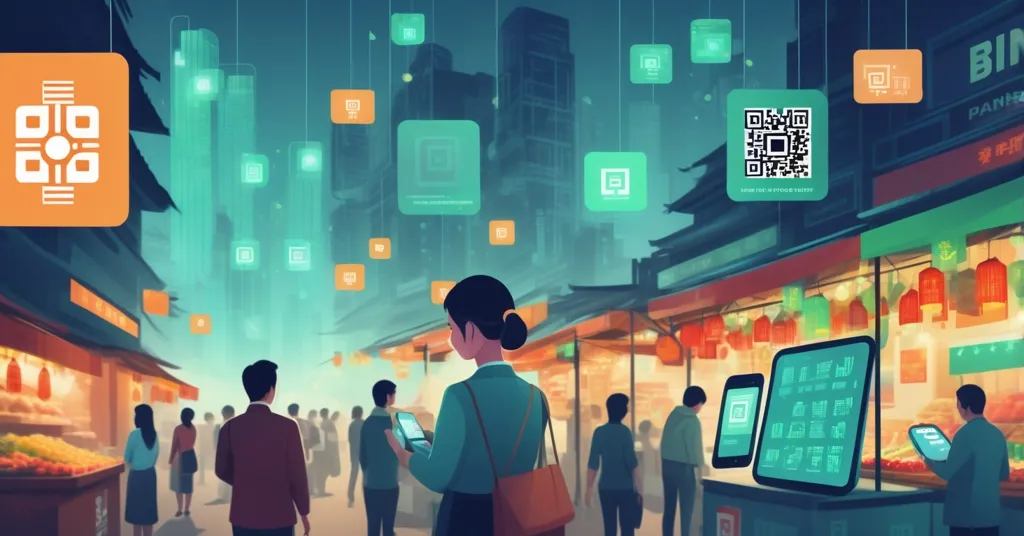
LTB Vietnam is charging ahead with a cashless economy plan that could make even the most hardline paper-wallet fan sweat. By 2030, the country wants nearly every adult on transaction accounts, non-cash payments flowing at 30 times GDP, and digital finance stitched deeper into banking, public services, and small business lending.
- 95% account ownership target
- Cashless payments to hit 30x GDP
- Digital IDs, AI public services, and SME lending reforms
- Big upside for inclusion — and big risks around surveillance and access
Vietnam approved Decision No. 928/QD-TTg on May 25, setting the framework for the National Comprehensive Financial Strategy for 2026–2030. The targets are bold, and very on-brand for a government trying to drag more of the economy onto digital rails: by 2030, 95% of people aged 15 and above should have transaction accounts, the value of non-cash payments should reach 30 times GDP, at least 30% of adults should have savings at credit institutions and foreign bank branches, and at least 300,000 SMEs should have outstanding loans from those institutions.
For anyone wondering what “30 times GDP” actually means, it’s not some magic accounting trick. It refers to the total annual value of cashless payments processed relative to the size of the economy. In plain English: Vietnam wants money moving through bank accounts, cards, apps, QR codes, and other digital payment rails at a massive scale, far beyond what a cash-heavy economy would normally generate.
Deputy Prime Minister Nguyen Van Thang said the country has already seen a “revolution” in consumer behavior and cash-flow management. That’s not the kind of word officials toss around lightly. It signals that Hanoi believes the shift is already underway and that the state now wants to push harder, faster, and with more structure.
“Digital data, digital identification, digital connectivity, and digital payments are gradually shaping a more modern, transparent, and convenient financial system for citizens and businesses.”
“Digital payments are a crucial condition for accelerating money circulation, expanding access to financial services, improving management efficiency, and creating momentum for digital economic growth in the new era.”
That’s the official pitch: smoother commerce, broader financial inclusion, faster payments, and a leaner economy. And to be fair, there’s real substance behind it. The State Bank of Vietnam says that by the end of 2025, 88.96% of citizens aged 15 and above had bank accounts, while the value of cashless transactions reached 28 times GDP. Those are not amateur numbers. Vietnam is already deep into the transition, which makes the 2030 targets aggressive but not fantasy-level delusional.
That said, there’s a big difference between people having accounts and people actually using them for everyday life. A transaction account is basically a bank or payment account used to send, receive, and store money for routine activity. It’s not just a sleeping account sitting there collecting dust. The point here is to get wages, purchases, bills, savings, and business payments moving through formal financial channels instead of stuffed in envelopes, drawers, or under mattresses like it’s 1997 and the internet is still a rumor.
Vietnam’s strategy also includes speeding up regulatory frameworks, setting technical standards, promoting digital technology in banking, and strengthening links between banks, fintechs, and financial service providers. In real-world terms, that means the government is trying to fix the plumbing: the rules, the rails, the standards, and the integrations that let digital payments work without turning into a glitchy circus.
The upside is obvious. Digital payments can reduce theft, cut friction, make salary distribution easier, improve access to credit, and help small businesses run leaner. They can also make tax collection and anti-fraud work easier for the state, which is usually the part governments like best. Financial inclusion is a real win when people who were locked out of basic banking finally get access. It becomes a lot less noble when the same system becomes a neat little visibility machine for officials and institutions.
That’s the tension running through Vietnam’s push: efficiency on one side, control on the other. A cashless economy is not just about convenience. It means more activity is recorded, searchable, and analyzable. For citizens, that can mean safer payments and easier access. For the state, it means more visibility into who paid whom, when, where, and for what. That can reduce corruption. It can also make surveillance easier. Same gear, different use case.
The adoption gap is where the nice rhetoric collides with messy reality. Vietnam still faces uneven access between urban and rural areas, and older or low-income users are often more resistant to cashless payments. That’s not because they’re all hopelessly allergic to technology. It’s because adoption depends on trust, device access, network quality, usability, and whether the system actually serves people instead of making them beg a chatbot for permission to live.
That’s why Project 06 matters so much. It is Vietnam’s broader digital transformation program focused on population data applications, digital identification, authentication, and public-service digitization. In simple terms, it’s the identity backbone for a more digital state. By 2035, the government wants all citizen-government transactions to be online. That could mean less paperwork and faster services. It could also mean a lot more reliance on centralized data systems that need to be secure, accurate, and not run by idiots.
Officials are also pushing AI deeper into public administration. Ministries are expected to deploy AI and virtual assistants for public services by September, and Digital Citizen Stations are being studied for possible implementation in January 2027. On paper, this sounds efficient and modern. In practice, it could be helpful digital infrastructure — or it could become a polished bureaucratic wall with a chatbot attached. Artificial intelligence can speed up simple tasks and reduce queues, but it can also spit out confident nonsense with machine-age swagger. Progress is great. Automated nonsense is just bureaucratic nonsense with better branding.
The most interesting development for crypto and digital asset watchers is the Ministry of Finance proposal allowing SMEs to use digital assets and intellectual property rights as collateral for bank loans. That proposal is included in a draft revised Law on Support for SMEs, and it’s a significant signal. Small and medium-sized businesses are often the engine room of growth, but they are also frequently the ones shut out of financing because they don’t have land, buildings, or other traditional collateral to pledge.
Allowing digital assets and intellectual property to back loans could open up credit access for more innovative firms. A software company, a content business, a tokenized venture, or a tech startup may have real value that doesn’t show up in old-school collateral frameworks. If Vietnam gets this right, it could help unlock capital for businesses that are asset-rich in ideas but asset-poor in brick-and-mortar terms.
But let’s not pretend this is automatically smart just because it sounds futuristic. The phrase “digital assets” can mean a lot of things: crypto holdings, tokenized assets, virtual property, or broader intangible value. That ambiguity matters. Not every token is collateral-worthy. Not every blockchain-linked asset is productive. And not every shiny new financial concept deserves to be treated like serious credit material. If the rules are fuzzy, lenders get exposed, borrowers get squeezed, and the whole thing degenerates into regulatory cosplay.
That’s the part policymakers often skip over: finance is not just about opening doors. It’s about defining the door properly, locking it when needed, and making sure the foundation doesn’t collapse the first time someone waves a speculative asset under the lender’s nose. Vietnam appears willing to experiment, which is better than being paralyzed by fear. But the details will decide whether this becomes a genuine financing innovation or another overhyped headache dressed up as modernization.
Vietnam is also positioning itself as one of the world’s faster digital adopters, including in digital assets. That doesn’t mean it’s taking a full Bitcoin-maxi or libertarian self-custody route. It does mean the government seems to understand that cash-heavy systems can be slow, costly, and exclusionary. It also suggests that Vietnam sees digital finance as a competitive advantage, not a threat to be buried under endless regulation and performative concern.
For Bitcoin and decentralized tech advocates, the key contrast is obvious. A centralized digital payments system can be fast and efficient, but it is still a permissioned system. Bitcoin offers something different: self-custody, censorship resistance, and money that doesn’t need to ask a bank or state actor for approval. Vietnam’s move won’t replace that debate; it sharpens it. The more governments digitize finance, the more people will ask who controls the rails, who can freeze them, and who gets left out when the lights flicker.
The risks are not theoretical. Cybersecurity and personal data protection are real concerns whenever a state builds deeper identity and payment infrastructure. If transaction data, digital IDs, and public service records are all tied together, the attack surface grows. So does the temptation to monitor, profile, and nudge behavior. “Financial inclusion” sounds lovely until it mutates into “financial visibility” without meaningful privacy guardrails.
And to be blunt: not every citizen wants a government-approved digital breadcrumb trail following every cup of coffee, bill payment, salary deposit, and business transfer. That doesn’t make them anti-progress. It makes them aware that convenience is not free. A cashless society can be cleaner and more efficient. It can also become a beautifully organized cage if privacy and choice are treated like optional extras.
Key questions and takeaways:
What is Vietnam trying to achieve by 2030?
Vietnam wants near-universal transaction account ownership, far more cashless payments, stronger household savings in formal institutions, and broader SME access to credit.
How far along is Vietnam already?
Pretty far. Officials say 88.96% of adults already had bank accounts by the end of 2025, and cashless transaction value was already around 28 times GDP.
Why does digital identity matter here?
Because digital ID and authentication make online banking, public services, and secure digital payments easier to scale across the population.
What is Project 06?
It is Vietnam’s digital transformation program built around population data, digital identification, authentication, and the move to online public services.
Why is the SME collateral proposal important?
It could help businesses borrow against digital assets and intellectual property, which may expand credit access for firms that lack traditional collateral.
What are the main risks of a cashless economy?
Cybersecurity problems, privacy erosion, unequal access for rural and older users, and the possibility of turning financial inclusion into a surveillance-heavy system.
Is Vietnam becoming crypto-friendly?
Not in a wild, anything-goes sense. But it is clearly more open than many governments to digital assets, fintech integration, and modernizing the rules around financial value.
Vietnam’s gamble is straightforward: push hard on financial inclusion, build a more efficient digital economy, and use digital payments, digital identity, and AI-backed public services to modernize how money and administration work. If it succeeds, it could become a model for emerging markets trying to leapfrog old banking friction without completely surrendering sovereignty to legacy finance. If it fails, it will remind everyone that a cashless system without privacy, resilience, and real inclusion is just a prettier way to track people.