Bitcoin Pizza Fest Turns Bitcoin Pizza Day Into BTC Rewards and Mining Access
 LTB
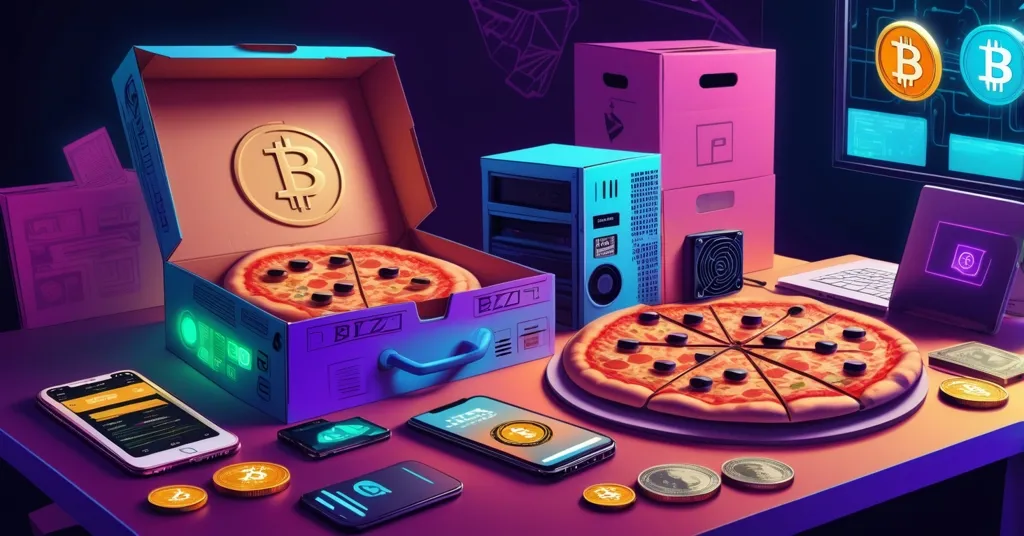
LTB Bitcoin Pizza Day is getting a very practical makeover. BeMine is using the famous crypto milestone to push a Bitcoin Pizza Fest campaign that hands out BTC rewards and temporary mining access in exchange for something as ordinary as a pizza receipt or a social post.
- Bitcoin Pizza Fest runs from May 18 to May 31
- Share a pizza photo on X or Instagram to unlock mining perks
- Upload a receipt from a participating chain to get $10 in BTC
- Domino’s, Pizza Hut, Papa Johns, and New York Pizza are eligible
- The campaign is a test of whether offline habits can drive crypto onboarding
BeMine, a cloud mining platform with more than 400,000 registered users, is turning Bitcoin Pizza Day into a user-acquisition machine. The pitch is refreshingly straightforward for an industry that often buries itself in jargon: buy pizza, post pizza, prove pizza, get Bitcoin-related rewards. No whitepaper acrobatics. No hand-wavy “revolutionizing the future of finance” nonsense. Just a simple hook tied to one of Bitcoin’s most recognizable cultural moments.
How Bitcoin Pizza Fest works
The campaign runs for two weeks and offers two participation paths. The first is called Share Your Slice. Users post a pizza photo on X or Instagram, tag @bemineclub, use #ProofOfPizza, and submit the link. In return, they receive temporary access to mining capacity, including a fractional share of an Antminer S23, for 7 days.
The second path is Proof of Pizza. Users upload a receipt from participating pizza chains and receive $10 in BTC. It is a neat little bridge between a normal purchase and a crypto reward. In other words: dinner becomes a funnel.
The eligible pizza chains are:
- Domino’s Pizza
- Pizza Hut
- Papa Johns
- New York Pizza
The mining reward side of the campaign is capped at 2,205 ASIC slots. An ASIC is specialized hardware built to mine Bitcoin efficiently. If you are new to mining, that means the reward is not some vague points system with a glossy landing page — it is tied to actual mining power. And yes, cloud mining means users rent mining capacity from a company instead of buying, maintaining, and cooling hardware themselves. It sounds convenient because, well, it is supposed to be convenient.
That said, cloud mining has its own baggage. Users have to trust the platform’s payout structure, fees, and transparency. Convenience is nice; being blindly rug-pulled by spreadsheet theater is not.
Why BeMine is using Bitcoin Pizza Day
Bitcoin Pizza Day has always been more than a meme. It marks the first iconic real-world Bitcoin purchase, when Bitcoin crossed from abstract internet money into something people could actually spend. That moment matters because it turned a network experiment into a cultural story. Most crypto marketing never gets that right. It chases “adoption” with buzzwords, then wonders why nobody outside the bubble cares.
BeMine CEO Kiryu Artemev framed the logic plainly:
“If you look at how Bitcoin entered the real world, it didn’t happen through infrastructure — it happened through a simple purchase.”
“Collaborations between crypto platforms and consumer brands aren’t just marketing. They’re a continuation of that original idea — bringing digital assets into everyday transactions.”
“We see this as a natural next stage.”
“The sooner crypto connects to real-world habits, the faster adoption stops being a concept and becomes behavior.”
That last line is the one worth sitting with. Crypto has spent years trying to win people over with ideology, charts, and technical superiority. Sometimes that works. Usually it doesn’t. Most people do not wake up wanting to understand hash rates, nonce values, or whatever marketing fairy dust a startup is throwing around this week. They respond to something familiar, useful, or rewarding.
A pizza receipt is familiar. A BTC reward is useful. A social post with a hashtag is easy enough to do while waiting for delivery. That is the entire game.
Why this kind of campaign works
BeMine is leaning on two things that consistently move the needle: user-generated content and simple incentives. People like free stuff. They like low-friction participation even more. If the campaign is easy to understand, easy to complete, and offers a tangible reward, it can spread fast without needing a big education campaign.
That is especially important in crypto, where many onboarding attempts fail because the first step feels like homework. Wallets, seed phrases, gas fees, bridges, staking, wrapping, swapping — it is enough to make a newcomer close the tab and go eat actual pizza instead. BeMine’s angle cuts through that clutter.
There is also a stronger strategic point here. Crypto adoption often happens when digital assets connect to ordinary behavior, not when they sit on a pedestal and demand reverence. If a person who has never touched a mining dashboard uploads a receipt and gets BTC, that is a real entry point. Not mass adoption, not some fairy tale of global monetary overthrow — just a usable on-ramp.
And those matter. A lot.
The limits of pizza-powered onboarding
Still, let’s not kid ourselves. This is marketing first, adoption strategy second, and product funnel third. That does not make it bad. It just makes it honest.
Campaigns like this can generate attention, but attention is not the same as retention. Someone may happily upload a pizza receipt for $10 in BTC and never think about Bitcoin again. Another person may share a slice photo for the temporary mining perk and treat it like a one-off promo. That is fine, but it is not the same thing as durable user growth or deep understanding of Bitcoin as money.
There is also the operational side. BeMine notes that campaign growth creates more need for manual moderation and support, even if the mining product itself is automated. That is the part every “decentralized future” pitch conveniently forgets: humans still have to review submissions, answer questions, and make sure the system is not being gamed. The system may scale automatically, but someone still has to review the pizza.
And yes, people will absolutely try to game the pizza.
What this says about crypto adoption
The bigger takeaway is not that pizza is magical. It is that crypto companies are increasingly trying to meet users in real life, through real purchases, with rewards that feel concrete rather than theoretical. That is a healthier direction than shouting about tokenomics from a rooftop and calling it community building.
There is real value in connecting Bitcoin to everyday habits. Bitcoin was born through a purchase, after all, not through a conference panel or a venture capital memo. If the industry wants more people to use Bitcoin, it probably needs fewer sermons and more simple, repeatable reasons to try it.
At the same time, it is worth keeping a skeptic’s eye on the whole thing. A campaign like Bitcoin Pizza Fest can be clever, effective, and still ultimately limited. It is a nudge, not a revolution. A hook, not proof that the masses have suddenly embraced self-sovereign money. But if it gets people to touch Bitcoin in a real-world context, that is still a better outcome than another week of recycled hype and fake price-pump prophecy.
Key takeaways and questions
What is Bitcoin Pizza Fest?
BeMine’s Bitcoin Pizza Fest is a promotional campaign built around Bitcoin Pizza Day. It offers BTC rewards and mining access to people who buy pizza, share pizza content, or submit eligible receipts.
How do you participate?
Users can either post a pizza photo on X or Instagram with @bemineclub and #ProofOfPizza, or upload a receipt from a participating pizza chain.
What do participants get?
The rewards include temporary mining access, a fractional share of an Antminer S23 for seven days, or $10 in BTC for qualifying receipts.
Which pizza chains are included?
Domino’s Pizza, Pizza Hut, Papa Johns, and New York Pizza.
What is cloud mining?
Cloud mining lets users rent Bitcoin mining power from a company instead of buying and running mining hardware themselves.
Why does Bitcoin Pizza Day matter?
It represents Bitcoin’s first iconic real-world purchase and has become a symbol of Bitcoin’s move from internet curiosity to usable money.
Does this prove mass Bitcoin adoption?
No. It shows that consumer habits can be used as a crypto onboarding path, but it does not prove broad or lasting adoption on its own.
What is the main risk with campaigns like this?
The biggest risk is shallow participation. People may join for the reward and never become long-term Bitcoin users, while platforms still have to handle moderation, fraud checks, and support.
Why does this matter beyond the gimmick?
Because it shows a practical way crypto can connect with ordinary behavior. In a sector full of empty promises, that kind of real-world utility is worth more than a hundred hype threads and a smug chart screenshot.
BeMine’s campaign is a reminder that crypto adoption does not always begin with grand ideas. Sometimes it starts with pepperoni, a receipt, and a small BTC reward. Not glamorous, not world-changing on its own, but very much in the spirit of Bitcoin’s original real-world use: money being used like money.