Canada Moves to Tighten Crypto ATM Rules Amid Rising Bitcoin Scam Fraud
 LTB
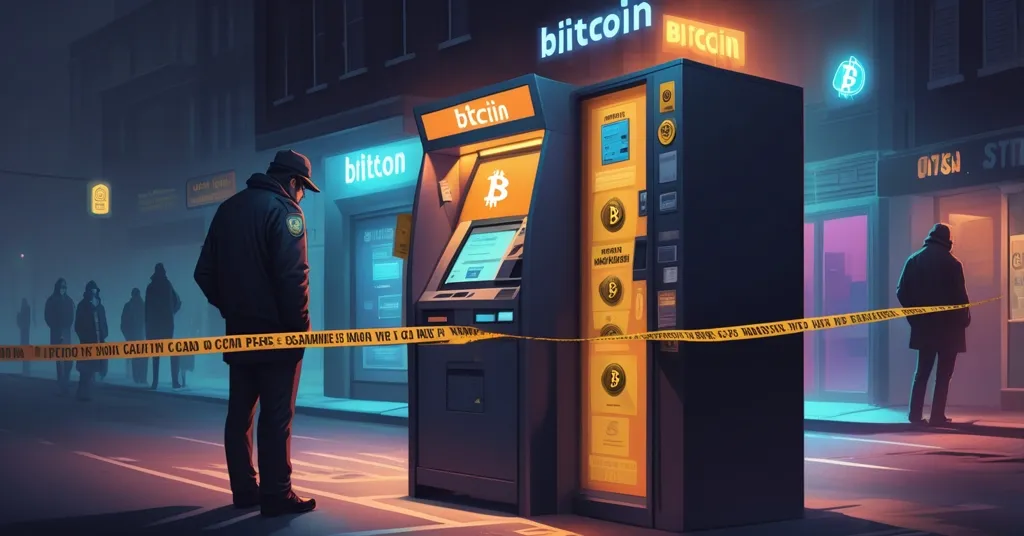
LTB Canada is moving toward a tougher stance on crypto ATMs after investigators tied the machines to a growing wave of fraud and scam payments. What began as a handy cash-to-bitcoin bridge is increasingly being treated like a criminal convenience tool with a QR code.
- Canada crypto ATM crackdown
- Crypto ATM scams are rising
- Bitcoin ATM regulations may tighten
- Fraud vs. financial access
Crypto ATMs, also called bitcoin ATMs, are physical kiosks that let people buy cryptocurrency with cash and, in some cases, sell it back for cash. In theory, they give users a simple way to access bitcoin and other digital assets without going through a traditional exchange. In practice, they have become a favorite instrument for scammers who need victims to send money fast, irreversible, and with as little resistance as possible.
That’s the ugly part. Once a victim feeds cash into one of these machines and the crypto is sent, the transaction is usually gone for good. No chargeback. No bank reversal. No friendly clerk asking, “Wait, are you sure this isn’t complete nonsense?” For fraudsters, that finality is gold.
Why Canada is looking at crypto ATM restrictions
The push in Canada reflects a very simple reality: crypto ATM fraud has become too common to ignore. Scam operations have leaned on these machines in cases involving impersonation scams, fake police calls, bogus tech-support emergencies, extortion, and other familiar con jobs designed to create panic. The formula is depressingly effective. A scammer keeps the victim on the phone, adds pressure, and sends them to a nearby kiosk to complete the transfer before anyone can intervene.
That speed is exactly what makes the system dangerous. Cash is inserted. Crypto is purchased. Funds are moved. By the time the victim realizes what happened, the money is gone and the scammer is already on to the next mark. It’s not clever. It’s just efficient theft wearing a digital costume.
Canada’s response appears to be aimed at reducing that abuse, though “crackdown” can mean a few different things. Depending on the policy path, officials could pursue:
- stronger identity checks,
- transaction limits,
- better warnings at the point of sale,
- licensing or registration requirements for operators,
- or a flat-out ban on some or all crypto ATMs.
That distinction matters. A targeted compliance push is one thing. A blanket ban is another. The first tries to clean up the mess. The second brings in the bulldozer.
How crypto ATM scams work
The machines themselves are not the villain. They’re tools. Tools can be used well or abused badly, and crypto ATMs have become a repeat fixture in scam playbooks because they combine three things criminals love: urgency, finality, and physical accessibility.
Here’s the basic scam pattern:
- the victim gets a threatening call or message,
- the scammer claims an emergency or urgent risk,
- the victim is told to move money immediately,
- the scammer directs them to a crypto ATM,
- the victim deposits cash and sends crypto to the attacker’s wallet.
For newcomers, a wallet is where crypto is received and stored. A wallet address is the destination string used to send funds. Once the crypto is sent, the blockchain does exactly what it was designed to do: it records the transfer and doesn’t care whether the sender was fooled, manipulated, or simply had a terrible day.
That irreversibility is a feature in honest transactions and a nightmare in fraud cases. Bitcoin doesn’t fix human stupidity, and it certainly doesn’t prevent someone from being socially engineered out of their savings. The scammer doesn’t need to hack the machine. They just need to hack the victim.
Why regulators are paying attention now
Canada is not alone here. Around the world, regulators have been getting nervous about crypto ATM compliance, especially where know-your-customer rules are weak or inconsistently enforced. KYC, for readers who haven’t been buried in compliance jargon, means identity checks meant to make it harder for criminals to move money anonymously at scale.
That doesn’t make KYC some magical anti-crime force field. Bad actors still find ways around it. But weak oversight at cash-to-crypto machines is practically an invitation for fraudsters to set up shop. If the barrier to converting stolen cash into crypto is low, the criminal incentive gets stronger.
There’s also a broader political reality. When the public keeps losing money through one visible payment channel, lawmakers get pressure to do something. And “something” too often means “ban the thing.” It’s an old reflex: when a tool is abused, governments sometimes reach for the hammer first and ask questions later. That’s not always smart policy, but it is very common.
The real problem is abuse, not bitcoin
Bitcoin supporters should be able to admit this without choking on the words: crypto ATMs are a genuine weak point in consumer protection when they’re poorly monitored. Pretending otherwise helps nobody. The same goes for the broader crypto sector, which has spent years insisting on innovation while tolerating a swamp of scams, grifts, and outright garbage. If the industry wants legitimacy, it has to confront abuse instead of spinning fairy tales about “disruption.”
At the same time, a blanket ban would be a blunt instrument. It would hit legitimate users who rely on cash-based access to bitcoin and other cryptocurrencies, including:
- the unbanked or underbanked,
- privacy-conscious users,
- people in cash-heavy communities,
- and users who simply want a fast local on-ramp without opening an exchange account.
That’s the tension regulators keep running into. Yes, the machines can be abused. No, that does not automatically justify burning down the whole use case. If the state responds to every fraud problem by eliminating the underlying financial option, the result is often less freedom and not necessarily less fraud. Criminals tend to migrate to the next weak point. They’re annoyingly adaptable little parasites.
What smarter crypto ATM regulations could look like
A better response than a sweeping ban would be stricter oversight that preserves legitimate access while making scams harder to pull off. That could include clearer warning screens, mandatory delays on first-time transactions, lower daily limits, enhanced verification for higher-value transfers, operator licensing, and tighter monitoring of suspicious activity.
Another option is better consumer education. A lot of victims don’t understand that no real government agency, bank, or tech company is going to demand payment through a bitcoin ATM to fix an emergency. If a caller insists you must immediately deposit cash into a machine to avoid arrest, frozen funds, or account closure, that is almost certainly a scam. If your “urgent problem” can only be solved by turning cash into crypto under pressure, it’s not a rescue mission. It’s a robbery with a script.
Still, education alone is not enough. Fraud prevention is strongest when user warnings, operator compliance, and enforcement all work together. The more difficult it is for criminals to cash out through crypto ATMs, the less attractive the method becomes. That is the basic logic behind Canada’s current posture.
Canada crypto ATM crackdown: what it means for bitcoin users
For bitcoin users, the big question is whether Canada chooses a precise fix or a lazy one. A targeted approach could reduce crypto ATM scams without destroying useful access to bitcoin and stablecoins. A blanket ban would likely reduce one fraud channel, but it would also punish ordinary users who use these machines for convenience, privacy, or lack of alternatives.
There’s no need to romanticize the machines. They are not sacred. They are not some constitutional shrine to financial liberty. But they also are not the root of fraud. The root is fraud. The machines are just one of the easier ways criminals exploit panic and speed.
For the crypto sector, this is another reminder that decentralization and freedom come with responsibilities. If a tool keeps getting turned into a scam faucet, the industry can’t just shrug and scream “self-custody!” from the sidelines. If it wants broad adoption, it needs better guardrails, better compliance where appropriate, and less tolerance for the garbage that keeps embarrassing the space.
Questions and answers
Why is Canada cracking down on crypto ATMs?
Because investigators say the machines are being used in fraud and scam payments, especially where victims are pressured into sending money quickly and irreversibly.
What is a crypto ATM?
It’s a physical kiosk that lets users buy, and sometimes sell, cryptocurrency using cash or a card. People often use them for bitcoin purchases.
Why do scammers like crypto ATMs?
They are fast, accessible, and difficult to reverse once funds are sent. That makes them ideal for fraudsters who want victims to move money before they can think twice.
Will a ban stop crypto ATM scams?
It could reduce one easy route for scammers, but criminals usually move to whatever method is next easiest. A ban may cut fraud, but it can also create collateral damage.
Will legitimate bitcoin users be affected?
Yes. People who use crypto ATMs for privacy, convenience, or cash-based access could lose an important on-ramp to bitcoin and other cryptocurrencies.
What is the smarter fix?
Tighter identity checks, transaction limits, operator rules, better warnings, and stronger enforcement are likely more effective than a total ban.
Canada’s next move will matter far beyond the country’s borders. If it chooses a thoughtful policy, it could reduce crypto ATM fraud without kneecapping legitimate bitcoin access. If it chooses a heavy-handed ban, it may make headlines while solving only part of the problem. The technology is not innocent, but neither is it the real culprit. The real villain here is still the same old scam economy, now with a shiny kiosk in front of it.