February CPI Report 2024: Inflation Data, Bitcoin at $70K Amid Oil Crisis
 LTB
LTB February CPI Report 2024: Pre-War Economy Data and Bitcoin Price at $70K
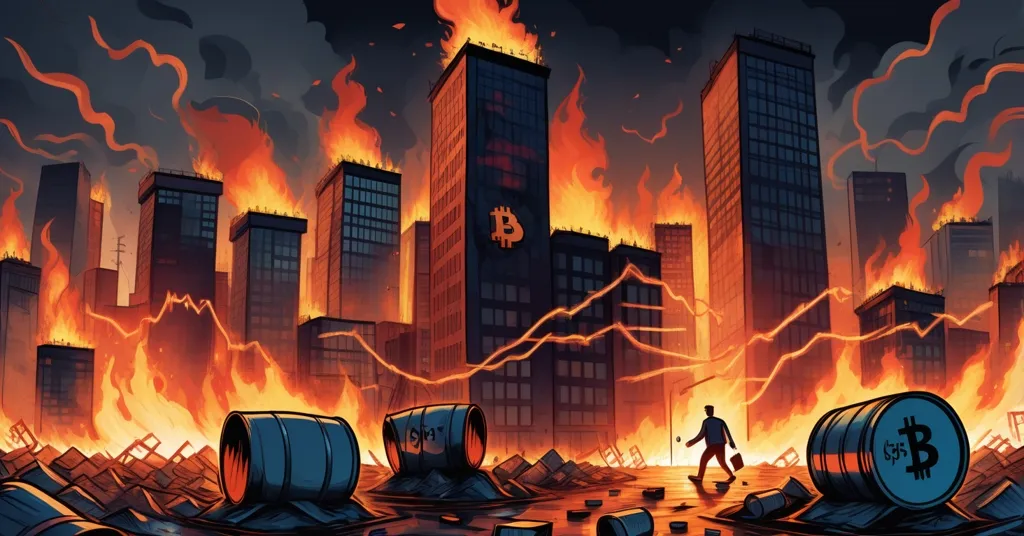
The U.S. February Consumer Price Index (CPI) report is set to drop soon, painting a picture of an economy before the Iran conflict flipped the energy market on its head. With oil prices soaring past $115 per barrel and Bitcoin holding steady at $70,000 after a wild ride, we’re at a crossroads of outdated data, policy paralysis, and crypto resilience. Let’s unpack what this means for inflation, the Federal Reserve’s next moves, and Bitcoin’s role in this mess.
- CPI Forecast: Expected at 2.5% year-over-year, up slightly from January’s 2.4%.
- Energy Crisis: Post-data collection, oil spiked over $115/barrel, gas to $3.57/gallon due to Iran tensions.
- Bitcoin’s Stand: Recovered to $70K from a $60K dip, outperforming slumping equities.
CPI: A Relic of a Bygone Era
Why bother with a CPI report when gas prices are already burning holes in wallets? The February numbers, forecasted at a tame 2.5% year-over-year inflation rate by economists, reflect a world before the Iran conflict sent energy costs into the stratosphere. This is a mild nudge up from January’s 2.4%, and Core CPI—stripping out volatile food and energy prices—is expected to hold at 2.5% annually with a 0.3% month-over-month bump. Institutions like Goldman Sachs and Wells Fargo hint at softening momentum in core inflation, suggesting disinflation might still be on track. But here’s the rub: this data was gathered before oil surged past $115 per barrel and gas jumped 16% to $3.57 per gallon. As Morningstar notes, the real sting of this energy shock won’t even hit until March’s report. For a deeper analysis of this disconnect, check out the insights on February’s CPI and its outdated economic snapshot.
The disconnect is glaring. With 20% of global oil supply squeezing through the Strait of Hormuz—a narrow 21-mile chokepoint now under threat from geopolitical flare-ups—the current reality consumers face is nowhere near this “pre-war” snapshot. For context, the Strait is a lifeline for energy markets; any disruption here ripples into supply chains, shipping costs, and ultimately, everything from groceries to manufacturing. The CPI’s lag isn’t just academic—it’s a blind spot that could screw up policy responses. Think of it as trying to navigate with a map from last year while the roads have been blown up. And when second-order effects like reduced consumer spending or stalled logistics kick in, the inflation story gets uglier than these numbers suggest.
Fed’s Impossible Balancing Act
So, what’s the Federal Reserve supposed to do with data that’s already obsolete? With the March 18 FOMC meeting on the horizon, the Fed is stuck in a policy clusterfuck of epic proportions. Markets are betting heavy—99.4% odds, per futures data—that rates will stay parked at 3.50%–3.75%. But that’s based on a CPI report blind to the oil spike and the chaos at the pump. Should they cut rates to prop up a shaky economy, risking an inflation inferno already fueled by energy costs? Or tighten the screws and potentially strangle growth when it’s least affordable? It’s like trying to fix a car engine at 100 mph—good luck, Jerome Powell.
History offers grim lessons. Back in early 2020, during the COVID-19 freefall, CPI data lagged behind the economic nosedive, and the Fed slashed rates to near-zero almost overnight to stem the bleeding. Today, with inflation still above their 2% target, their wiggle room is a damn joke. They can’t print money or slash rates without stoking the fire, yet standing pat might tip a fragile recovery into recession. The Fed’s “dot plot”—a chart mapping where officials see interest rates heading, like a weather forecast for borrowing costs—will be scrutinized at the meeting, alongside economic projections. Powell’s tone on this oil mess could spook or soothe markets. Hawkish hints of tightening might hammer risk assets; a dovish nod to growth support could spark a relief bounce. Either way, they’re reacting to yesterday’s news in a world already on fire.
Bitcoin’s Defiant Rally
Amid this macro mayhem, Bitcoin is playing its own game. After tanking to $60,000 when the Iran conflict erupted, it’s battled back to $70,000—a 6% climb since February 28. Compare that to the S&P 500, down 1%, or global indices like South Korea’s Kopsi and Japan’s Nikkei, which have taken even harder hits. Bitcoin’s position feels like a rare win, with more upside potential than downside risk, almost like a bet with better odds on the winning side. CoinGecko research shows BTC typically jumps 1.2% within 24 hours of a cooler-than-expected CPI as risk-on sentiment kicks in. A hotter print usually drags it down 0.8%, though moves have been sharper since Spot ETFs launched, bringing institutional money and amplified swings into the mix.
Key levels to watch? A tame CPI could push Bitcoin to retest $72,000 highs, while sticky inflation might knock it to $67,000, with $65,000 as a make-or-break floor. The VIX, Wall Street’s fear gauge, spiking above 35—a threshold tied to market panic—often marks local bottoms for Bitcoin. History suggests when traditional markets shit the bed, BTC tends to find traction. But let’s not pop the champagne yet. Bitcoin isn’t bulletproof. Spot ETFs, while a liquidity boon, are a double-edged sword; institutional outflows during panic could gut prices faster than retail FOMO can prop them up. Plus, if whales—big holders with deep pockets—cash out near $72K, we could see a nasty pullback. And don’t forget regulatory shadows; a Fed overreach or post-FOMC crackdown chatter could sour sentiment. Bitcoin’s outpacing equities for now, but it’s still a risk asset in a jittery world.
Decentralization: The Bigger Picture
For those just dipping toes into crypto, let’s break it down. Bitcoin runs on a blockchain—a digital ledger spread across thousands of computers worldwide, where transactions are verified by a network, not a bank or government. This decentralization means no single entity can freeze your funds or devalue your holdings overnight through policy blunders. The Consumer Price Index (CPI), meanwhile, measures inflation by tracking price changes in everyday stuff like food and rent. Core CPI skips food and energy to dodge wild swings, but even that can’t hide systemic cracks. Stagflation, a toxic mix of high inflation and stagnant growth, is the boogeyman here—if energy shocks persist while the economy stalls, Bitcoin’s pitch as an outside-the-system hedge gains steam.
The Iran conflict, threatening 20% of global oil via the Strait of Hormuz, exposes why centralized systems buckle under pressure. When geopolitics choke supply lines and central banks fumble with outdated playbooks, fiat currency—government-backed money—takes a beating through inflation or devaluation. Bitcoin, borderless and censorship-resistant, sidesteps this. Look at real-world cases: during the Ukraine war, crypto donations flowed past banking roadblocks to fund resistance. Contrast that with fiat’s vulnerability to sanctions or capital controls. Sure, Bitcoin’s not perfect—its price swings can induce nausea, and it’s not your go-to for buying coffee yet. But when equities bleed and central planners scramble, its 6% recovery isn’t random. It’s a middle finger to a failing status quo.
Still, let’s play devil’s advocate. Skeptics argue Bitcoin’s just another speculative asset, not a true safe haven. Correlation data from past downturns shows it often dips with equities during severe crises—think 2020’s COVID crash. If the Fed botches this energy crisis response, capital could flee all risk assets, BTC included. Decentralization sounds sexy, but mass adoption hinges on stability and usability, not just ideology. The narrative’s strong, but the proof is in the pudding—or the price chart.
What’s Next for Bitcoin?
The coming days are a gauntlet. The February CPI drop will set short-term tone—cool numbers could fuel a risk-on push to $72K, while a hot print might test $67K or lower. The March 18 FOMC meeting looms larger, with Powell’s stance on the energy shock and future projections potentially jolting markets. Looking ahead, March CPI data capturing the full oil spike, plus any escalation in Iran tensions, will keep volatility alive. Bitcoin’s holding ground for now, but its staying power depends on whether decentralized assets can truly decouple from centralized failures. One thing’s clear: in a financial system this wobbly, betting on disruption over tradition isn’t just bold—it’s necessary. Will Bitcoin stand as a bastion if the Fed fumbles this crisis, or are we overselling its independence?
Key Questions and Takeaways on Bitcoin, Inflation, and Policy
- What’s the deal with the February CPI report, and why does it feel outdated?
It’s pegged at 2.5% year-over-year inflation, hinting at cooling trends, but misses the Iran conflict’s aftermath—oil over $115 per barrel and gas at $3.57 per gallon—making it a snapshot of a vanished economy. - How does the Federal Reserve’s policy bind impact Bitcoin’s outlook?
Caught between inflation risks and growth concerns with stale data, the Fed’s March 18 decisions could sway risk sentiment, potentially positioning Bitcoin as a stagflation hedge if central plans falter. - Is Bitcoin really outperforming equities in this economic storm?
Yes, with a 6% gain since late February versus the S&P 500’s 1% loss, bolstered by market panic signals like the VIX over 35, though correlations in past crashes remind us it’s not immune. - What short-term Bitcoin price shifts might the CPI trigger?
A softer CPI could lift BTC 1.2% toward $72K, while a hotter reading might drop it 0.8% to $67K, with $65K as a critical support level to monitor. - Why is the March 18 FOMC meeting a big deal for crypto?
Beyond rate calls, Powell’s take on the energy shock and rate forecasts could either rattle or rally risk assets, testing Bitcoin’s narrative of moving independently from traditional markets. - Does decentralization give Bitcoin an edge in crises like this?
Absolutely—it’s outside central control, as seen in conflict zones like Ukraine with crypto bypassing fiat barriers, though volatility and adoption gaps temper the ‘safe haven’ hype.