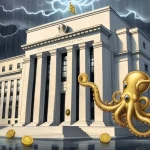
Federal Reserve Unveils 2025 Crypto Framework, Ditches 2023 Policy for Blockchain Innovation

 LTB
LTB Federal Reserve Scraps 2023 Innovation Policy for a Smarter 2025 Crypto and Blockchain Framework
The U.S. Federal Reserve Board has pulled the plug on its 2023 policy governing how state member banks can dive into innovative activities, replacing it with a 2025 framework that’s less about knee-jerk tech bans and more about tackling actual risks. This pivot isn’t just paperwork—it’s a potential game-changer for blockchain, Bitcoin, tokenization, and AI in banking, signaling the Fed’s readiness to embrace disruption while keeping the financial system from imploding.
- Old Policy Out: 2023 guidelines withdrawn, swapped for a 2025 risk-focused framework.
- Tech-Neutral Stance: Shifts from targeting crypto to evaluating underlying risks in any innovation.
- Banking Impact: Sets new rules for crypto, tokenization, AI, and payments in regulated finance.
From Crypto Panic to Pragmatic Oversight
Cast your mind back to 2022—a year of crypto chaos with disasters like Terra/Luna and FTX cratering, wiping out billions and spooking regulators worldwide. The Fed’s 2023 policy on bank innovation was forged in that furnace of distrust, treating crypto-related activities as ticking time bombs. Concerns over liquidity shocks—sudden cash crunches from volatile digital assets—and operational fragility, like hacks or tech failures, dominated the narrative. Banks dabbling in blockchain or digital currencies faced intense scrutiny, often discouraged by supplementary guidance that flagged crypto as a uniquely dangerous beast. It was like a parent locking away the car keys after one reckless driver—overreaction rooted in fresh trauma. For more details on the withdrawal of the earlier guidelines, check out the Federal Reserve’s decision to scrap the 2023 policy.
By 2025, the Fed has seemingly cooled off. The new framework tosses out those crypto-specific red flags, opting instead for a risk-based lens. It’s not about whether a bank is experimenting with Bitcoin custodial services or Ethereum smart contracts; it’s about whether they can manage the inherent dangers of those activities. This shift feels like a win for decentralization advocates, as it recognizes that innovation itself isn’t the villain—shoddy execution is. The Fed’s implied message is straightforward: banks can play in the sandbox of tokenized assets or programmable payments, but they’d better have their safety nets ready.
Decoding the Jargon: What’s at Stake?
For those new to the space, let’s break down some core concepts. Tokenization is the process of turning real-world assets—think property, stocks, or even fine art—into digital tokens on a blockchain. This enables fractional ownership and lightning-fast, secure trades, but it’s not without pitfalls like regulatory uncertainty or tech glitches. Programmable settlements, often powered by smart contracts on platforms like Ethereum, are self-executing agreements that automatically complete transactions when conditions are met—no middleman needed. They could revolutionize banking efficiency, yet a buggy code can mean millions lost in seconds.
Then there’s the regulatory split between insured and uninsured state member banks. Insured banks are backed by the Federal Deposit Insurance Corporation (FDIC), a government body that protects depositors’ money up to $250,000 if a bank fails. Their innovation must align with what national banks are allowed to do under federal rules. Uninsured banks, lacking this safety net, face harsher scrutiny on “safety and soundness”—ensuring they won’t collapse under risky bets—and “systemic stability,” meaning their failure can’t domino into a broader financial crisis. They’re expected to hold high-quality liquid assets (think cash or easily sellable securities) or enough loss-absorbing capacity—basically, a financial cushion to eat losses without breaking. It’s a tailored approach, acknowledging not all banks pose the same threat to the system.
Beyond Crypto: A Wider Innovation Horizon
While blockchain enthusiasts are buzzing about implications for Bitcoin and altcoins, the 2025 framework casts a broader net. Picture AI-driven tools that forecast market swings or automate compliance checks—game-changing, but a black-box algorithm with hidden biases could wreak havoc if unchecked. Or consider next-gen payment systems slashing cross-border transfer times from days to seconds, yet potentially opening floodgates to fraud if safeguards don’t keep up. The Fed’s stance is crystal clear: innovate all you want, but your risk controls, transparency to regulators, and internal governance better match the pace of your shiny new toys.
Bitcoin maximalists like myself see a silver lining here. Bitcoin, with its unmatched decentralization and store-of-value credentials, could gain legitimacy as banks explore custodial services under less hostile oversight. Ethereum and other altcoins, meanwhile, might fuel tokenization and settlement experiments, filling niches Bitcoin isn’t built for. It’s not about picking winners—it’s about letting the ecosystem breathe, provided the guardrails hold.
The Flip Side: Don’t Pop the Champagne Yet
Let’s not get carried away with optimism. This isn’t a free pass for banks to launch half-baked stablecoins or slap blockchain on everything without a plan. Uninsured banks, especially, are under a regulatory microscope, needing to prove they won’t tank the economy if their crypto bet goes bust. Even insured banks must wade through a maze of oversight to avoid endangering depositors or the FDIC’s fund. And let’s be brutally honest—the crypto space still reeks of predatory garbage. Rug pulls, scam tokens, and shady exchanges haven’t vanished, and banks could amplify those messes if they dive in recklessly. The Fed isn’t here to babysit bad decisions; it’s here to keep the fallout contained.
Another devil’s advocate point: a risk-based approach sounds great, but what if banks fudge their risk reports? Or worse, what if regulators lack the blockchain expertise to spot red flags in complex smart contracts or decentralized protocols? Smaller banks, already strapped for resources, might struggle to build the robust systems needed to satisfy the Fed, potentially leaving innovation as a playground for deep-pocketed giants. This could widen the gap between big finance and scrappy disruptors—the opposite of decentralization’s ethos.
Global Lens: Where Does the Fed Fit?
Zooming out, the Fed’s pivot mirrors a global push to tame innovation without killing it. The EU’s Markets in Crypto-Assets (MiCA) regulation sets a comprehensive rulebook for digital assets, aiming for clarity while protecting consumers. The UK’s fintech sandboxes let startups test blockchain solutions in a controlled environment, balancing risk with progress. The Fed’s risk-focused 2025 framework feels like part of this trend—a grudging acceptance that decentralized tech isn’t a passing fad but a cornerstone of future finance. Still, compared to MiCA’s granular rules, the Fed’s guidance remains broad, leaving room for interpretation (and possibly inconsistency) in how risks are assessed.
Looking ahead, imagine a 2030 where central bank digital currencies (CBDCs) clash or coexist with Bitcoin, or where institutional adoption pushes Bitcoin into reserve asset territory. The Fed’s current stance might evolve further, either tightening if a major bank stumbles or loosening as blockchain proves its resilience. For now, this policy feels like a cautious step forward—one that could nudge decentralized tech closer to mainstream, if banks and innovators don’t botch the opportunity.
Key Takeaways and Burning Questions
- Why did the Federal Reserve ditch the 2023 policy for a 2025 crypto and blockchain framework?
The Fed saw that innovation, including digital assets, has matured since the 2023 policy, which was shaped by 2022 market meltdowns like FTX. The new focus on specific risks over blanket tech bans aims for a balanced approach to banking disruption. - What’s the biggest shift in the Fed’s 2025 banking innovation stance?
It’s moved to a risk-based evaluation, judging activities like tokenization or AI by their actual dangers, not whether they involve Bitcoin or Ethereum, offering a more nuanced regulatory perspective. - Can banks now freely explore Bitcoin, Ethereum, and tokenization under this policy?
Not exactly—while crypto stigma is fading, banks must show strong risk management and transparency. Uninsured banks, in particular, face tougher scrutiny to ensure financial safety isn’t compromised. - How does the 2025 policy shape blockchain’s role in traditional finance?
It opens pathways for tokenized assets, smart contract settlements, and potentially Bitcoin custody in banking, as long as safety standards hold, possibly speeding up decentralized tech’s mainstream integration. - What risks might the Fed’s new framework still miss in crypto and banking?
Plenty—crypto volatility, smart contract flaws, and scam artists persist. If oversight lags or banks misstep, these issues could spiral into wider financial headaches, no matter how smart the policy. - How does this align with global blockchain regulation trends like the EU’s MiCA?
The Fed’s risk-based focus echoes efforts like MiCA and UK fintech sandboxes, which foster crypto and blockchain progress within safe limits, hinting at a growing worldwide consensus on managing innovation.
Ultimately, the Fed’s overhaul is a nod to a future where Bitcoin, Ethereum, and decentralized systems aren’t just sidelined experiments but integral to finance—provided the groundwork is solid. It’s far from perfect, and regulators won’t hype your favorite coin, but it’s a damn sight better than the 2023 fear-fest. For those of us rooting for disruption and freedom from centralized chokeholds, it’s a tentative green light to push harder. Just remember: the guardrails are there for a reason, and if the system crashes, don’t expect a bailout from Uncle Sam.