Ferrari Accepts Bitcoin and Crypto Payments in the U.S. and Europe
 LTB
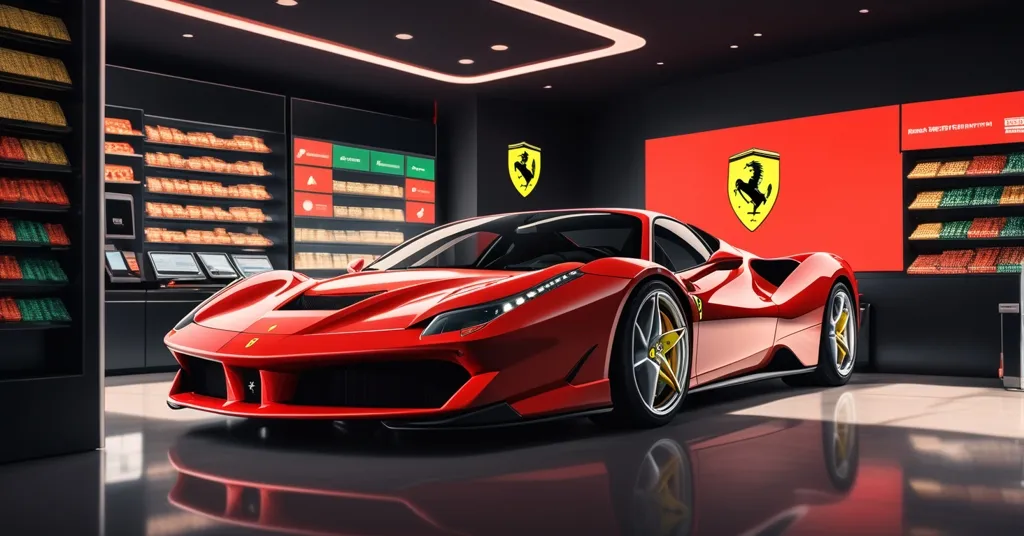
LTB Ferrari is now accepting Bitcoin and other crypto payments in the United States and Europe, giving one of the most recognizable luxury brands on the planet a real place in the digital asset economy.
- Ferrari expands crypto payments across the US and Europe
- Bitcoin is accepted, alongside other crypto payment options
- Luxury brand adoption adds credibility, but it is still niche
- Payment acceptance is not the same as balance-sheet conviction
Ferrari taking Bitcoin payments is a tidy little signal that crypto is no longer just the playground of traders, speculators, and people staring at charts like they’re reading tea leaves. A legacy carmaker with serious brand cachet does not casually attach itself to something it sees as pure nonsense. If Ferrari is comfortable letting customers pay with Bitcoin and crypto, that says something. Not everything, but something.
The move matters because it puts Bitcoin in a category it has been inching toward for years: not just an asset to hold, but a tool to spend. That distinction is important. Bitcoin adoption is not only about price action or exchange listings. It is also about merchant acceptance, payment infrastructure, and whether digital assets can function in the real economy without collapsing into a pile of hype and technical friction.
For Ferrari customers, the appeal is obvious. A buyer in the U.S. or Europe may want to pay with Bitcoin for convenience, for privacy, for cross-border flexibility, or simply because it is the most natural asset they hold. A high-end buyer often cares less about squeezing every last cent out of a payment rail and more about speed, discretion, and optionality. If a Ferrari can be bought with crypto, that is a status move, yes — but it is also a practical one for the right customer.
There is also a very boring but very real business reason brands do this: more payment options can mean more sales. Luxury brands already deal with international customers, expensive purchases, and buyers who are used to moving money across borders. Bitcoin payments in the United States and Europe fit that use case better than they fit the average grocery run. That does not make the use case trivial. It makes it specific.
That said, a luxury carmaker accepting Bitcoin does not mean Ferrari is suddenly going full cypherpunk and stacking sats on its balance sheet like a sovereign orange-pill bunker. In many cases, merchants use payment processors that handle the crypto side and convert the payment into fiat currency, such as dollars or euros, almost immediately. In plain English: the customer pays in Bitcoin, but the merchant may end up with cash instead of holding volatile crypto. That is not a betrayal of the mission. It is basic risk management. Volatility is fun for traders; it is a nuisance for payroll and inventory.
That nuance matters because the crypto space loves to blur the line between accepting Bitcoin and believing in Bitcoin. The two are not identical. A company can support crypto payments while still treating digital assets as a back-end convenience rather than a strategic treasury decision. Still, even that limited form of adoption matters. Each merchant that flips the switch helps normalize the idea that Bitcoin is not just a speculative instrument — it is a usable payment asset.
Ferrari’s move also highlights the broader split between Bitcoin as money and the wider crypto market. Bitcoin remains the strongest candidate for a censorship-resistant, portable form of digital money. Other blockchains and tokens may serve different purposes: faster settlement, smart contracts, gaming economies, tokenized assets, or experimental financial infrastructure. Not every chain needs to be money. Not every token deserves a standing ovation. Some are useful tools. Some are just glossy nonsense with a mascot.
There is a practical reason Bitcoin tends to get this kind of recognition from brands with global customers. It is the most widely understood digital asset, the most established, and the one that carries the strongest brand association with hard money and long-term value storage. For a luxury buyer, that matters. For a business, that means fewer headaches than trying to explain some random token that was minted last Thursday by a team with a Discord server and a dream.
Still, it would be foolish to oversell the significance. Ferrari accepting crypto is not mass adoption. It is not proof that the average household will soon pay rent, buy groceries, and settle taxes in Bitcoin. It does not solve Bitcoin’s throughput limits, price volatility, or user experience quirks. A payment option at the high end of the market is not the same thing as broad consumer usage.
But dismissing it as a mere marketing stunt would be too easy and, frankly, a bit lazy. Luxury brands are often early adopters because their customers are international, affluent, and more likely to own digital assets. They also benefit from being seen as forward-looking without having to bet their entire business on the technology. In other words, they can test the rails while the rest of the market argues about whether crypto is dead for the 400th time this month.
The bigger takeaway is that merchant adoption keeps expanding in places where the fit makes sense. Payments matter. Real payments matter more than price predictions, and real-world acceptance matters more than another clownish call for “BTC to $1 million” based on vibes, lines on a chart, and financial astrology. Ferrari’s move is not a moonshot headline. It is a reminder that Bitcoin’s utility is showing up where the stakes are high and the buyers are picky.
For Bitcoin holders, this is another brick in the wall of legitimacy. For skeptics, it may look like a niche luxury perk with limited practical impact. Both views have merit. The truth sits in the middle: Ferrari accepting Bitcoin and crypto payments in the U.S. and Europe is meaningful because it normalizes digital assets in premium commerce, but it is not some magical proof that crypto has won.
What it does prove is simpler: the old financial gatekeepers are no longer the only game in town. If a Ferrari can be bought with Bitcoin, then Bitcoin is no longer just something people argue about online. It is something people can actually spend.
Key takeaways and questions
-
Why does Ferrari accepting Bitcoin matter?
It shows that a globally recognized luxury brand sees enough demand and operational value to support crypto payments. That adds legitimacy, even if the use case is still niche. -
Does Ferrari accepting crypto mean it is betting on Bitcoin’s price?
Not necessarily. Many merchants use payment processors that convert crypto into fiat right away, which limits exposure to volatility. This is about payment acceptance, not necessarily a treasury strategy. -
Is this mainstream crypto adoption?
It is adoption, but not broad consumer adoption. Luxury purchases are a small slice of the economy, though they can still shape perception and encourage more merchant support. -
What does this say about Bitcoin’s role?
It reinforces Bitcoin’s role as a usable payment asset for certain buyers, especially those who value portability, cross-border flexibility, and less reliance on traditional rails. -
What is the catch?
Adoption at the checkout counter does not solve Bitcoin’s scaling or volatility challenges. It is a meaningful step, not a finished revolution.