Kevin Warsh Advances as Fed Chair Odds Rise, Powell Exit Looms for Bitcoin Markets
 LTB
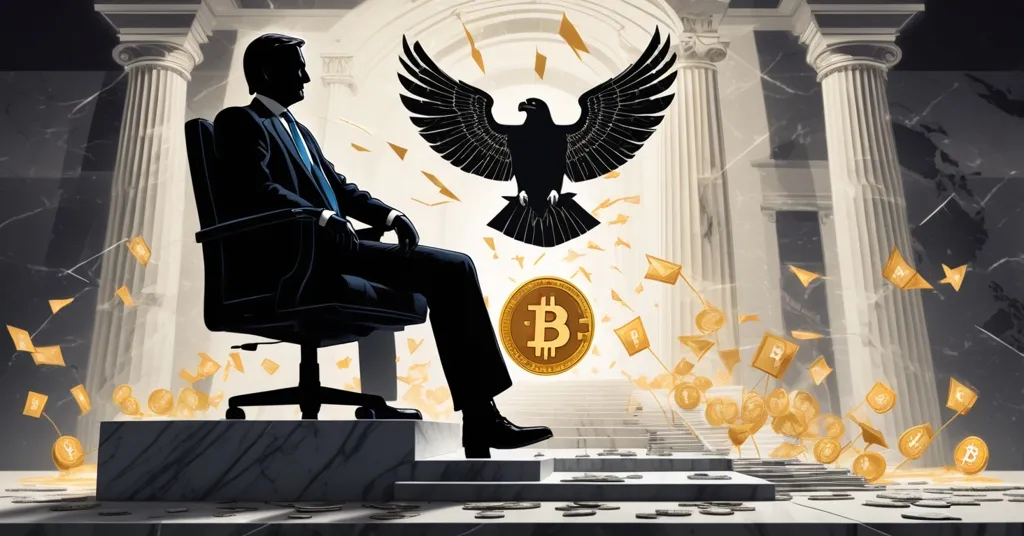
LTB Senate Banking Committee advances Warsh for Fed Chair, Powell’s exit likely
The Federal Reserve is back in the spotlight, with the Senate Banking Committee reportedly moving Kevin Warsh closer to a possible Fed Chair role while Jerome Powell’s departure looks increasingly likely. That’s not just Beltway drama — it could matter for interest rates, inflation, dollar liquidity, and the mood across Bitcoin and crypto markets.
- Kevin Warsh is being pushed forward as a serious Federal Reserve Chair contender.
- Jerome Powell appears to be nearing the end of his run at the Fed.
- A Fed leadership change could shift the outlook for rates, inflation, and liquidity.
- Markets will judge the next chair on one thing: hawkish or dovish — and what that means for risk assets.
The Senate Banking Committee matters here because it sits near the front of the line when major Fed leadership changes start to take shape. If Warsh is being advanced through that process, it suggests more than idle speculation. In Washington terms, that means he’s not just another name being tossed around by policy wonks and cable-news narrators trying to sound important before lunch.
Kevin Warsh is a familiar figure in central banking circles. He served as a Federal Reserve governor and is generally viewed as an establishment-friendly, inflation-wary policymaker. In plain English, that means he’s the kind of figure who may be less enthusiastic about cheap money, more focused on keeping inflation under control, and more skeptical of the Fed’s habit of acting like it can fine-tune the entire economy with a joystick and a prayer.
Jerome Powell, meanwhile, has been one of the defining financial figures of the past several years. He oversaw the Fed through an inflation surge, aggressive rate hikes, and the usual market tantrums that come whenever investors remember money is not free forever. If his exit is indeed becoming more likely, that would mark a meaningful transition at the top of the U.S. central bank.
The stakes are high because the Federal Reserve does far more than set boring meeting dates and produce polished statements. It controls monetary policy — the Fed’s tools for influencing inflation, borrowing costs, and overall financial conditions. When the Fed raises rates, money gets more expensive and speculative assets often take a hit. When it cuts rates or keeps conditions loose, capital tends to flow more freely, and assets like Bitcoin often benefit.
That’s why the phrase “Fed Chair” matters so much to traders. It’s not just a personnel change. It can signal a shift in how the U.S. central bank thinks about inflation, recession risk, and market support. A chair seen as more hawkish — meaning more focused on fighting inflation, usually by keeping rates higher — can put pressure on risk assets. A more dovish chair — meaning more willing to support growth and cut rates sooner — usually gives markets more breathing room.
Warsh is often placed closer to the hawkish end of that spectrum. That doesn’t make him a market villain or some cartoon Fed assassin with a briefcase full of rate hikes. It does suggest that if he becomes Fed Chair, the market may expect a more disciplined, less inflation-tolerant central bank. For Bitcoin, that creates a mixed picture.
Short term, a hawkish or restrictive Fed can weigh on BTC and the broader crypto market because liquidity tightens, borrowing gets more expensive, and risk appetite usually shrinks. Longer term, though, a more hard-money-minded Fed can also sharpen the case for Bitcoin itself. When people lose faith in endless money printing and financial engineering, a scarce asset with a fixed supply starts looking a lot less like internet cosplay and a lot more like a serious monetary alternative.
That’s the paradox Bitcoin keeps exposing: the system doesn’t need to collapse for hard money to make sense. It just needs to keep revealing its own bad habits.
Still, it’s worth being careful with the narrative. A Fed leadership change is not an automatic bull case for Bitcoin, and it’s not automatically bearish either. Markets often overreact to leadership speculation long before actual policy shifts matter. If the next chair is seen as credible and orderly, investors may welcome the transition. If the appointment is interpreted as a signal of tighter policy for longer, stocks, bonds, and crypto could all feel the squeeze.
There’s also a political angle here that shouldn’t be ignored. The Fed is supposed to operate with a degree of independence, but no one serious believes central banking exists in a vacuum. The next chair will be judged not only on inflation and unemployment, but also on how well they navigate the ugly little reality that monetary policy and politics are always in bed together, even when they pretend not to be.
For Bitcoin holders, the practical question is simple: what does this mean for liquidity? Easy money tends to feed speculation. Tight money tends to starve it. That’s true across markets, from high-growth tech to altcoins to leveraged degen positions that never should have existed in the first place. If Warsh is the next chair and Powell is on the way out, traders will be watching for signs that the Fed is about to become less generous with financial conditions.
Key questions and takeaways
What does it mean that the Senate Banking Committee advanced Warsh?
It suggests Kevin Warsh is moving closer to being considered for Federal Reserve Chair. Depending on the exact process behind the move, it may reflect political support, procedural progress, or both.
Is Jerome Powell definitely leaving?
Not necessarily based on the title alone. The stronger takeaway is that Powell’s exit is being viewed as increasingly likely, which signals rising expectation of a leadership transition at the Fed.
Why does a Fed Chair change matter for Bitcoin?
Because the Fed helps shape interest rates and liquidity. Those two things heavily influence risk assets, including Bitcoin and the broader crypto market.
Would Kevin Warsh be bullish or bearish for crypto?
Probably mixed in the short term. A more hawkish Fed can pressure Bitcoin and altcoins if liquidity tightens, but a hard-money posture can also reinforce Bitcoin’s long-term value proposition.
What is a hawkish Fed?
A hawkish Fed is more focused on fighting inflation, often by keeping interest rates higher and avoiding easy money policies.
What is a dovish Fed?
A dovish Fed is more willing to support growth and financial markets, often by cutting rates sooner or keeping money conditions loose.
The bigger picture is that Fed leadership is not some dusty Washington side quest. It’s a live input into the price of money, the strength of the dollar, and the direction of global risk appetite. If Warsh really is climbing toward the top job and Powell is heading for the door, Bitcoin and crypto markets will be reading every signal for clues about what kind of monetary regime comes next. And unlike the usual influencer nonsense, this actually matters.