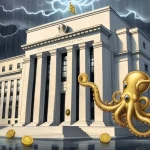
Kraken’s Fedwire Access Ignites Controversy with Maxine Waters’ Sharp Criticism

 LTB
LTB Kraken’s Historic Fedwire Access Sparks Backlash from Top Democrat Maxine Waters
A monumental breakthrough for the cryptocurrency industry has ignited a firestorm of debate on Capitol Hill. The Federal Reserve Bank of Kansas City recently granted Kraken Financial, the banking arm of a leading U.S. crypto exchange, a “limited purpose account,” giving it direct access to the Federal Reserve’s payment system, Fedwire. This historic move has drawn sharp criticism from Representative Maxine Waters, the top Democrat on the House Financial Services Committee, who is questioning the transparency, legality, and potential risks of such a decision.
- Kraken becomes the first crypto firm to access Fedwire, handling over $4 trillion in daily transactions.
- Rep. Maxine Waters demands answers on the approval’s legal basis and risks to financial stability.
- Traditional banks fear crypto integration could destabilize the U.S. payment system.
Kraken’s Watershed Moment in Crypto Legitimacy
Earlier this month, the Kansas City Fed dropped a bombshell: Kraken Financial secured a master account with “limited purpose” status, making it the first cryptocurrency entity to plug directly into Fedwire. This interbank payment system, operated by the Federal Reserve, processes a staggering $4 trillion in transactions daily—more than the GDP of most countries combined. For Kraken, this means bypassing the slow, pricey middlemen—traditional banks—that have long acted as gatekeepers for crypto firms. The result? Faster, more efficient transfers, especially for high-volume clients and professional traders who need seamless access to liquidity. This is no small feat; it’s a giant leap toward mainstream financial integration for blockchain-based businesses.
For years, crypto exchanges like Kraken have been forced to partner with banks that often treat them like cash cows, slapping on exorbitant fees or imposing tight restrictions. Direct access to Fedwire is akin to getting a backstage pass to the financial core of the U.S., a privilege typically reserved for heavily regulated institutions. Kraken, founded in 2011 and known for its relatively strong compliance record—including registering as a Money Services Business with FinCEN—has positioned itself as a credible player. Still, it’s not without baggage, having settled with the SEC in 2022 over its staking services for $30 million. Whether it’s the “safe” bet for such access remains a point of contention, but there’s no denying the symbolic weight of this approval. It screams that crypto isn’t just a fringe experiment—it’s knocking on the door of legitimacy.
Maxine Waters’ Pushback: A Call for Clarity
While crypto enthusiasts might see this as a long-overdue victory, not everyone is ready to celebrate. Rep. Maxine Waters, a heavyweight in financial policy as the Ranking Member of the House Financial Services Committee, has come out swinging. In a pointed letter to Jeff Schmid, President of the Kansas City Fed, she demanded a full accounting by April 10, 2026, of Kraken’s access privileges, any restrictions in place, and the risk management measures considered during the approval process, as detailed in a recent report on the Kansas City Fed’s approval of Kraken’s master account. Her skepticism carries weight, and it’s not hard to see why. The term “limited purpose account” sounds like a neat little workaround, but here’s the rub: neither federal statutes nor the Federal Reserve Board’s own Account Access Guidelines mention this account type. So, what legal footing is the Kansas City Fed standing on? That’s the trillion-dollar question.
“The Kansas City Fed’s announcement does not disclose specific information about Kraken’s access to the range of Federal Reserve financial services ‘due to the confidentiality of business information provided by applicants.’ However, the announcement raises questions about the approval because neither statute nor the Federal Reserve Board’s Account Access Guidelines refer to a ‘limited purpose account’ type.”
To break it down for those new to the jargon, a master account with the Federal Reserve is like a VIP pass for financial institutions, allowing direct interaction with central bank services. A “limited purpose account,” while not clearly defined, can be thought of as a restricted debit card compared to a full-blown credit card—some access, but theoretically with tight controls. Waters isn’t buying the vagueness. She’s worried that without transparent rules or legal grounding, this move could open Pandora’s box for unchecked risks, especially given the crypto market’s $2.27 trillion valuation and its notorious volatility, as tracked by TradingView’s recent charts.
Traditional Banking Fears: Guarding the Fortress
Waters isn’t the lone voice of caution. Traditional banking groups, spearheaded by the American Bankers Association (ABA), are sounding the alarm over crypto firms—even with restricted access—tapping into the heart of U.S. financial infrastructure. Their core argument is blunt: letting volatile, often under-regulated entities into Fedwire could threaten the stability of the entire payment system. And they’ve got a point. The crypto space has a rap sheet—think the 2014 Mt. Gox hack, which saw $460 million vanish, or the 2022 Terra-LUNA collapse that wiped out $40 billion in value overnight. If a firm like Kraken were to stumble while connected to Fedwire, the shockwaves could rattle far beyond digital wallets.
But let’s not pretend this resistance is pure altruism. Banks have a vested interest in protecting their turf. They’ve profited handsomely from acting as intermediaries, often treating crypto companies like ATMs with fees that’d make your wallet weep. The ABA’s stance reeks of gatekeeping as much as it does genuine concern. Crypto’s disruptive potential—rooted in blockchain’s promise of decentralization—threatens their monopoly on money movement. Still, the risk argument isn’t baseless. A single ransomware attack, like the 2021 Colonial Pipeline incident partially paid in Bitcoin, shows how digital assets can intersect with real-world chaos. If Fedwire becomes a conduit for such vulnerabilities without ironclad safeguards, the fallout could be disastrous.
Regulatory Context: A Chaotic Mosaic
Zooming out, Kraken’s breakthrough isn’t an isolated event—it’s a flashpoint in the broader tug-of-war between innovation and oversight. Crypto firms have been shut out of Federal Reserve payment systems for over a decade, with Fed policies historically citing risk aversion to non-traditional entities. Past denials often leaned on concerns about anti-money laundering (AML) gaps and consumer protection failures, forcing companies to rely on intermediary banks. Kraken’s approval signals a crack in that wall, but it comes amid a messy regulatory landscape. The Office of the Comptroller of the Currency (OCC), a federal agency overseeing national banks, has recently granted conditional bank charters—essentially provisional licenses to operate like banks under strict rules—to crypto and fintech players like Ripple, Circle, BitGo, Paxos, and Fidelity.
These parallel moves blur the lines between traditional finance and digital assets, hinting at a slow but contentious shift in federal attitudes. Yet, legal gaps persist. There’s no cohesive framework for how crypto fits into regulated systems, leaving decisions like Kraken’s vulnerable to pushback. Waters’ scrutiny reflects a larger debate in Washington: can blockchain innovation coexist with financial stability, or are we moving too fast for our own good? The stakes are high, and the lack of clarity around terms like “limited purpose account” only fuels the fire of uncertainty.
The Upside: Accelerating a Decentralized Future
As a Bitcoin maximalist at heart, I can’t help but cheer for anything that chips away at the creaky, gatekeeper-heavy financial system. Kraken’s access to Fedwire, if handled with proper guardrails, could be a proof of concept for mainstreaming crypto. Beyond just efficiency, direct access might lower transaction costs for end users—think cheaper remittances or trading fees. It could also enable new blockchain-based financial products, like real-time settlement tools or tokenized assets, that traditional banks have been too sluggish to innovate on. If we’re serious about effective accelerationism—pushing systems forward faster, flaws and all—experiments like Kraken’s are the messy but necessary first steps toward a decentralized future rooted in freedom and privacy.
Playing Devil’s Advocate: The Case for Caution
That said, let’s not drink the Kool-Aid just yet. Waters and the ABA have valid reasons to slam on the brakes. Crypto’s track record isn’t spotless—beyond Mt. Gox and Terra-LUNA, countless rug pulls and scams have burned investors to the tune of billions. The industry still grapples with fraudsters and fly-by-night projects that taint its reputation. Handing direct access to federal systems without bulletproof oversight feels like giving a toddler a loaded gun and hoping they don’t pull the trigger. If the Kansas City Fed can’t even define “limited purpose” under existing law, how can we trust they’ve got the safeguards to prevent a meltdown? Transparency isn’t a luxury here—it’s a necessity.
On the flip side, stifling innovation out of fear is how you end up with a stagnant, monopolistic system that only serves the entrenched elite. Bitcoin and blockchain tech are about dismantling outdated power structures, not bowing to them. Kraken’s milestone could force regulators to finally update frameworks for the digital age, rather than hiding behind decades-old rules. The tightrope is clear: embrace the future without letting it blow up in everyone’s face. Balance isn’t just ideal—it’s survival.
What’s at Stake for Crypto?
This isn’t just about one exchange or one Fed branch—it’s a defining moment for cryptocurrency’s place in the U.S. financial system. Will Kraken’s bold step drag finance into the future, or trip it up on the untamed edges of blockchain? If Waters’ demands for answers by 2026 aren’t met with satisfactory detail, we could see escalated congressional oversight, public hearings, or even rushed legislation to curb crypto access until risks are better managed. Alternatively, success here might embolden other firms to push for similar approvals, accelerating adoption despite the growing pains. Only time—and maybe a few fiery debates on Capitol Hill—will tell.
For now, Waters’ insistence on clarity isn’t bureaucratic noise; it’s a signal that Congress won’t let the Fed play mad scientist with the payment system without a damn good explanation. And frankly, they shouldn’t. Innovation? Hell yes. Recklessness? Hard pass. The outcome of this clash could shape whether crypto becomes a cornerstone of modern finance or remains a rebellious outsider for another decade.
Key Questions and Takeaways on Kraken’s Fedwire Access Controversy
- What makes Kraken’s access to Fedwire a historic moment for cryptocurrency?
Kraken Financial is the first crypto exchange to gain direct access to the Federal Reserve’s payment system, handling $4 trillion daily, marking a major step toward mainstream financial integration and cutting out costly banking intermediaries. - Why is Rep. Maxine Waters challenging the Kansas City Fed’s decision on Kraken?
As a top Democrat on the House Financial Services Committee, Waters questions the opaque approval process, the undefined “limited purpose account” status, and potential risks to financial stability, demanding detailed answers by April 2026. - How do traditional banks view crypto exchanges like Kraken joining federal systems?
Groups like the American Bankers Association fear systemic risks from crypto’s volatility and lack of regulation, though their resistance may also stem from protecting their dominance against disruptive blockchain innovation. - What are the broader implications of Kraken’s Fedwire access for blockchain regulation?
This milestone reflects a growing but contentious trend of crypto integration into regulated finance, alongside OCC charters for firms like Ripple and Circle, yet legal gaps and regulatory uncertainty continue to fuel heated debates. - What risks could arise from crypto firms accessing Federal Reserve payment systems?
Past failures like Mt. Gox and Terra-LUNA highlight how hacks, scams, or market crashes could ripple through Fedwire if safeguards aren’t robust, potentially destabilizing the broader U.S. financial infrastructure. - Could Kraken’s breakthrough accelerate cryptocurrency adoption in mainstream finance?
If managed with proper oversight, direct access could lower costs, speed up transactions, and pave the way for new blockchain-based financial products, pushing decentralization deeper into the traditional system. - What might happen if the Kansas City Fed fails to address Waters’ concerns by 2026?
Escalated congressional scrutiny, public hearings, or new legislation could emerge to restrict or redefine crypto access to federal systems, shaping the industry’s trajectory for years to come.