Kraken’s Historic Fed Account Win Sparks Banking Backlash and Crypto Revolution Debate
 LTB
LTB Banks Fight Kraken’s Federal Reserve Approval: Crypto Threat or Financial Revolution?
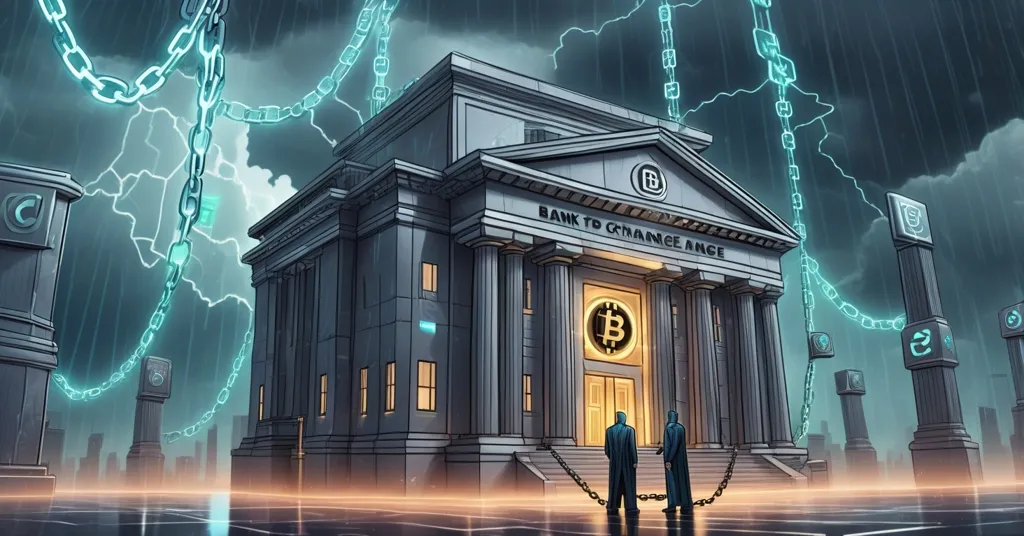
Kraken Financial, the banking arm of cryptocurrency exchange Kraken, has achieved a historic breakthrough by securing a Federal Reserve master account—the first crypto-focused entity to gain such access. Announced on Wednesday, this decision by the Kansas City Federal Reserve marks a bold step toward integrating decentralized finance (DeFi) with the U.S. central banking system. Yet, traditional banking giants are pushing back hard, labeling crypto a reckless threat to financial stability, while crypto proponents see this as a pivotal moment for innovation and freedom in finance.
- Historic First: Kraken Financial secures a Federal Reserve master account, a landmark for crypto integration.
- Banking Pushback: Groups like ICBA and Bank Policy Institute decry the move as risky and procedurally flawed.
- Legislative Fallout: The approval intensifies battles over crypto laws like the GENIUS Act and CLARITY Act.
Understanding the Master Account: Kraken’s Big Win
For those new to the financial intricacies, a Federal Reserve master account is essentially a direct connection to the U.S. central bank’s payment infrastructure. It allows an institution to hold reserves and settle transactions in central bank money—funds issued and guaranteed by the Fed, widely regarded as the most secure form of currency in the American system. For Kraken Financial, operating under a Wyoming Special Purpose Depository Institution (SPDI) charter, this access is a game-changer. It creates a direct link between the often unpredictable world of cryptocurrency and the rigid structure of traditional finance, cutting out intermediaries like correspondent banks that typically slow down processes and add fees.
However, this isn’t a full-fledged banking license. Kraken’s account is a “skinny” version, which means it can hold reserves and process settlements but is restricted from issuing loans or accessing the Fed’s discount window—a critical emergency funding mechanism banks use during liquidity crises. Picture it as getting invited to the high-stakes poker table but only being allowed to watch from the sidelines on certain plays. Despite these limitations, the approval is a massive symbolic and practical victory, showing that crypto entities can operate within the same frameworks as legacy financial players.
Kraken’s Regulatory Odyssey: A Hard-Fought Path
Kraken Financial didn’t stumble into this milestone by accident. Since obtaining its Wyoming SPDI charter in 2020—one of the first charters tailored for crypto firms to function under bank-like regulatory oversight—it has faced a gauntlet of skepticism from federal and state regulators wary of digital assets’ wild price swings and scandal-ridden history. Wyoming’s progressive stance allowed Kraken to custody client funds and offer banking services, but federal acceptance remained a distant goal until this week. The Kansas City Federal Reserve’s decision is not just a win; it’s a defiant stand against years of doubt from the traditional finance establishment.
Banking Backlash: Genuine Concern or Turf War?
The crypto community has every reason to celebrate this as a step forward, but traditional banks are far from thrilled. Heavyweights like the Independent Community Bankers of America (ICBA) and the Bank Policy Institute have unleashed sharp criticism, warning that integrating crypto firms into the Fed’s system could spell disaster for financial stability, as detailed in a recent report on banks opposing Kraken’s Federal Reserve approval. They point to crypto’s notorious volatility—cases like the Terra/Luna collapse in 2022, which erased over $40 billion in value almost overnight, or the countless hacks and scams that have cost investors billions—as evidence of the sector’s dangers. Their argument isn’t without merit: if a crypto firm with direct Fed access implodes, the ripple effects could strain the broader economy, potentially leaving taxpayers on the hook.
Adding fuel to their fury, the Bank Policy Institute accuses the Kansas City Federal Reserve of flouting protocol by approving Kraken’s application without a public comment period. Journalist Eleanor Terrett of Crypto In America notes that banking lobbyists view this as a blatant disregard for transparency and due process. But let’s cut through the noble rhetoric—banks aren’t just playing guardian angels here. For generations, they’ve controlled the financial plumbing of payments and settlements. Kraken’s entry into their exclusive club threatens that dominance, risking their bloated profit margins from transaction fees and intermediary roles. This isn’t just about protecting the system; it’s about protecting their own damn interests.
The Crypto Counterpunch: Why Innovation Must Prevail
On the other side of the ring, crypto advocates are rolling their eyes at the doomsday predictions. They argue that stifling progress out of fear is a tired tactic from the old guard. A master account for Kraken could deliver tangible benefits—faster, cheaper transaction settlements that undercut the hefty fees banks often charge. It’s also a proof of concept that decentralized systems can coexist with traditional finance without triggering Armageddon. Sure, Bitcoin maximalists might scoff at any compromise with centralized institutions like the Fed, but even they can’t ignore the practical upside. This aligns with the spirit of effective accelerationism—pushing technological progress forward at full throttle, even if it means navigating rough patches. If Kraken can handle this responsibly, it could inspire confidence in regulators to open similar doors for other crypto firms, fostering competition that ultimately benefits users with lower costs and more options.
Legislative Battlefield: Stablecoins and Regulatory Gridlock
This controversy unfolds against a backdrop of heated legislative debates over how to govern digital assets in the U.S. Two pieces of legislation stand at the center of the storm: the GENIUS Act, signed into law last year, and the CLARITY Act, currently mired in congressional gridlock. The GENIUS Act addresses stablecoins—cryptocurrencies designed to maintain a stable value by pegging to assets like the U.S. dollar—but traditional banks are up in arms over language that might permit crypto firms to offer interest on idle stablecoin balances. This potential loophole horrifies them, as it could rival traditional savings accounts and lure customers away.
“We want to continue negotiating, and what we’re trying to do is defend the agreement in-principle of no interest on balances, making sure no holes are punched in that.” – Unnamed banking source speaking to Crypto In America
This statement reveals the banking sector’s deep anxiety about losing ground. Meanwhile, the CLARITY Act, intended to establish clear market structures for digital currencies, remains stalled amid fierce disagreements between traditional finance and crypto stakeholders. It’s a messy standoff, akin to a high-stakes poker game where no one wants to show their hand first. Kraken’s master account approval adds urgency to these debates, amplifying calls for regulatory clarity while exposing the raw tension between innovation and control.
Political Spotlight: Trump Weighs In
Complicating matters further, former President Donald Trump has taken to Truth Social to voice strong support for the crypto industry, pressing Congress to pass comprehensive legislation like the CLARITY Act. Positioning digital assets as a pillar of economic freedom and American innovation, his stance starkly opposes the banking sector’s resistance. It’s a loud signal of a growing political current favoring disruption over preservation of the status quo. Yet, let’s not overstate the impact—tweets and posts don’t resolve the tangled web of regulatory ambiguity or mend the rift between decentralized tech and legacy finance. Trump’s endorsement boosts morale for crypto advocates, but the heavy lifting remains undone.
Echoes of History: Fintech’s Early Struggles
This isn’t the first time a disruptive force has clashed with financial incumbents. Rewind to the early 2000s, when online banking and fintech pioneers like PayPal faced similar accusations of posing risks and unfair competition. Banks fought tooth and nail, yet digital payments are now a cornerstone of daily life. Crypto’s current battle mirrors that trajectory—chaotic, contested, and often vilified before slow acceptance. Kraken’s milestone could be a defining moment akin to PayPal’s early breakthroughs, or it might falter under the weight of banking lobbying. History suggests progress eventually wins, but not without a brutal fight, especially when deep-pocketed opponents can delay the inevitable for decades.
What’s Next: Ripple Effects for Crypto and DeFi
Looking ahead, Kraken’s achievement could serve as a beacon for other crypto players like Coinbase or Anchorage Digital, demonstrating that Federal Reserve access is within reach. If Kraken operates smoothly under this “skinny” account framework, it might nudge the Fed to refine and expand criteria for similar approvals, accelerating DeFi’s integration into mainstream finance. But don’t expect a red-carpet rollout. Banking groups will likely escalate their efforts, pushing for tighter regulations or outright reversals through political channels. Picture a worst-case scenario: a crypto firm with master account access suffers a catastrophic failure—a hack or gross mismanagement—and the fallout hands banks the perfect excuse to demand a clampdown, vindicating their dire warnings.
That said, paralyzing innovation over hypothetical disasters is a gutless move. Crypto’s rap sheet isn’t clean, with high-profile debacles like FTX or Terra/Luna proving the naysayers have ammunition. But traditional finance isn’t exactly a saint—recall the subprime mortgage crisis of 2008 that nearly tanked the global economy. Risk is baked into any financial system; the distinction lies in crypto’s potential to rebuild with transparency, user sovereignty, and decentralization as guiding principles. For Bitcoin purists, cozying up to the Fed might stink of betrayal, but pragmatism matters. Altcoins and protocols like Ethereum serve purposes Bitcoin doesn’t touch—stablecoins for daily transactions, smart contracts for programmable finance. Kraken’s foothold could lay groundwork for a hybrid financial ecosystem where centralized and decentralized systems grind against each other until a new equilibrium emerges.
Key Takeaways and Burning Questions
- What is a Federal Reserve master account, and why does Kraken’s approval matter?
It’s a direct account with the U.S. central bank, enabling Kraken Financial to hold reserves and settle transactions without intermediaries. As the first crypto entity to achieve this, it’s a historic stride toward merging decentralized finance with traditional systems, even with “skinny” account limitations. - Why are traditional banks so opposed to Kraken’s Federal Reserve access?
They cite crypto’s volatility—evidenced by crashes like Terra/Luna’s $40 billion wipeout—as a systemic risk, and they’re furious the Kansas City Fed allegedly skipped public comment protocols. Underneath, they fear erosion of their control over financial infrastructure and profits. - How does this connect to wider crypto regulatory battles?
It heightens disputes over legislation like the GENIUS Act, tied to stablecoin rules, and the stalled CLARITY Act, aimed at defining digital currency markets. Banks seek to block perks like stablecoin yields, while crypto pushes for clear, equitable regulations. - What’s the significance of political backing, such as Trump’s support?
Trump’s vocal advocacy on Truth Social frames crypto as a driver of innovation and freedom, lifting industry spirits. However, it doesn’t untangle legislative knots or close the gap between traditional finance and decentralized tech. - Could Kraken’s breakthrough influence other crypto firms or DeFi?
Potentially, it could spur approvals for entities like Coinbase if Kraken proves reliable, hastening DeFi’s mainstream traction. Yet, banking opposition and possible failures could lead the Fed to restrict access or halt future progress. - Is banking resistance purely about risk, or is there a deeper motive?
It’s both—real concerns about crypto’s instability exist, but it’s also self-preservation. Banks dread losing their stranglehold on payments and customer loyalty as decentralized tech challenges their supremacy.
This showdown transcends Kraken or master accounts—it’s a frontline skirmish in the broader war between centralized authority and decentralized disruption. Crypto thrives on upending entrenched power, and milestones like this underscore its capacity to redefine finance. But capacity alone doesn’t cut it. With banking resistance, regulatory minefields, and the industry’s own penchant for spectacular missteps, the journey forward is a gauntlet of grit and uncertainty. Kraken has cracked open a door, but holding it against the titans of old money is a battle royale. One question lingers like a shadow: will legacy finance ever yield space for the new guard, or are we cursed to replay gatekeeping sagas in a digital disguise?