Lawmakers Slam Fed on Crypto Policy as FDIC Preps Strict Stablecoin Rules
 LTB
LTB Lawmakers Blast Fed on Crypto Stance as FDIC Sets Stage for Stablecoin Rules
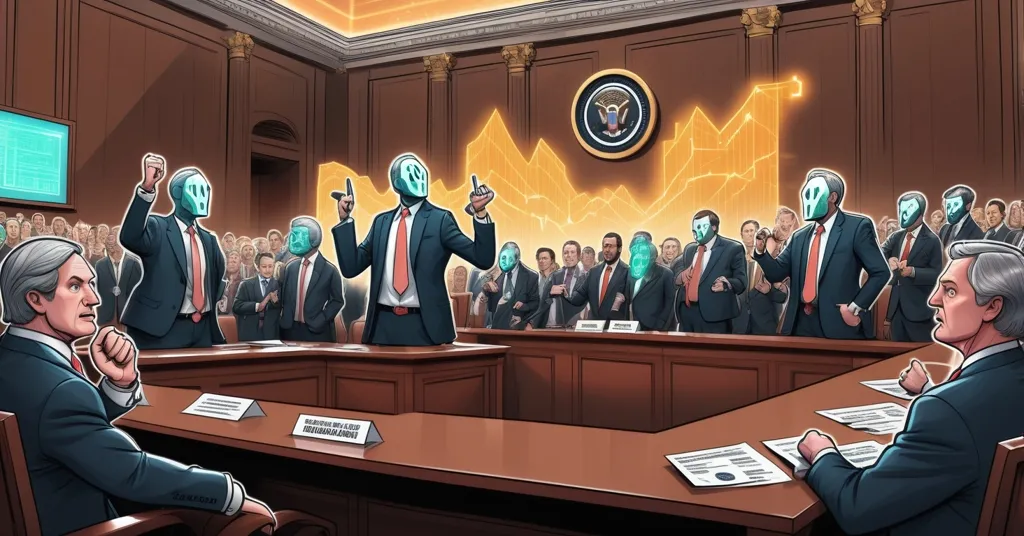
A fiery clash in a recent U.S. congressional oversight hearing has put the Federal Reserve under the spotlight for its murky stance on digital assets, while the Federal Deposit Insurance Corporation (FDIC) prepares to roll out a game-changing national framework for stablecoin regulation. This double-barreled push from lawmakers and regulators marks a critical juncture for the crypto space, as the government wrestles with integrating blockchain tech into the financial system without killing its rebellious spirit.
- Congressional Heat: Rep. Stephen Lynch grills Fed Vice Chair Michelle Bowman on banks dabbling in digital assets.
- GENIUS Act Push: New law demands a unified federal approach to payment stablecoin oversight.
- FDIC’s Power Move: National stablecoin rules coming this month, targeting bank-linked issuers with strict vetting.
Congress Turns Up the Heat on the Fed
In a tense oversight hearing, U.S. Representative Stephen Lynch didn’t hold back as he challenged Federal Reserve Vice Chair Michelle Bowman over her earlier statements urging banks to explore digital assets. Speaking last November at the Santander International Banking Conference, Bowman had pitched the idea that financial institutions should get cozy with these emerging technologies. Lynch wasn’t buying the vague rhetoric and demanded specifics: was she greenlighting cryptocurrencies like Bitcoin, or was this about something broader? Bowman pushed back, clarifying that her comments covered digital assets as a whole—think everything from tokenized securities to potential central bank digital currencies (CBDCs), not just the wild west of crypto coins.
But Lynch dug deeper, zeroing in on stablecoins, a specific type of digital asset engineered to hold steady value, usually pegged to something like the U.S. dollar. Unlike Bitcoin, which can rocket or crash in hours, stablecoins aim to stay within a tight range—most hover less than 1% from their peg—making them a go-to for transactions and a lifeline between old-school finance and the crypto frontier. Yet, as Lynch pointed out, there’s still a mess of confusion around what stablecoins really are versus other digital assets, and how the Fed plans to draw the line. This isn’t just nitpicking; without clear definitions, regulators risk either strangling innovation or leaving loopholes for chaos. The stakes couldn’t be higher as banks start testing these waters, especially with lawmakers slamming the Fed over its unclear crypto policies.
Bowman leaned on a fresh piece of legislation as her anchor: the Guiding and Establishing National Innovation for US Stablecoins (GENIUS) Act, signed into law by President Donald Trump in July. This law is a big damn deal—it’s the first stab at national rules for payment stablecoins, yanking oversight from the chaotic patchwork of state-by-state regulations that have plagued the industry. It ropes in heavy hitters like the Fed, FDIC, Office of the Comptroller of the Currency (OCC), and National Credit Union Administration (NCUA) to build a unified framework. Bowman didn’t mince words on the mandate:
“The GENIUS Act requires us to promulgate regulations to allow these types of activities.”
Then she tossed out a curveball: let Fed staff hold small chunks of crypto or other digital assets to get a real feel for the tech. Her exact pitch?
“[Staff at the Fed should be allowed to hold] small amounts of crypto or other types of digital assets” to grasp better how the technology works.
Okay, sure, hands-on learning sounds smart—until you picture a Fed employee’s meme coin exploding in value, and they’re suddenly writing policy from a penthouse. Call it a conflict of interest waiting to happen. While some might see this as a practical way to close the knowledge gap, it’s a risky dance in a space already paranoid about institutional bias.
FDIC Steps Up with a Stablecoin Crackdown
While the Fed’s still philosophizing, the FDIC is done talking and ready to act. Under acting chair Travis Hill, the agency is set to drop a national stablecoin regulatory framework later this month, zeroing in on issuers tied to FDIC-insured banks (that’s banks with federal backing to protect depositors up to $250,000 if things go south). This isn’t a suggestion—it’s a gauntlet. Stablecoin outfits operating as subsidiaries of these banks will need to file formal applications, facing a grilling on their business plans, risk management, and compliance chops. The aim is to ditch the fragmented state-level oversight for a single, hard-hitting national standard.
And they’re not stopping at a first draft. Early next year, the FDIC plans a follow-up proposal to lock in standards for capital, liquidity, and reserve assets for payment stablecoin issuers. Translation: they’re making damn sure these tokens can weather a storm and actually stay stable. For a reality check, look back three years to the Terra debacle—an algorithmic stablecoin that spectacularly imploded, wiping out billions and torching trust in the concept. That kind of disaster is exactly why regulators are obsessed with nailing this down. Stability isn’t just a catchy name; it’s the glue holding user confidence together.
For those new to the game, let’s break it down: stablecoins are digital tokens built to dodge the price rollercoasters of stuff like Bitcoin or Ethereum, often by pegging their worth to real-world assets like the dollar or gold. They’re the backbone of everything from fast cross-border payments to decentralized finance (DeFi) apps, where users lend, borrow, or trade without middlemen. Payment stablecoins, the GENIUS Act’s target, act like digital cash for everyday use. But when they “depeg”—lose that tie to their anchor—the fallout can be brutal, as Terra’s collapse showed in spades.
GENIUS Act: Lifeline or Leash?
The GENIUS Act isn’t just a bureaucratic footnote; it’s a seismic shift toward federal control over a sector that’s been a regulatory wild card. Before this, stablecoin rules were a mess of state-level quirks—think New York’s heavy-handed BitLicense versus Wyoming’s crypto-friendly sandbox. Now, with agencies like the Fed and FDIC tasked with crafting nationwide standards, there’s a shot at clarity for issuers and users alike. But let’s not pop the champagne yet. The law splits stablecoins into categories like asset-backed (tokens like USDC, tied to real reserves of cash or bonds) and algorithmic (like Terra, relying on code to balance supply and demand). Each type faces different risks, and regulators will need to tailor their approach or risk a one-size-fits-all disaster.
Globally, the U.S. isn’t alone in this fight. The European Union’s Markets in Crypto-Assets (MiCA) framework is already setting a precedent for comprehensive crypto oversight, including stablecoins. If the GENIUS Act delivers, it could position the U.S. as a leader in balancing innovation with safety. But if the FDIC or Fed overplay their hand with suffocating rules, don’t be shocked if startups bolt to places like Singapore or Dubai, where red tape doesn’t strangle at first sight. The crypto crowd doesn’t exactly have a history of bowing to authority—just ask anyone who’s followed Bitcoin’s decade-long middle finger to central banks.
The Dark Side of Stability
Let’s not sugarcoat it: stablecoins aren’t the flawless saviors some hype them up to be. Many are run by centralized issuers—think Tether or Circle with USDC—who could easily bend to government pressure for surveillance or control. Imagine a world where every stablecoin transaction is tracked, flagged, or frozen at a bureaucrat’s whim. That’s a direct gut punch to the privacy and freedom crypto was built on. While Bitcoin’s decentralized nature makes it a harder target for such overreach, stablecoins tied to banks under FDIC scrutiny might become tools of the state, not liberators of finance.
Then there’s the practical fallout. Major players like Tether, with its massive USDT market cap, or USDC, backed by Circle, could face steep compliance costs under new FDIC rules. Smaller issuers might not survive the gauntlet at all. Industry whispers suggest compliance could run into millions annually for mid-tier projects—money they might not have without big venture backing. If the rules favor the big dogs, we’re looking at a consolidated stablecoin market that’s anything but decentralized. That’s a bitter pill for those of us rooting for blockchain to upend the status quo.
Bitcoin, Stablecoins, and the Decentralized Dream
As a Bitcoin maximalist at heart, I’ll die on the hill that BTC is the ultimate store of value—digital gold for a world drowning in fiat inflation. Look at places like Venezuela or Argentina, where hyperinflation turns savings to ash; Bitcoin’s a lifeline there, a hedge no central bank can touch. But I’m not blind to its limits. Its price swings make it a lousy choice for buying coffee or settling a bill. That’s where stablecoins shine—they’re the practical grease for DeFi wheels, enabling lending protocols or instant remittances without the volatility.
Yet, their centralized weak spots and regulatory baggage are a far cry from Bitcoin’s ethos. The GENIUS Act and FDIC’s moves are a necessary evil to curb disasters like Terra and protect users from scams. But if they morph into a bureaucratic stranglehold, they’ll choke the very disruption we’re fighting for. Effective accelerationism—pushing tech forward fast to solve real problems—means giving stablecoins room to breathe, not tying them down with endless red tape. Bitcoin and stablecoins can coexist, each carving out their niche, but only if regulators don’t bulldoze the path to innovation.
What’s at Stake for Crypto’s Future?
The regulatory showdown unfolding now isn’t just about stablecoins—it’s a battle for crypto’s soul. The House Financial Services Committee is buzzing with debates over how far federal oversight should stretch, reflecting bipartisan worry about financial stability versus tech progress. Meanwhile, the industry holds its breath, knowing these rules could either mainstream stablecoins or send them underground. Beyond that, these decisions might ripple into trends like tokenized real-world assets (think digital deeds for property) or Bitcoin’s layer-2 scaling solutions like Lightning Network, which aim to make BTC more transactional.
One thing is crystal clear: the tussle between regulators and the crypto frontier is just getting started. We’re in for a wild ride, and you can bet we’ll be here to spotlight the breakthroughs, roast the failures, and call out the absolute nonsense every step of the way. The promise of decentralization, privacy, and financial freedom hangs in the balance—let’s hope the suits in D.C. don’t botch it.
Key Questions on U.S. Crypto Regulation in 2023
- What Is the GENIUS Act and Why Does It Matter for Crypto?
It’s a landmark U.S. law from July 2023 setting national rules for payment stablecoins, ditching messy state-by-state oversight. It matters because it could either legitimize stablecoins for broader use or smother innovation with heavy rules. - How Is the Federal Reserve Tackling Digital Assets?
The Fed’s catching heat from Congress for unclear crypto guidance. Vice Chair Bowman wants banks to explore digital assets broadly, not just Bitcoin, but ideas like staff holding crypto spark concerns over bias. - What’s the FDIC’s Strategy for Stablecoin Oversight?
The FDIC is launching a national framework this month for stablecoin issuers tied to insured banks, with tough checks on risk and compliance. Next year, expect stricter rules on capital and reserves to avoid crashes like Terra’s. - Could New U.S. Laws Crush Blockchain Innovation?
Damn right they could. While protecting users is crucial, overly harsh rules from the FDIC or Fed might bury small stablecoin projects or push them to laxer countries, clashing with crypto’s free-spirit roots. - Do Bitcoin and Stablecoins Share a Future in Finance?
They absolutely can. Bitcoin stands as a decentralized shield against fiat chaos, while stablecoins handle practical payments and DeFi. Both face regulatory hurdles that could reshape their paths forward.