Stephen Miran Resigns from White House Amid Fed Chaos: Bitcoin and Crypto Implications
 LTB
LTB Stephen Miran Resigns from White House Council Amid Federal Reserve Shake-Up: Impact on Bitcoin and Crypto
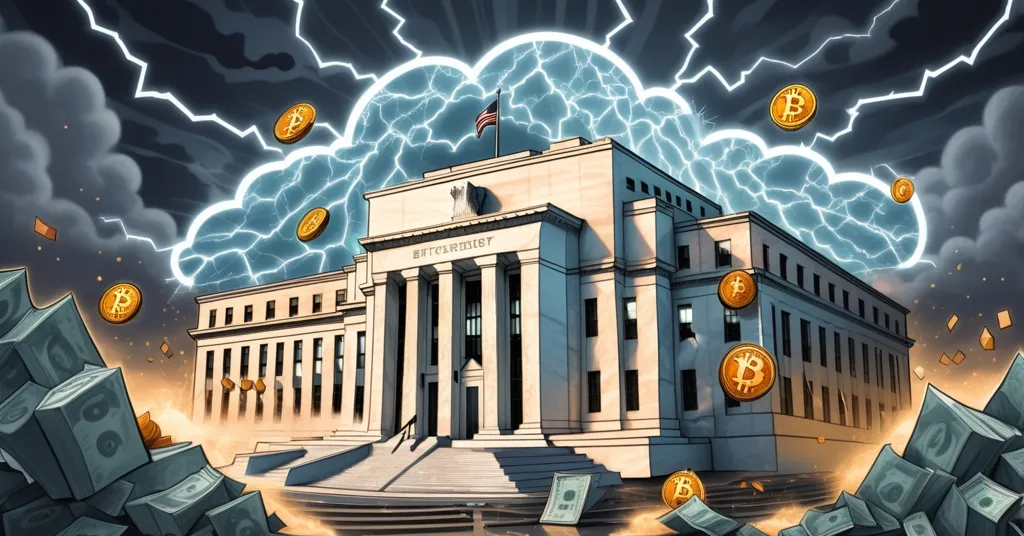
Stephen Miran, Chair of the White House Council of Economic Advisers (CEA), has stepped down from his post to focus solely on his role as a Federal Reserve Governor. This resignation, driven by a prior commitment to the U.S. Senate and the legal mandates of the Federal Reserve Act, unfolds during a tumultuous period for U.S. central banking as President Donald Trump aggressively seeks to reshape the institution, with potential shockwaves for Bitcoin, cryptocurrency markets, and decentralized finance.
- Miran resigns from CEA to prioritize Federal Reserve Governor duties.
- Move honors Senate pledge tied to his extended temporary Fed term.
- Timing aligns with Trump’s controversial Fed overhaul and Jerome Powell’s criminal probe.
- Fed instability may boost Bitcoin’s appeal while threatening altcoin and DeFi liquidity.
A Dual Role Raises Eyebrows
For those just dipping their toes into the financial world, let’s break down the players here. The White House Council of Economic Advisers is a pivotal group that provides the President with guidance on economic policy. Meanwhile, the Federal Reserve Board of Governors is the backbone of the nation’s central banking system, tasked with monetary policy—essentially controlling the money supply and interest rates to steer the economy. Holding roles in both, as Miran did, is a rare and eyebrow-raising situation, sparking concerns about conflicts of interest between advising the executive branch and maintaining the Fed’s supposed independence.
Miran’s journey into this dual role began in September when the Senate confirmed him to fill a short-term vacancy on the Fed’s Board, previously held by Adriana Kugler. His term was set to expire at the end of January, but per Fed rules, he can remain until a Senate-confirmed successor takes over. During his confirmation, Miran made a clear promise to senators: if his time at the Fed stretched beyond January, he’d resign from the CEA to comply with the Federal Reserve Act’s requirement for full-time dedication to the Board. He’s now followed through, a decision acknowledged by White House spokesman Kush Desai, who highlighted Miran’s value to Trump’s economic team. For more details on this transition, check out the full report on Miran’s resignation from the CEA.
“In accordance with the Federal Reserve Act, members of the Board of Governors must be committed full-time to their roles. Although I took an unpaid leave from the Council to join the Federal Reserve, I assured the Senate that if I remained on the Board after January, I would officially resign from the Council,” Miran explained.
“Following his commitment made to the Senate during his confirmation for the Federal Reserve’s Board of Governors, Stephen Miran has resigned from the Council of Economic Advisers,” Desai confirmed, adding, “His insightful contributions and dedicated support for Trump made him an invaluable asset to the White House.”
Federal Reserve Chaos: Trump’s Power Play
Let’s not sugarcoat this—Miran’s exit isn’t just a routine bureaucratic shuffle. It’s happening against the backdrop of a full-on storm at the Federal Reserve. President Trump is dead set on remolding the central bank to align with his vision, including naming financier and former Fed Governor Kevin Warsh as a potential successor to current Fed Chair Jerome Powell. Warsh has a history of criticizing the Fed’s post-2008 policies like quantitative easing—essentially pumping money into the economy to spur growth. His “hawkish” stance, favoring higher interest rates to tame inflation, could signal a sharp departure from the easy-money days of Powell’s tenure, potentially drying up the speculative capital that often fuels crypto markets.
Speaking of Powell, he’s currently under a criminal investigation by the Justice Department over testimony he gave to Congress regarding the Fed’s building renovations in Washington, D.C. That’s right—something as mundane as renovations has escalated to a federal probe, with whispers of mismanagement or misuse of funds. Whether this is a legitimate issue or a politically charged attack remains unclear, but it’s throwing a wrench into the Fed’s leadership stability at a critical moment.
As if that weren’t enough, Senator Thom Tillis, a heavyweight on the Senate Banking Committee, has sworn to block any Fed board nominations until Powell’s investigation concludes. This isn’t just posturing—Senate confirmations are already a slog, and historical precedents, like delays during Obama’s administration over Fed picks, show these blockades can stall monetary decisions for months. For the crypto community, this gridlock is a mixed bag. It exposes the fragility and blatant politicization of centralized financial systems—the very issues Bitcoin was created to sidestep. Yet, it also risks destabilizing markets, tightening monetary policy unexpectedly, or delaying much-needed clarity on crypto regulations or central bank digital currencies (CBDCs), which are government-backed digital versions of fiat, unlike decentralized cryptocurrencies like Bitcoin.
Crypto’s High Stakes in the Fed Drama
Let’s connect the dots for our Bitcoin and blockchain enthusiasts. The Federal Reserve’s independence from political interference has always been more of a fairy tale than fact. From Nixon pressuring the Fed in the 1970s to Reagan’s era of influence, presidents have long meddled in central banking affairs. Trump’s current maneuvers are simply a louder, brasher iteration of this trend. If Warsh steps in as Fed Chair, his inclination toward tighter monetary policy—raising interest rates and curbing money supply—could end the ultra-low interest rate environment we’ve seen under Powell. This era of cheap borrowing has often driven investment and speculative capital into riskier assets, including altcoins, Ethereum-based DeFi protocols, and tokenized projects. A hawkish Fed could choke off that liquidity, making life tougher for smaller crypto ventures or leveraged traders hoping to pump prices.
But here’s the silver lining for Bitcoin maximalists: this chaos could be a golden opportunity. As public trust in centralized institutions falters—especially with a Fed Chair under criminal scrutiny and senators playing hardball—Bitcoin’s case as a decentralized, tamper-proof store of value gets a massive boost. It’s the ultimate hedge against fiat drama, a way to say, “Screw your political games, I’ve got my sats.” Still, let’s not get carried away with blind optimism. A counterpoint looms large: Fed instability might spook governments into harsher crypto crackdowns as they fight to retain control. We’ve seen this playbook before—when traditional markets wobble, lawmakers often scapegoat Bitcoin as the unregulated wild west, ignoring that it’s their own centralized systems causing the earthquakes.
Moreover, Senate gridlock and leadership uncertainty could push back critical discussions on crypto-friendly policies or CBDC development. While Bitcoin doesn’t need Fed approval to thrive, many altcoins and DeFi platforms operate in a regulatory gray area where clarity from central banks could mean the difference between mainstream adoption and stagnation. For now, the crypto space remains in limbo, caught in the crossfire of a much larger power struggle.
Miran’s Resignation: A Small Move in a Big Battle
So, where does Stephen Miran fit into this mess? His resignation from the CEA might seem like a minor detail, but it’s emblematic of the broader clash between executive overreach and central banking autonomy. By stepping down, he’s at least paying lip service to the impartiality expected of a Fed Governor. But let’s be real—can that impartiality hold up in the current political pressure cooker? As Miran pivots fully to the Fed’s Board, every decision, whether it’s tweaking interest rates or shaping policies on digital assets, will face intense scrutiny. His move might adhere to protocol, but it’s a drop in the bucket compared to the seismic shifts happening around him.
Key Questions for Crypto Enthusiasts
To dig deeper into what this means for Bitcoin, blockchain, and decentralized tech, let’s tackle some pressing questions:
- What drove Stephen Miran to resign from the White House Council of Economic Advisers?
Miran resigned to fulfill a Senate commitment, ensuring full-time focus on his role as a Federal Reserve Governor as mandated by the Federal Reserve Act, especially since his temporary term extended beyond January. - How does his resignation tie into the Federal Reserve’s current turmoil?
It coincides with Trump’s push to overhaul the Fed, including plans to replace Jerome Powell, who’s under criminal investigation, with Kevin Warsh, pointing to a volatile shift in central banking leadership. - What’s the potential impact on Bitcoin and cryptocurrency markets?
Fed instability could undermine trust in fiat systems, enhancing Bitcoin’s appeal as a decentralized alternative, but tighter monetary policies under new leadership might reduce speculative capital for altcoins and DeFi. - Can the Federal Reserve maintain independence under political pressure?
History suggests it’s unlikely—Trump’s aggressive moves and Tillis’s nomination blockade show politics often overshadows Fed autonomy, highlighting the need for decentralized finance (DeFi) solutions. - Might this chaos delay crypto-friendly policies or CBDC progress?
Absolutely, as Senate gridlock and leadership uncertainty could stall regulatory clarity on cryptocurrencies or CBDC initiatives, leaving the industry navigating uncertainty amid centralized power struggles.
Decentralization’s Moment to Shine?
Zooming out, this entire fiasco screams why decentralization matters now more than ever. Bitcoin and blockchain technology aren’t just nerdy side projects or playthings for speculators; they’re a direct challenge to the centralized power games we’re witnessing at the Fed. Yes, crypto has its fair share of scams and snake oil salesmen—and we’ll call out that garbage with zero hesitation—but at its core, the pursuit of financial freedom, unshackled from political whims and shadowy institutions, is why so many of us are here. Miran’s resignation is a small blip in a sprawling narrative, but it underscores the high stakes of this fight. As Trump molds the Fed to his will, as Powell grapples with legal battles over something as absurd as building renovations, and as senators draw battle lines, the crypto community stands at a crossroads. Could this be the tipping point that drives mass Bitcoin adoption, or are we still chained to fiat’s endless drama? One thing is crystal clear—we’re not looking away from this trainwreck.