Tether Expands Into Modular Bitcoin Mining, Raising Efficiency and Centralization Questions
 LTB
LTB Tether is pushing deeper into Bitcoin mining with a modular setup, and that’s the sort of move that can either make the network stronger or hand more power to an already heavyweight operator. Modular BTC mining usually means prebuilt, containerized units that can be shipped, plugged in, and scaled without the usual construction circus. Faster deployment is the pitch. Concentration risk is the catch.
- Tether is moving into Bitcoin mining
- Modular mining implies portable or containerized infrastructure
- The appeal is speed, flexibility, and easier scaling
- Mining remains a brutal business with thin margins and heavy energy dependence
Tether is no longer just the company behind the stablecoin that half the crypto market seems to breathe through. It has been steadily expanding its reach across the Bitcoin ecosystem, and mining is a very direct way to do that. If you want exposure to Bitcoin’s base layer, owning mining infrastructure is about as hands-on as it gets. You’re not just orbiting the network; you’re helping secure it. For a deeper look at the latest move, see Tether’s modular BTC mining push.
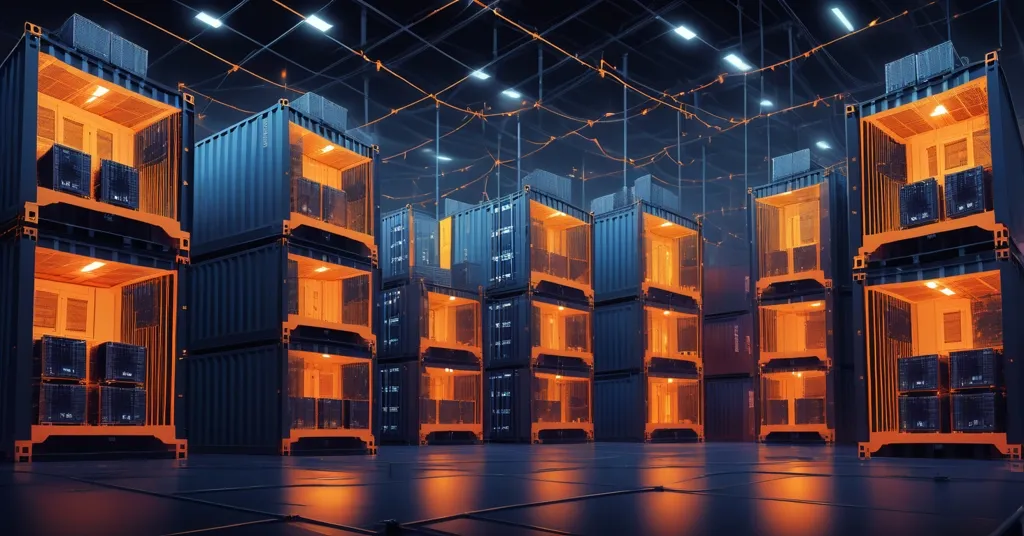
The phrase “modular” matters. In plain English, modular Bitcoin mining refers to self-contained mining units, often built in containers or prefabricated racks, that can be deployed faster than a conventional mining site. Instead of waiting months for a big facility to be built from scratch, operators can roll in standardized hardware, connect power and cooling, and start hashing. Less shovel, more plug-and-play.
That kind of setup can be a real advantage. It can reduce construction delays, simplify expansion, and let operators move equipment around based on energy prices, regulations, or seasonal conditions. In mining, flexibility is not a luxury; it’s survival. Power costs can make or break an operation, and a few bad assumptions about electricity can turn a “strategic investment” into a warehouse full of expensive space heaters.
For readers new to the mechanics: Bitcoin miners use specialized computers called ASICs — application-specific integrated circuits — built for one job only, which is to compete for the right to add transactions to the blockchain and earn BTC rewards. The business is highly competitive because the network adjusts difficulty, so miners are constantly fighting each other with better hardware, cheaper power, and tighter operations. That’s why modular infrastructure gets attention: anything that improves deployment speed or reduces overhead can matter.
There’s also a broader strategic angle here. Tether has increasingly behaved like more than a stablecoin issuer. It has positioned itself as a major force in crypto infrastructure, and Bitcoin mining fits neatly into that plan. Owning or backing mining operations gives a company a stake in the machinery that secures Bitcoin itself. That’s not a side hustle; that’s a claim on the plumbing.
Still, let’s not pretend modular mining is some magical cure-all. Mining remains a savage business. The romance of “decentralized energy-backed infrastructure” hits a wall pretty fast when the bill for electricity arrives. Margins are thin, uptime matters, hardware ages quickly, and even a well-run operation can get squeezed when Bitcoin price, network difficulty, and energy costs all move against it at once. Modular rigs may improve logistics, but they do not repeal economics.
There’s a reason the sector keeps drifting toward more industrial-scale operations: capital wins. Big players can negotiate cheaper power, buy newer machines, and wait longer for returns. That can be good for Bitcoin network security if the result is more efficient and resilient hash power. But it can also mean less meaningful distribution of mining influence. Bitcoin is permissionless, sure. The industrial side of mining, though, has a nasty habit of consolidating around whoever has the deepest pockets and the best access to power.
That’s the real tension in Tether’s move. On one hand, modular Bitcoin mining could improve operational efficiency, help deploy hash rate in remote or energy-rich regions, and support a more adaptive mining sector. On the other hand, it gives another large corporate player more leverage over critical Bitcoin infrastructure. Bulls will call that smart capital allocation. Skeptics will call it creeping centralization dressed up as innovation. Both sides have a point.
There’s also an environmental angle worth keeping in view. Modular mining can be deployed near stranded or underused energy sources, which is one of the strongest arguments for Bitcoin mining in the first place. It can monetize power that might otherwise go to waste, or help stabilize grids by absorbing excess generation. That’s the good version. The ugly version is when mining becomes just another power-hungry industrial load with a PR team attached. The line between those two depends on where the rigs are, what energy they use, and how honestly the operator talks about it.
For Bitcoiners, the upside is fairly straightforward: more serious infrastructure can strengthen the network, improve geographic distribution if deployed intelligently, and push mining into more efficient territory. For skeptics, the concern is also straightforward: when a giant like Tether gets more involved, the promise of decentralization starts looking a bit more like a logo than a guarantee. Bitcoin itself doesn’t care who mines blocks. The network only cares that the work gets done. But the market and the politics around that work absolutely do care.
What exactly is modular Bitcoin mining?
Modular Bitcoin mining usually means prebuilt, self-contained mining units — often containerized — that can be deployed quickly and scaled more easily than traditional mining farms.
Why would Tether get into Bitcoin mining?
It gives Tether deeper exposure to Bitcoin infrastructure and more influence over the systems that secure the network, rather than staying limited to stablecoins and liquidity rails.
Does modular mining improve profitability?
It can improve logistics, lower construction friction, and make expansion easier, but profitability still depends on cheap power, efficient ASICs, and disciplined operations.
Is this good for Bitcoin?
Potentially, yes. Better infrastructure can strengthen Bitcoin network security. But there’s a real trade-off if more mining power ends up concentrated in the hands of fewer large players.
Does this make mining less decentralized?
It can, depending on who controls the hardware, where it’s deployed, and how much of the market share gets absorbed by big corporate operators. Bitcoin stays decentralized at the protocol level, but mining can still centralize in practice.
Modular BTC mining is a sign of where the industry is headed: more professional, more mobile, more optimized, and probably more concentrated. That doesn’t make it bad by default. In fact, if the infrastructure is deployed intelligently, it could be a net positive for Bitcoin’s resilience. But nobody should confuse logistics innovation with some kind of moral upgrade. It’s still a ruthless, energy-driven business. The machines don’t care about slogans, and the network rewards hash rate, not press releases. No bullshit — that’s the game.