Trump’s Fed Battle: How Political Power Grabs Could Shake Bitcoin Markets
 LTB
LTB Fed Power Struggle and Trump’s Grip: How It Shakes Bitcoin and Crypto Markets
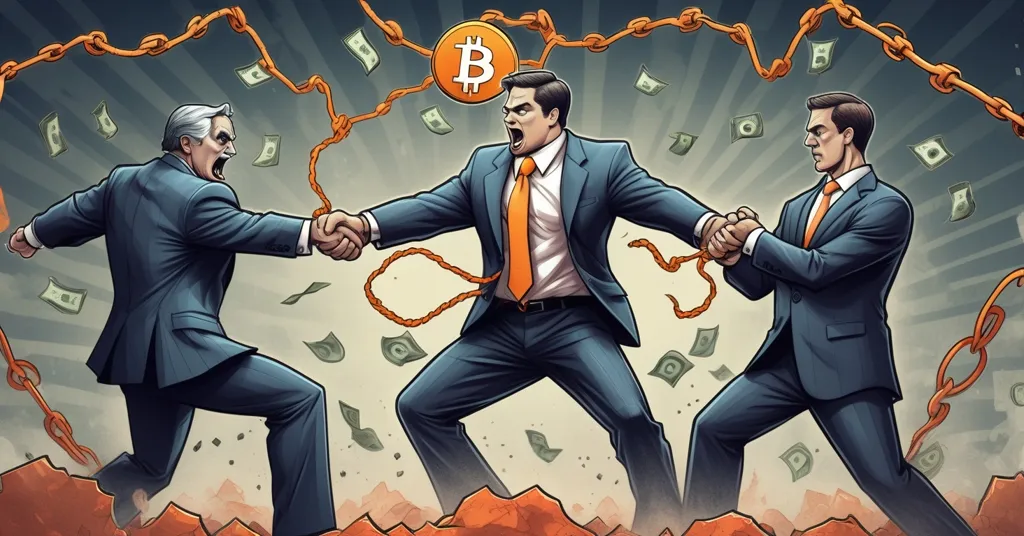
Wall Street is on edge as Federal Reserve Chairman Jerome Powell’s term winds down in May, with President Donald Trump’s unrelenting pressure on the central bank stirring up a storm that could ripple into Bitcoin and cryptocurrency markets. This isn’t just a bureaucratic spat; it’s a battle over who controls the money printer, and the outcome might push more investors toward decentralized assets—or drag them through volatility hell.
- Powell’s Deadline: Chairmanship ends in May, governor term lasts two more years.
- Trump’s Muscle: Three of seven Fed Board seats are his allies, with a potential majority at stake.
- Crypto Stakes: Fed policy shifts could weaken the dollar, fueling Bitcoin as a hedge, or spark market chaos.
Powell at the Crossroads: Stay or Go?
The Federal Reserve, the engine behind U.S. monetary policy, is caught in a political crossfire as Jerome Powell faces a pivotal moment. His role as chairman expires in May, but his position as a governor on the Fed’s seven-member Board of Governors extends for another two years. This quirk has sparked intense speculation: will he step down entirely, or stick around as a governor to influence from within? Powell’s staying mum on the matter, dodging questions with a curt brush-off.
I’m focused on my remaining time as chair. I haven’t got anything new on that to tell you. Please move on.
That silence could be a calculated play to avoid tipping his hand, or a quiet protest against the political heat he’s under. Historically, Fed chairs don’t linger after their top job ends. Only Marriner Eccles in 1948 stayed on as a governor, later cementing central bank independence with the 1951 Treasury-Fed accord—a deal that shielded the Fed from direct government meddling. Recent chairs like Ben Bernanke and Janet Yellen exited the board early, heading to private gigs or other government posts. If Powell bucks the trend, it could signal a fight for Fed autonomy—or just add more chaos to an already messy situation.
Trump’s Power Play: A Wrecking Ball to Fed Independence
Donald Trump isn’t whispering critiques; he’s swinging a wrecking ball at Powell and the Fed’s independence. He’s lambasted Powell as “Too Late,” accusing the chairman and the board of costing the U.S. trillions in interest by not slashing rates to near zero. Trump’s vision? Interest rates at 1% or lower to ease national debt burdens, a move critics warn could overheat the economy or tank the dollar’s value. For more on the financial world’s mixed reactions, check out Wall Street’s uncertainty over Fed policies and Trump’s influence.
Jerome ‘Too Late’ Powell, and his entire Board, should be ashamed of themselves… We should be paying 1% Interest, or better!
Trump’s got skin in the game already—three of the seven Board of Governors seats are filled by his appointees. If Powell vacates the chairmanship without a successor fight, Trump could seize an immediate majority. That’s an earthquake for monetary policy, potentially steering the Open Market Committee (the Fed body that sets interest rates by tweaking money supply through tools like government bond trades) toward ultra-low rates or other agenda-driven moves. Yet, there’s a wrinkle: Trump’s appointees recently showed spine, voting unanimously to reappoint all 12 regional bank presidents for five-year terms, hinting they’re not just yes-men.
Legal Wildcards: The Lisa Cook Case and Beyond
The drama doesn’t stop at boardroom politics. A legal showdown looms with Fed Governor Lisa Cook, whom Trump fired over an alleged mortgage fraud claim she denies. The Supreme Court will hear her case on January 21, and the stakes are sky-high. If the ruling sides against Cook, it could hand Trump broader power to ax governors at will, putting even Powell’s seat in jeopardy if he stays on. This isn’t just about one person—it’s a test of how much political muscle can be flexed over a body meant to be above partisan games. A Fed under siege could erode trust in centralized finance, a point we’ll circle back to when we talk crypto.
Bitcoin’s Stake in the Game: Hedge or Casualty?
Why should Bitcoin maximalists or crypto OGs care about this Beltway brawl? Simple: the Fed’s moves on interest rates and money supply directly sway the dollar’s worth, inflation, and how investors view risk assets like cryptocurrencies. If Trump gets his way with rock-bottom rates, the dollar could weaken further, making Bitcoin’s capped supply of 21 million coins a sexy shield against inflation. Think of Bitcoin as a lifeboat—when the fiat ship looks shaky, more folks might jump aboard.
But let’s not pop the champagne yet. Sudden policy swings or a Fed buckling under political weight could rattle traditional markets, and crypto isn’t immune to the fallout. Remember 2020-2021? Ultra-low rates and Fed money-printing via quantitative easing fueled a Bitcoin bull run, pushing prices from under $10,000 to over $60,000. History could repeat if rates crash again—but if markets panic over dollar devaluation or asset bubbles burst, even Bitcoin might take a hit in the short term.
Beyond Bitcoin, decentralized finance (DeFi) platforms on blockchains like Ethereum could see a boost if trust in centralized systems frays. DeFi, for the uninitiated, refers to apps like Aave or Uniswap that let you lend, borrow, or trade without banks, all secured by transparent blockchain code. If the Fed looks like a political puppet, more users might flock to these alternatives for financial freedom. Ethereum’s ecosystem, with its smart contract muscle, might outpace Bitcoin’s raw store-of-value appeal in capturing this wave—though BTC remains the OG middle finger to centralized mismanagement.
The Dark Side: Regulatory Blowback and Market Noise
Playing devil’s advocate, a Trump-dominated Fed might not be the crypto utopia some imagine. Extreme dollar devaluation or erratic policies could spook global markets so badly that even censorship-resistant assets like Bitcoin get caught in the crossfire of a broader sell-off. Worse, governments rattled by economic instability might lash out with harsher crypto regulations, fearing decentralized systems as threats during a crisis. Look at post-2008—financial meltdowns often birth tighter rules, and the U.S. could double down on clamping stablecoins like USDT or USDC if dollar trust wavers, indirectly hurting broader adoption.
And let’s cut the crap on price hype. Anyone tying Powell’s exit or Trump’s board grab to instant $100K Bitcoin predictions is peddling snake oil. We’re not here for shill nonsense; we’re tracking systemic shifts, not day-trading fantasies. The real play is long-term—if the Fed loses its spine, Bitcoin’s case as borderless, unmanipulable money only grows stronger, regulatory hurdles or not.
Global Ripple Effects and Decentralization’s Moment
Zooming out, this Fed saga isn’t just a U.S. problem. A weakened dollar under political Fed policies could shake global faith in fiat, nudging more countries toward crypto adoption—or at least blockchain experiments. But it’s a double-edged sword: if stablecoins pegged to the dollar lose credibility, users might pivot to non-fiat-backed assets, or governments might rush central bank digital currencies (CBDCs) to reassert control, potentially sidelining true decentralization.
This mess is a raw reminder of why Bitcoin was forged in the 2008 crisis ashes. Centralized systems, no matter how “independent,” are vulnerable to power plays. If the Fed bends, it might light a fire under the urgency for a financial future that answers to no single ruler. We’re all for effective accelerationism—pushing disruptive tech like blockchain to upend the status quo—but let’s not kid ourselves about the bumpy road. Will a politicized Fed be the final straw that drives the masses to stack sats, or just another chapter of chaos we weather?
Key Questions for Crypto Enthusiasts
- How could Trump’s Fed influence impact Bitcoin’s price?
Ultra-low interest rates might devalue the dollar, positioning Bitcoin as a prime inflation hedge. Yet, abrupt policy changes could trigger market volatility, hitting crypto prices in the near term. - What does Fed independence mean for decentralized finance growth?
Political meddling in the Fed could shatter trust in traditional finance, driving adoption of DeFi platforms like Aave on Ethereum. These offer autonomy and transparency beyond government reach. - Could Powell staying on as governor stabilize crypto markets?
If Powell remains, he might temper Trump’s agenda, leading to steadier Fed policies. This could prevent wild fiat swings, keeping Bitcoin and altcoins on a less erratic path. - Why do Fed board dynamics matter to cryptocurrency fans?
Fed decisions shape global markets, including risk assets like crypto. A politically swayed Fed might fuel adoption by weakening fiat—or hinder it with instability and regulatory pushback. - What risks does political control of central banks pose to blockchain adoption?
Erratic Fed policies under political control could push users to blockchain solutions, but also risk harsh regulations. Governments might crack down on crypto if they see it as a threat during economic turmoil.