Delaware and New Jersey Move to Ban Crypto ATMs Amid Scam Surge
 LTB
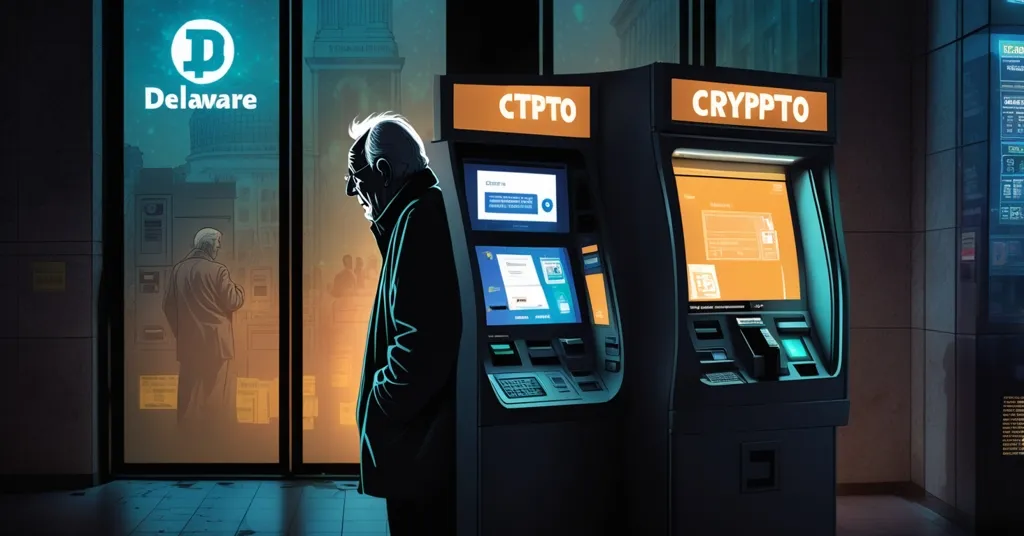
LTB Crypto ATM bans are picking up speed, with Delaware and New Jersey now moving to shut down kiosks that lawmakers say have become scam magnets for older adults and other vulnerable users.
- Delaware: House Bill 441 advanced on June 9
- New Jersey: Senate Bill 2141 advanced on June 8
- FBI data: 13,460 complaints and more than $388.9 million in reported losses in 2025
- Main target: Kiosks used in fast-moving crypto scams
- Industry pushback: Operators say they’re being blamed for scammers’ crimes
Why Delaware and New Jersey want crypto ATMs gone
Delaware’s House Economic Committee advanced House Bill 441, which would ban the ownership, installation, and operation of crypto kiosks outright. In plain English, that means the machines would be taken off the table, not merely dressed up with more compliance theater.
If the bill becomes law, existing kiosks in Delaware would have to be removed within 90 days after the law takes effect. The proposal also blocks retail point-of-sale and cashier-assisted crypto sales that function like kiosks in disguise — basically closing the “we’re not a kiosk, we’re just a kiosk with better lighting” loophole before industry lawyers get cute.
The penalties are no joke. Violations could bring fines of up to $10,000, and illegal fees could be refunded to customers or sent to Delaware’s Consumer Protection Fund. Representative Cyndie Romer, who sponsored the bill, put it bluntly:
“These kiosks reduce digital currency to a predatory cash grab,” — Rep. Cyndie Romer
New Jersey is taking a similar sledgehammer approach. The state’s Senate Commerce Committee advanced Senate Bill 2141, which would prohibit businesses from owning, controlling, installing, managing, selling, or offering crypto ATMs. The bill would take effect on the first day of the sixth month after enactment, giving operators a short runway before the lights go out.
New Jersey’s penalties are even harsher for repeat violations: up to $10,000 for a first offense and up to $20,000 for later ones. That’s not a slap on the wrist. That’s the state saying, “We’ve heard enough.”
The scam problem that pushed lawmakers over the edge
The political momentum isn’t coming out of nowhere. The FBI’s Internet Crime Complaint Center, or IC3, reported 13,460 crypto kiosk complaints in 2025, with more than $388.9 million in losses tied to the machines. One detail stands out above the rest: people over 50 accounted for more than half of the complaints.
That’s the kind of statistic that changes votes. When the people most affected are older adults, lawmakers tend to stop talking about “innovation” and start talking about consumer protection.
The scam pattern is ugly but effective. A fraudster contacts a victim, often pretending to be a bank employee, government agent, utility rep, or tech support. The victim is pressured to act fast, withdraw cash, and feed it into a crypto ATM or kiosk. Once the crypto is sent to a scammer-controlled wallet, it is usually gone for good.
No chargeback. No bank reversals. No magic undo button. Just a very expensive lesson.
That irreversible design is part of why these machines are so convenient for legitimate users and so useful for scammers. The same feature that makes crypto appealing — direct, final settlement without a middleman — also makes fraud harder to unwind. That’s not a bug in every case, but it is a giant neon sign for criminals when victims can be panicked into sending funds instantly.
Crypto ATMs: useful tool or predatory cash funnel?
Crypto ATMs started as a bridge between physical cash and digital assets, especially for people who didn’t want to deal with exchanges or banking rails. For some users, especially the underbanked or cash-heavy crowd, that bridge matters. Not everyone wants to hand over documents, wait for verification, or fiddle with an app that looks like it was designed by three interns and a sleep-deprived contractor.
But the problem is that the bridge has also become a freeway for scams.
Operators say they shouldn’t be punished for crimes committed by outside scammers. That argument is not nonsense. A kiosk company is not the same thing as the fraudster using it. Many operators have responded by adding scam warnings, identity checks, and transaction limits.
The issue is that regulators increasingly see those safeguards as too little, too late. A warning sign slapped on the machine does not help much when the victim is already being coached by a scammer on the phone, terrified into moving money before lunch. If the fraud is systemic and the losses keep piling up, legislators are going to ask a very unglamorous question: why keep the machine at all?
That’s the tension at the heart of the crypto ATM debate. A blunt ban can protect consumers, but it can also cut off legitimate access to Bitcoin and other digital assets for people who rely on cash-based on-ramps. A stricter licensing regime, lower limits, stronger identity checks, or mandatory anti-scam cooling-off periods might preserve some utility while reducing abuse. Then again, regulators may have decided that the industry has already had its chance to self-police and blew it.
A growing wave of statewide total bans
Delaware and New Jersey are not operating alone. Indiana became the first state to pass a total crypto ATM ban in March, followed by Tennessee, with Minnesota joining in May. The broader message is obvious: once a product becomes strongly associated with fraud, lawmakers start reaching for the shutdown switch.
Canada is also moving toward tougher restrictions, with broader limits or even a nationwide ban under discussion. That suggests this is not just a local panic response. It’s becoming a policy pattern.
For the crypto industry, that’s a warning shot. If operators cannot convincingly prove that their machines are not acting as scam rails, more states will likely follow the same playbook. And once one state enacts a clean ban, it becomes much easier for the next legislature to copy-paste it with minimal debate. Bureaucracy loves precedent almost as much as it loves ruining your afternoon.
Bitcoin Depot bankruptcy adds to the pressure
The business side of the sector is already feeling the squeeze. Bitcoin Depot, one of the larger crypto ATM operators, filed for Chapter 11 bankruptcy amid regulatory pressure, falling revenue, and security issues. That doesn’t automatically mean the whole sector is finished, but it does show how rough the terrain has become.
Chapter 11 is a restructuring process, not an instant funeral. Companies can use it to reorganize debts and keep operating. Still, when a major name in the sector is fighting for survival while states line up to ban the machines outright, the model clearly has some nasty structural problems.
That matters beyond one company. If major operators are struggling under regulatory scrutiny, then smaller ones are likely even more exposed. The market is telling its own story here, and it’s not a glowing one.
What this means for consumers and Bitcoin access
There’s a real consumer-protection case for these bans. The FBI data is ugly, the victims are often older, and the scam playbook is brutally effective. If lawmakers believe these kiosks are disproportionately used to drain vulnerable people, a crackdown is not some knee-jerk anti-crypto tantrum. It’s a response to a very real harm.
But there’s another side to the story that shouldn’t be ignored. Crypto ATMs can be one of the few accessible ways for people to buy Bitcoin with cash, especially if they’re outside the banking system or uncomfortable using exchanges. Remove those machines, and some users may be pushed toward less convenient, less private, or more centralized alternatives. That may be an acceptable tradeoff to some policymakers, but it’s still a tradeoff.
And let’s be honest: if governments keep hammering every easy cash-to-crypto on-ramp into the ground, they’re not solving the demand for digital money. They’re just shoving it elsewhere. Sometimes that means centralized exchanges. Sometimes it means peer-to-peer markets. Sometimes it means people who wanted a simple Bitcoin purchase end up dealing with more friction than the system needed in the first place.
The trick, as always, is separating legitimate use from predatory abuse. That’s easy to say and hard to do. But if the crypto industry wants to avoid getting regulated like a scam accessory, it needs more than warning labels and hand-waving. It needs real consumer protection, real transaction controls, and less tolerance for the sleaziest corners of the business.
Key questions answered
What is happening to crypto ATMs in Delaware and New Jersey?
Both states advanced bills that would ban crypto ATMs and kiosk-style crypto sales outright.
Why are lawmakers targeting these machines?
They point to rising fraud complaints, major reported losses, and repeated use of kiosks in scam schemes.
How bad is the scam problem?
The FBI reported 13,460 complaints and more than $388.9 million in losses in 2025.
Who is most affected?
People over 50 accounted for more than half of the complaints, which is a big reason the backlash is growing.
What would Delaware’s bill do?
House Bill 441 would ban owning, installing, and operating crypto kiosks, and existing machines would have to be removed within 90 days after the law takes effect.
What would New Jersey’s bill do?
Senate Bill 2141 would prohibit businesses from owning, controlling, installing, managing, selling, or offering crypto ATMs.
Are other places doing the same?
Yes. Indiana, Tennessee, and Minnesota have already passed total bans, and Canada is also moving toward tougher restrictions.
What is the counterargument from operators?
Operators say they should not be blamed for scams committed by outside fraudsters and point to warnings, ID checks, and transaction limits as safeguards.
What bigger trend does this reflect?
A growing consumer-protection crackdown on crypto ATMs, with regulators increasingly preferring bans over lighter regulation.